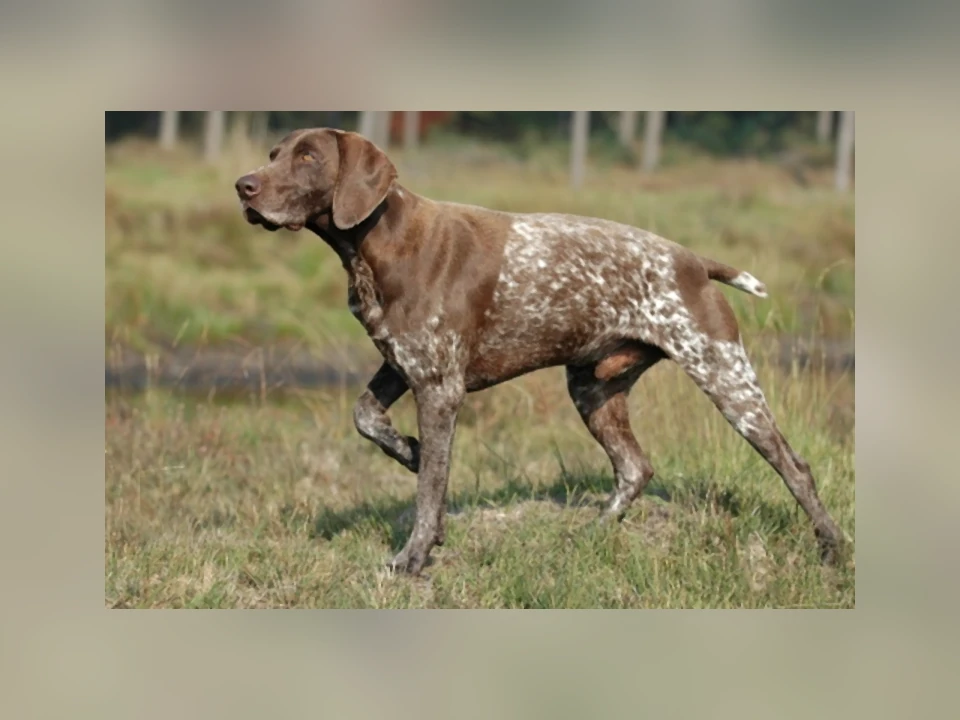
Meet the German Shorthaired Pointer (versatile, athletic gundog)
The German Shorthaired Pointer (GSP) was bred in 19th-century Germany to do almost everything in the field — point, retrieve, and track on both land and water. That versatility still defines the breed today. According to the American Kennel Club, the GSP belongs to the Sporting group, and it shows: this is a lean, powerful, deep-chested dog built for endurance and speed.
A GSP typically stands 21–25 inches at the shoulder and weighs 45–70 pounds, with a distinctive liver or liver-and-white coat. They’re elegant to look at, but make no mistake — underneath the handsome exterior is a tireless working athlete. Individuals vary in drive and intensity, but as a breed, GSPs were made to move all day. Bring one home expecting a couch companion and you’ll both be miserable. Bring one home as a running, hiking, or hunting partner and you may have found your perfect match.
Personality & temperament
GSPs are energetic, intelligent, affectionate, and highly biddable — meaning they genuinely want to work with you. That combination makes them a joy to train and a strong fit for dog sports like agility, dock diving, and field trials. They learn quickly, respond well to positive reinforcement, and crave a job to do.
That same brightness has a flip side: a GSP without enough physical and mental work will invent its own entertainment, usually at your furniture’s expense. These dogs also bond very closely with their people. That devotion is part of their charm, but it means many GSPs are prone to separation issues if left alone too long or too often. If your dog struggles when you leave, our guide on separation anxiety in dogs can help you build a healthier routine. Early socialization and consistent, reward-based training set a GSP up to be a confident, well-mannered companion.
Living with a GSP
This is the heart of the matter: GSPs have very high exercise needs, full stop. Plan on one to two hours of vigorous activity every single day — running, biking alongside, swimming, fetch, or field work — rain or shine. They make outstanding companions for runners and active outdoor households. A short walk around the block will not touch their energy reserves.
A bored, under-exercised GSP is a genuinely destructive dog: think chewed baseboards, dug-up gardens, counter-surfing, and nonstop motion indoors. Mental work matters too — scent games, training sessions, and puzzle toys all help burn that busy brain. Apartments and sedentary lifestyles are a poor fit unless you’re truly committed to meeting the activity quota.
One practical note for all that swimming and field time: the GSP’s ears are floppy and fold over, which traps moisture and warmth — ideal conditions for ear infections. Check and gently dry the ears after every swim or wet outing, and watch for head-shaking, odor, or redness. Our dog ear infections guide covers prevention and when to call your vet.
Grooming & care
Here’s the easy part. The GSP’s short, dense coat is about as low-maintenance as it gets. A weekly once-over with a rubber curry brush or grooming mitt removes loose hair and keeps the coat gleaming. They shed moderately and year-round, so expect some hair on your clothes, but you’ll never face the heavy seasonal blowouts of a double-coated northern breed.
Beyond brushing, stick to the basics: trim nails every few weeks, brush teeth regularly, and bathe only when your dog is actually dirty. Pair the ear checks mentioned above with this simple routine and grooming becomes a quick, pleasant part of life with a GSP.
Health
Most German Shorthaired Pointers are healthy, hardy dogs with a typical lifespan of 10–14 years, but the breed has a few conditions worth knowing about. Buying from — or supporting rescues that work with — breeders who health-test their stock makes a real difference.
- Hip dysplasia. A malformation of the hip joint that’s common in larger, athletic breeds. The Orthopedic Foundation for Animals (OFA) recommends hip screening (OFA or PennHIP) for breeding dogs.
- Bloat / GDV. As a deep-chested breed, the GSP is at elevated risk for gastric dilatation-volvulus, a sudden, life-threatening emergency. Learn the signs — a swollen belly, unproductive retching, restlessness — in our dog bloat (GDV) guide, and call your vet immediately if you see them.
- Ear infections. Common thanks to those floppy ears, especially in swimmers.
- Eye conditions. Including entropion and cataracts; OFA eye exams help responsible breeders screen.
- Certain cancers. Mammary tumors and other cancers appear in the breed; routine vet checkups support early detection.
Because GSPs gain weight quickly when their exercise drops off, keep an eye on body condition — our is my dog overweight guide shows you how to assess it at home. For clinical detail on any of these conditions, the Merck Veterinary Manual is a trustworthy reference. As always, individual dogs vary, and your veterinarian is your best partner for breed-specific care.
Is a GSP right for you?
A German Shorthaired Pointer is a superb dog for the right home. If you’re an active owner who runs, hikes, hunts, or competes — and you genuinely want a high-energy partner woven into your daily life — few breeds give back more affection, brains, and athleticism.
But be honest with yourself. If you live in a small apartment, prefer quiet evenings, or are away from home all day, a GSP will likely become frustrated, anxious, and destructive — and that’s not the dog’s fault. Whether you buy from a responsible, health-testing breeder or adopt from a breed-specific rescue, go in clear-eyed about the exercise commitment. Meet that, and you’ll have one of the most rewarding companions in the dog world.