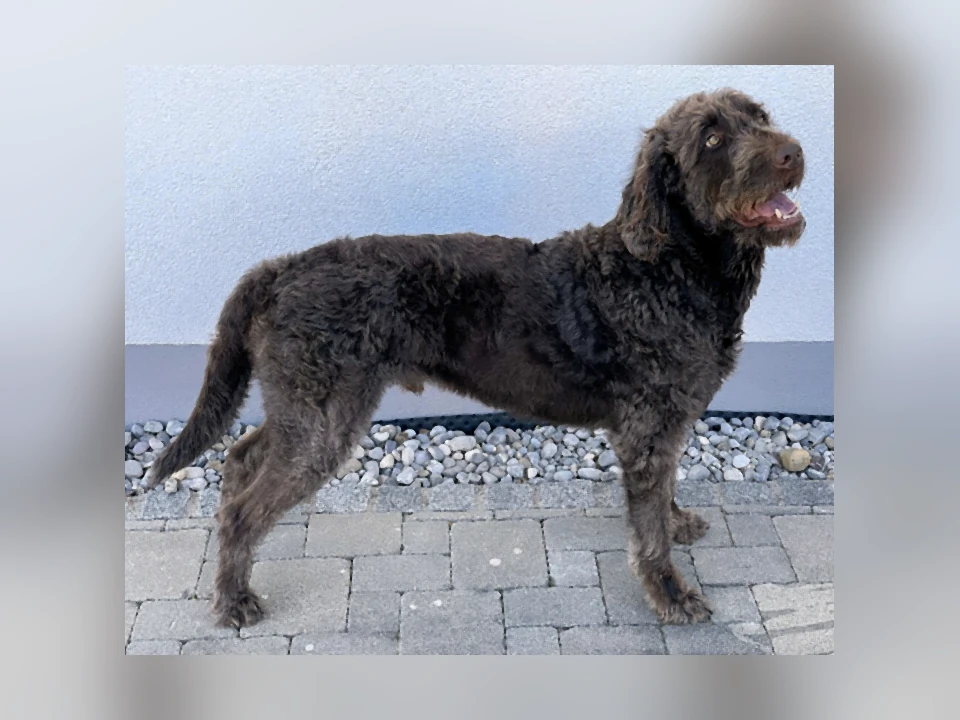
Meet the Labradoodle (Labrador × Poodle crossbreed; originally bred as allergy-friendlier guide dogs)
The Labradoodle is the dog that started the whole “doodle” phenomenon. In the late 1980s, a breeder at Australia’s Royal Guide Dogs association set out to create a guide dog that a vision-impaired client with a dog-allergic spouse could live with — pairing the steady, trainable Labrador Retriever with the lower-shedding Poodle. The hope was a service dog with a coat that allergy-sensitive people might tolerate better. That experiment launched a global trend, and today the Labradoodle is one of the most recognized crossbreeds in the world.
It is a genuinely appealing combination on paper: the Labrador’s friendly, willing nature and the Poodle’s brains and coat. But before the puppy photos win you over, it helps to understand exactly what a Labradoodle is — because that single fact shapes everything from the hair on your sofa to the health risks your dog may carry.
What “crossbreed” really means
Here is the honest part that breeder websites often skip: there is no Labradoodle breed standard, and no major kennel club recognizes the Labradoodle as a breed. A “breed” is a population bred to a consistent standard over many generations so that traits become predictable. A crossbreed is not — so no registry can guarantee what your puppy will grow into.
Labradoodles are often described by generation. An F1 is a straight Labrador × Poodle, a 50/50 mix whose coat and shedding are the least predictable. An F1b is an F1 bred back to a Poodle, usually curlier and lower-shedding. Multigen doodles pair two doodles. People assume later generations are “more hypoallergenic,” but none of these labels is a guarantee — they only shift the odds.
The practical reality is that coat type, adult size, and temperament all vary litter to litter, and even puppy to puppy within the same litter. Adult size ranges from a Mini around 15 pounds to a Standard topping 80. Coats fall into three rough types: a straighter, more Labrador-like hair coat (sheds most), a soft wavy fleece coat, and a tight curly wool coat (sheds least, mats fastest). Crucially, “hypoallergenic” and “non-shedding” are not guaranteed. No dog is truly hypoallergenic, and many Labradoodles — F1s especially — shed and can trigger allergies. If allergies are your reason for wanting this dog, meet the actual adult dog first and spend real time with it.
Personality & temperament
This is where Labradoodles tend to shine. Both parent breeds are famously people-oriented, and most Labradoodles inherit that warmth. Expect a dog that is typically friendly, smart, sociable, and family-oriented — happiest as part of the household rather than left alone in the yard. They generally do well with children and other pets, and their eagerness to please makes them rewarding to train.
The intelligence comes from both sides: the Poodle is among the smartest breeds, and the Labrador is an enthusiastic, biddable learner. These dogs pick up cues quickly and thrive on having a job. They also inherit energy from both parents — neither a working Labrador nor an athletic Standard Poodle is a couch potato, and most of their offspring aren’t either. Many Labradoodles keep a goofy, puppyish exuberance well into adulthood, which is charming but means early, consistent training matters. Boredom and under-exercise are the usual roots of nuisance behaviors like chewing, barking, and counter-surfing.
Living with a Labradoodle
Plan for moderate-to-high exercise. Most Labradoodles need a solid daily outlet — a brisk walk plus play, fetch, swimming, or training games — to stay balanced. Active families who hike, jog, or do dog sports will find a willing partner; a quiet, sedentary home may struggle to meet the dog’s needs, and an under-exercised Labradoodle is often a destructive one.
The coat is the bigger daily reality. The curlier the coat, the faster it mats, and the more frequent professional grooming becomes — typically a clip every six to eight weeks plus regular brushing down to the skin. Neglected curly coats form tight, painful mats that often have to be shaved off. One breed-specific point deserves attention: hair grows inside the ear canal, and the floppy, often hairy ears trap moisture, which makes ear infections common. Learn the warning signs in our guide to dog ear infections, and build routine ear cleaning and drying into your weekly schedule.
Grooming & care
Be honest with yourself about grooming before you commit, because this is where the Labradoodle asks the most — and the workload is coat-dependent. A wavier, more Labrador-like coat is easier to manage; a tight, wool, Poodle-like curl is a serious, ongoing commitment. Either way, expect frequent brushing to prevent mats and regular professional clipping. Because coat type is unpredictable, you may not know which grooming reality you’ve signed up for until the dog matures.
That translates into a recurring cost in time, money, or both. A professional groomer every six to eight weeks adds up quickly, and learning to clip at home takes equipment and practice. Fold ear cleaning, nail trims, and dental care into the routine too, and start handling your puppy early so grooming stays low-stress for life.
Health
Here is the claim doodle marketing most often gets wrong: crossbreeding does not erase health problems. The idea of “hybrid vigor” is real in some contexts, but a Labradoodle can inherit health issues from either parent breed — and sometimes from both. The conditions to watch reflect that double inheritance.
From both the Labrador and Poodle sides, hip and elbow dysplasia are real concerns, so weight management matters — our guide on helping a dog lose weight can ease strain on vulnerable joints. Eye conditions including progressive retinal atrophy (PRA) and cataracts appear in both parent breeds. Allergies and chronic skin disease are common — watch for relentless scratching and recurrent infections, and read our dog allergies guide to recognize the pattern. Ear infections follow from the coat and ear structure. Two inherited disorders deserve special mention: Addison’s disease, a hormonal condition that runs in Poodle lines and produces vague signs like unexplained lethargy and GI upset, and exercise-induced collapse (EIC), a genetic disorder of the Labrador for which a DNA test exists.
Your single best protection is an ethical breeder. Insist on one who health-tests both parent breeds — OFA hip and elbow clearances, current eye (CAER) exams, and breed-relevant DNA panels (including EIC on the Labrador side) on both the Labrador and the Poodle parent. As the Merck Veterinary Manual notes, knowing a dog’s hereditary risks lets your veterinarian screen proactively. And beware of doodle mills: the breed’s popularity has drawn high-volume breeders who churn out puppies with no health testing, charge premium “designer” prices, and make unverifiable hypoallergenic promises. If a breeder won’t show you clearances on both parents, walk away.
Is a Labradoodle right for you?
A well-bred Labradoodle can be a wonderful family dog — friendly, smart, sociable, and genuinely good with kids and other pets. For the right active household, few dogs are more rewarding. But the choice only works if you go in clear-eyed.
Accept three things up front. First, the grooming commitment is real, ongoing, and potentially expensive, and you may not know how demanding it will be until your puppy’s adult coat comes in. Second, low-shedding and “hypoallergenic” are not guaranteed — if that is your deal-breaker, this may not be your dog. Third, because there is no breed standard, you must vet the breeder carefully, insisting on health testing of both parent breeds and steering well clear of doodle mills. Remember that every dog is an individual; meet the actual dog and its parents, not the marketing, and you’ll know far more than any label can promise.