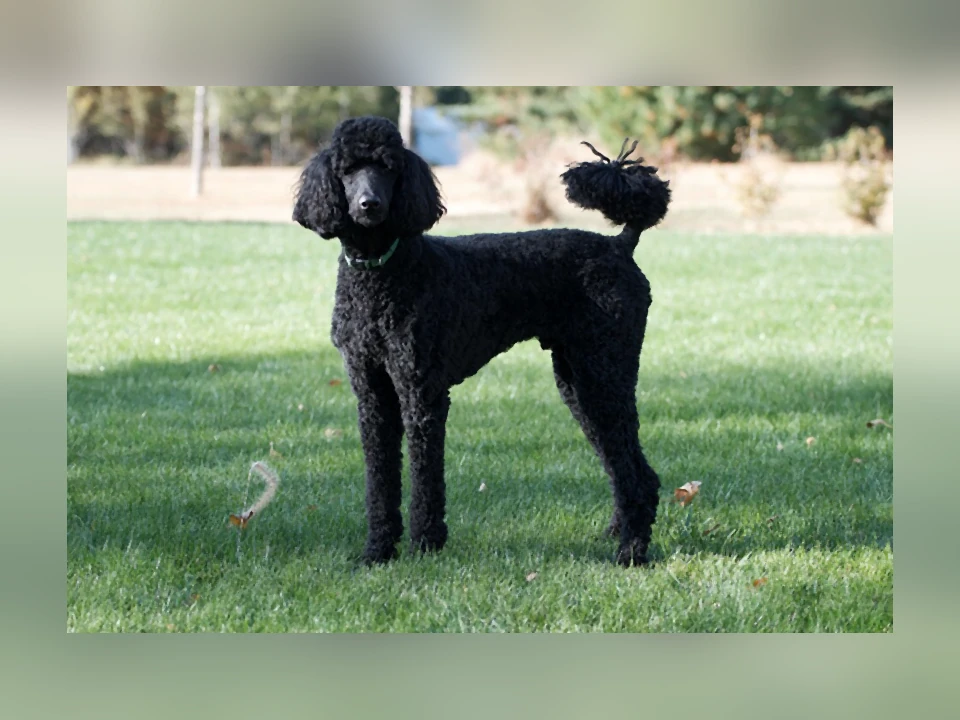
Meet the Poodle
Few breeds carry as much misunderstanding as the Poodle. The elaborate show clips and the reputation as a pampered lap dog hide what the Poodle actually is: a working water retriever bred in Germany and refined in France. According to the American Kennel Club, the iconic “puffs” of a show trim were originally functional — protecting joints and vital organs in cold water while keeping the dog light enough to swim. Underneath the styling is an athletic, problem-solving dog that ranks among the most intelligent breeds in the world.
What makes the Poodle unusual is that it is essentially one breed offered in three sizes — Standard, Miniature, and Toy. They share the same temperament, the same curly low-shedding coat, and the same sharp mind. What differs is scale and the lifestyle each size suits. Whether you want a 60-pound running partner or a 6-pound apartment companion, you get the same fundamentally brilliant, people-oriented dog.
Personality and temperament
Poodles are genuinely smart, and that intelligence shapes everything about living with one. They learn quickly, read their people closely, and thrive on having a job to do. This makes them a joy to train — and a handful when under-stimulated. A bored Poodle will invent its own entertainment, often involving counters, cabinets, or creative mischief.
They are also sensitive dogs. Poodles respond best to patient, positive, reward-based training and can shut down or grow anxious under harsh corrections. Most are playful and affectionate well into old age, eager to be part of family life rather than left alone in the yard. Expect a dog that wants to be with you, watches what you do, and rarely lets a learning opportunity pass. Daily mental work — training games, puzzle feeders, scent work, or new tricks — matters as much as physical exercise.
The three varieties
All three Poodles share a brain and a coat, but they fit different lives.
Standard Poodle
The original size and the most athletic. Standards generally stand over 15 inches and weigh roughly 40–70 pounds. They need real exercise and mental work, do well in dog sports, and suit active households with space. Their lifespan tends to run a bit shorter than the smaller varieties, around 12–14 years.
Miniature Poodle
A flexible middle ground at roughly 10–15 inches and 10–20 pounds. Miniatures keep the trainability and energy of the breed in a more manageable package, making them a popular choice for families who want a smart, portable dog.
Toy Poodle
The smallest variety, standing around 10 inches or under and weighing roughly 4–6 pounds. Toys fit apartments and laps and often live the longest, frequently into their mid-teens. They still have the Poodle drive and need mental engagement — small does not mean low-maintenance.
Living with a Poodle
The single-layer curly coat is the Poodle’s signature advantage. Because it sheds very little and tends to trap loose hair rather than dropping it, the breed is a strong fit for tidy households and people sensitive to dander. No dog is truly hypoallergenic, but many allergy-sufferers tolerate Poodles better than other breeds.
That same coat is also the catch. A low-shedding curly coat does not maintain itself — it grows continuously and mats easily, so the trade-off for a clean house is a real grooming commitment. Two breed-specific care points deserve attention. Poodles grow hair inside the ear canal, and combined with the moisture a curly coat traps, this makes them prone to infections; routine ear cleaning and our guide to dog ear infections will help you catch trouble early. Their nails also grow fast and need regular attention — see how to trim dog nails to keep paws healthy and walking comfortable.
Grooming and care
Be honest with yourself about grooming before you bring a Poodle home, because this is where the breed asks the most. The coat needs daily or near-daily brushing down to the skin to prevent mats, plus a professional clip every 4–6 weeks. Neglected coats form tight mats that pull at the skin and frequently have to be shaved off entirely — uncomfortable for the dog and disheartening for the owner.
That means a recurring cost in either time or money: learning to groom at home takes practice and equipment, while a professional groomer is an ongoing expense. Dental care is the other quiet priority, especially for Toy and Miniature Poodles, whose small mouths crowd teeth and speed up plaque buildup. Daily brushing and routine cleanings make a real difference; our dog dental care guide walks through a sustainable routine.
Health
Poodles are generally healthy and long-lived, but the conditions to watch vary by size, and responsible breeding is your best protection. The Poodle Club of America and the Orthopedic Foundation for Animals recommend specific health testing — buy or adopt from sources that screen their breeding dogs.
Standard Poodles are deep-chested and face a higher risk of bloat, or gastric dilatation-volvulus, a true emergency every owner should recognize; learn the warning signs in our dog bloat / GDV guide. Standards are also watched for hip dysplasia, Addison’s disease, and sebaceous adenitis, a skin condition concentrated in the breed. Toy and Miniature Poodles more often face luxating patellas (slipping kneecaps), dental disease, and certain eye disorders. Across all sizes, progressive retinal atrophy, cataracts, and epilepsy appear in some lines. Ask any breeder for current OFA hip and patella evaluations, recent eye (CAER) exams, and family health history. As the Merck Veterinary Manual notes, knowing a dog’s hereditary risks lets your veterinarian screen proactively rather than reactively.
Is a Poodle right for you?
A Poodle can be one of the most rewarding dogs you’ll ever own — brilliant, devoted, athletic, and kind to a tidy or allergy-sensitive home. But the picture only works if you go in clear-eyed. The grooming commitment is real, in both hours and dollars, and it never lets up. The intelligence that makes them so trainable also means a neglected, under-stimulated Poodle becomes restless and mischievous.
Choose the size that matches your space and activity level, commit to the grooming and the mental work, and seek out a responsible breeder or rescue that tests for the breed’s known issues. Do that, and you’ll have a remarkable companion for well over a decade. Remember that every dog is an individual — temperament and health vary even within a litter — so meet the dog, not just the breed.