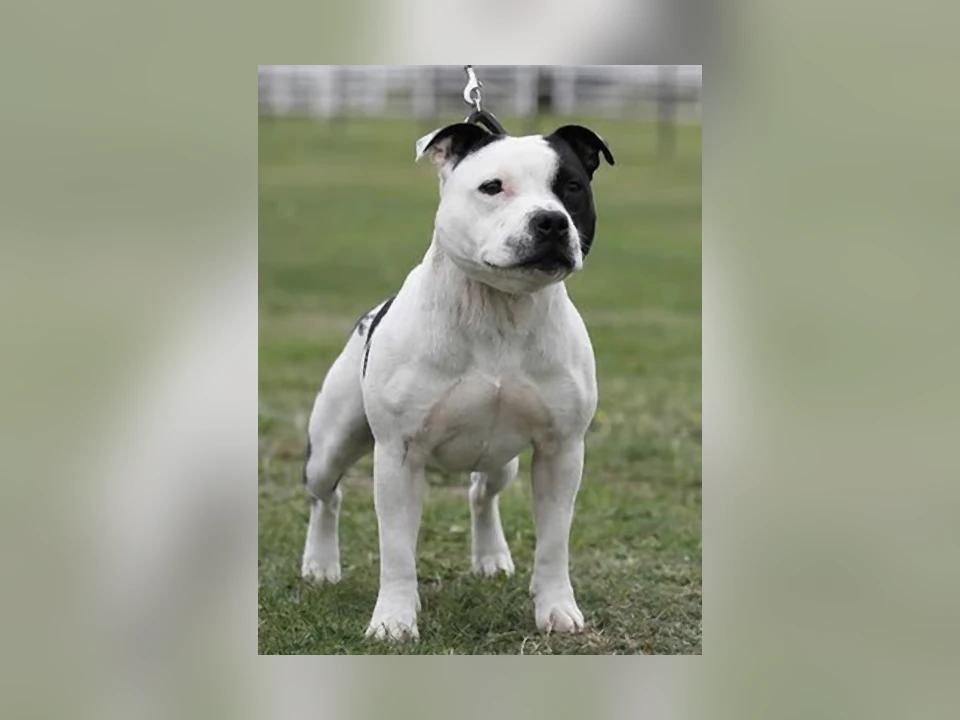
Origin
The Staffordshire Bull Terrier comes from the Black Country of Staffordshire and the West Midlands of England, where 19th-century bull-and-terrier crosses produced a compact, athletic dog. Once the blood sports those dogs were bred for were outlawed, breed enthusiasts steered the Staffie toward the show ring and the family hearth; the UK Kennel Club recognized the breed in 1935. From the start, fanciers prized its reliability with people, and that temperament — not its strength — is what defines the modern Staffie.
Personality and daily life
If there’s a single word for a good Staffie, it’s affectionate. These dogs adore their people, lean into laps that are far too small for them, and are famously good with children — the old ‘nanny dog’ nickname is rooted in genuine breed temperament, not internet folklore. They’re courageous, comical, and tenacious, with a terrier’s enthusiasm dialed up to eleven.
They’re also strong for their size and intensely social, which means they don’t do well isolated. A Staffie wants to be part of everything you do. Left alone too long or under-stimulated, that big personality turns into chewing, digging, and frustration.
Exercise and training
Don’t let the compact size fool you — this is an energetic, muscular breed that needs a solid hour-plus of daily exercise and play. Brisk walks, fetch, tug, and scent or trick games all work; they enjoy having something to do with their bodies and minds.
Staffies are smart and want to please their people, so they respond beautifully to positive, reward-based training. Start socialization early and keep it broad — people, places, sounds, and carefully managed dog introductions. Some Staffies become selective or reactive with other dogs as they mature, so it’s wise to manage multi-dog settings rather than assume universal friendliness.
Grooming
Grooming is genuinely easy: a weekly brush with a rubber mitt removes loose hair and keeps the coat glossy, plus the occasional bath. They shed moderately year-round. Routine nail trims, ear checks, and dental care round it out.
Health
Staffies are generally hardy and often live 12-14 years, but the breed carries two well-documented inherited diseases — both with DNA tests, which is why responsible breeding matters so much. L-2-Hydroxyglutaric aciduria (L-2-HGA) is a neurometabolic disorder causing seizures, tremors, and behavior changes, typically from 6 months to a year; its DNA test is mandatory under the UK Kennel Club scheme. Hereditary cataracts (HC, HSF4) can appear in puppyhood and progress to blindness by 2-3 years and also has a DNA test. Eye screening also catches persistent hyperplastic primary vitreous (PHPV), present from birth. As with most medium breeds, watch for hip dysplasia and keep your dog lean. A breeder who tests parents for L-2-HGA, HC, hips, and eyes is doing it right.
Who this breed suits
The Staffie is a wonderful fit for active families and committed owners who want a small-to-medium dog with an enormous heart and don’t mind a strong, exuberant personality. They reward early socialization and daily engagement, and they’re a poor match for anyone who’s gone all day or wants an aloof, low-energy companion. Choose a breeder who DNA-tests, and you’ll likely get one of the most devoted dogs you’ll ever own.