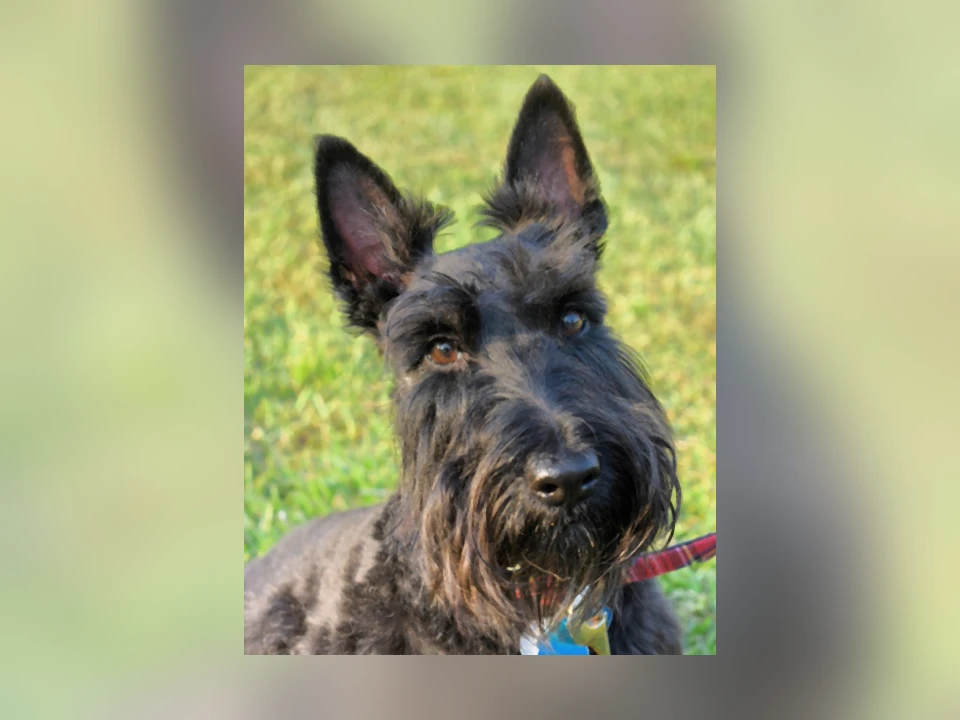
Meet the Scottish Terrier (the dignified little Scot)
Few small dogs carry themselves with the gravitas of the Scottish Terrier. Compact and powerful, with short legs, a long head, a wiry beard, and famously erect ears and tail, the “Scottie” looks like a dog that takes itself seriously—and largely does. Developed in the Scottish Highlands to hunt foxes, badgers, and vermin among rocky dens, this is a working earth dog at heart: brave, persistent, and built to make decisions on its own underground. The American Kennel Club places it in the Terrier group, and everything about the modern Scottie traces back to that fearless, self-reliant heritage.
Scotties typically weigh 18 to 22 pounds and stand about 10 inches at the shoulder—small in stature but never in personality. They come in black, wheaten, and brindle, and that distinctive silhouette has made them one of the most recognizable dogs in the world. As with every breed, individuals vary, and responsible breeding and thoughtful socialization genuinely improve outcomes.
Personality and temperament
The Scottish Terrier is often described as dignified, independent, and confident—and that’s accurate. Scotties bond deeply with their people and can be wonderfully loyal, but they are not lapdogs that live to please. They have opinions, a strong sense of self, and a reserved, sometimes aloof manner with strangers that makes them excellent little watchdogs. Affection from a Scottie is earned and given on its own terms, which many devoted owners find deeply rewarding.
That independence shades into stubbornness when it comes to training. Scotties are intelligent and perfectly capable of learning, but they respond to respect, patience, and reward-based methods—not repetition or force. Heavy-handed correction tends to make them dig in. Their terrier instincts also run deep: expect digging, a strong prey drive toward squirrels and small animals, and a readiness to stand their ground. None of this is a flaw; it’s the breed being exactly what it was bred to be.
Living with a Scottie
Scotties are adaptable and do well in apartments or houses, provided their needs are met. Their energy is moderate—a couple of daily walks plus some play and a little training keep both body and busy mind satisfied. They tend to do best with respectful older children and can coexist with other dogs when socialized early, but their prey drive makes small pets like hamsters or rabbits a poor match. A securely fenced yard and a reliable leash are essential, because a Scottie that spots quarry may bolt, and recall can be unreliable when instinct kicks in. Give them a sanctioned place to dig, or expect some creative landscaping.
Grooming and care
The Scottie’s harsh, wiry double coat is its signature and its main grooming commitment. To preserve the correct hard texture, show dogs are hand-stripped, while most pet owners choose clipping; either way, plan on professional grooming every few weeks, plus brushing at home a few times a week to prevent mats in the longer “furnishings” on the legs and beard. Round out care with regular nail trims, ear checks, and consistent dental care, since small breeds are prone to tartar and gum disease. Keeping your Scottie lean protects its joints and overall health.
Health
Scotties are generally hardy and often live 12 to 15 years, but the breed carries some specific risks that belong at the center of any honest guide. The most important is a strong, well-documented predisposition to transitional cell carcinoma, a bladder cancer that occurs in Scotties at a rate many times higher than in mixed-breed dogs. The early signs—blood in the urine, straining, frequent urination—look exactly like a routine bladder infection, so they’re easy to dismiss. Don’t: take urinary changes seriously and ask your vet about monitoring as your dog ages.
The breed is also associated with von Willebrand disease, an inherited clotting disorder that can cause excessive bleeding after injury or surgery, and with Scottie cramp, a non-painful movement disorder that causes brief stiffness during excitement or exertion. Puppies can develop craniomandibular osteopathy (“lion jaw”), an abnormal jawbone growth that causes pain and trouble eating but usually stabilizes with maturity, and patellar luxation (a slipping kneecap) occurs as in many small breeds. The best protection is good breeding: choose a breeder who DNA-tests for von Willebrand, screens patellas, and is candid about cancer history in their lines—or adopt from a reputable rescue that shares health records.
Is a Scottish Terrier right for you?
A Scottish Terrier is a dignified, loyal, fearless companion with one of the strongest personalities in the dog world—a real reward for owners who respect its independence rather than fight it. The honest counterweights are its stubborn streak, its terrier instincts to dig and chase, the ongoing grooming its wiry coat demands, and the breed’s elevated bladder-cancer risk. If you want a soft, eager-to-please dog or can’t commit to grooming and vigilant health monitoring, another breed may fit better. But if you appreciate a dog with genuine character and choose your breeder or rescue wisely, the Scottie will return your respect with deep, lasting loyalty.