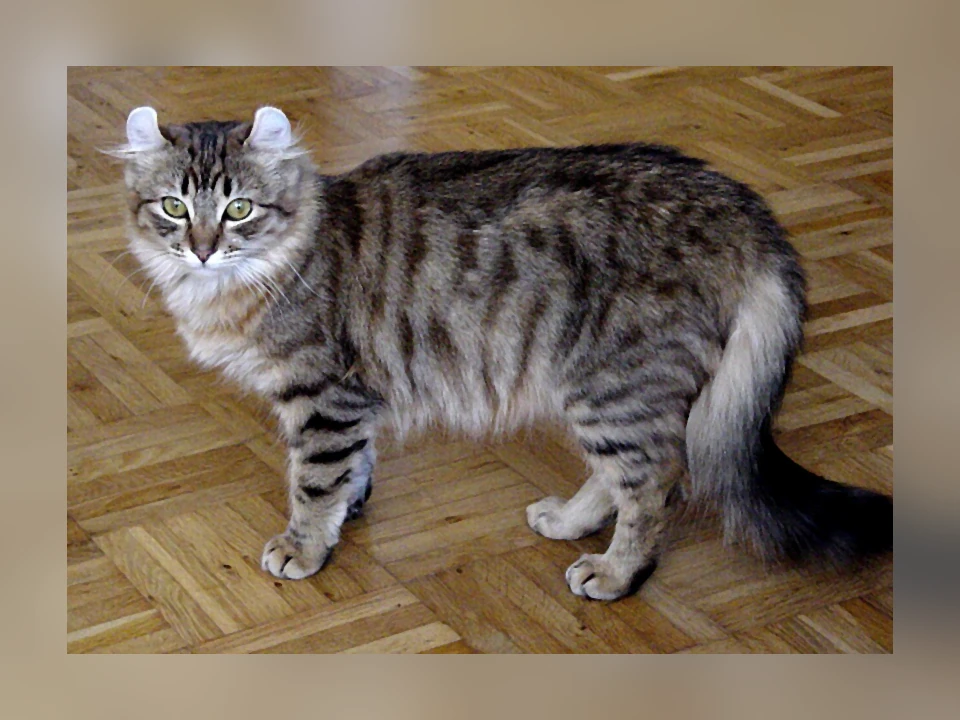
Meet the American Curl (the cat with whimsical backward-curling ears)
You notice the ears first. Instead of pointing up and forward, an American Curl’s ears sweep gracefully backward in a smooth arc, giving the cat a perpetually alert, slightly surprised, altogether charming expression. The breed traces to a single stray with unusual ears found in Lakewood, California, in 1981 — a sweet, long-haired black cat named Shulamith whose curled-ear kittens revealed the trait was heritable. From that one cat, a recognized breed was developed, and both TICA and the CFA accept the American Curl today.
What makes this breed easy to recommend is that the looks come without the heartbreak attached to some other “designer ear” cats. The American Curl is, by all accounts, a friendly, playful, deeply people-oriented companion — and, just as importantly, a generally healthy one. It’s a cat whose novelty and warmth travel together honestly, which is a rarer thing than it should be.
The ears
Here’s the honest, important part, and the good news leads it: the American Curl’s curl comes from a dominant gene that affects ear cartilage only — and, unlike the Scottish Fold’s mutation, it is NOT associated with painful skeletal or joint disease. This is the distinction that matters most. The Scottish Fold’s folded-ear gene causes osteochondrodysplasia, a body-wide cartilage disorder that brings on early, lifelong arthritis. The Curl’s gene does nothing of the sort. It shapes the ear and stops there; there is no evidence it harms the skeleton, the joints, or the cat’s comfort.
That doesn’t mean the ears need no thought. The cartilage that holds the curl is firm and somewhat delicate. The cardinal rule, echoed by breeders and breed clubs alike, is simple: handle the ears gently and never force, straighten, or roughly pose them. Bending a Curl’s ear the wrong way can hurt or even damage it, so this is a cat to admire with your eyes more than your fingers — and a reason to teach children to be gentle.
One delightful detail: Curl kittens are born with perfectly straight ears. The curl develops over the first days to weeks of life, with the ears tightening and relaxing — sometimes dramatically — before settling into their final shape by around four months. Because the trait is a single dominant gene, litters often include both curled- and straight-eared kittens, and the straight-eared ones are equally healthy, beloved cats.
Personality & temperament
If the ears get the attention, the temperament earns the loyalty. American Curls are often called the “Peter Pan” of cats because they never quite grow up emotionally — they stay playful, curious, and kittenish well into their senior years. Expect a cat that wants to be where you are: investigating your projects, riding on a shoulder, batting a toy across the floor, or simply supervising from the nearest warm lap.
These are genuinely people-oriented cats. They tend to be affectionate without being clingy, and friendly without being demanding — they form strong bonds with their families and often greet visitors with curiosity rather than suspicion. They’re typically adaptable and easygoing, taking new routines, rooms, and household members in stride. They’re also not especially loud; most Curls communicate with soft trills and chirps rather than insistent yowls, though every cat is an individual. If your cat is suddenly far chattier than usual, our guide on why your cat meows so much can help you tell ordinary conversation from a request for attention or a health signal worth a vet’s ear.
Living with an American Curl
Life with a Curl is interactive by nature. These cats thrive on engagement — daily play sessions, puzzle feeders, climbing space, and a window with a view all suit a curious, sociable temperament. They generally do well with children, other cats, and cat-friendly dogs, making them a flexible fit for busy family homes, and they tend to settle quickly after a move or a new arrival.
If you’re bringing home a kitten, set good habits early. Our new kitten checklist walks through the first-weeks essentials — vet visits, supplies, socialization, and gentle handling — and with a Curl that handling lesson includes the ears: get the cat comfortable with brief, calm touches so routine ear checks and occasional cleaning become a non-event. Because the curled shape can cup and trap a little extra wax and debris, a quick weekly look keeps things tidy; clean only the visible outer ear, gently, and never push anything into the canal.
Grooming & care
Coat care is refreshingly low-effort. The American Curl comes in short and semi-long varieties, both with a fine, silky coat and little undercoat, which means modest shedding and minimal matting. A weekly brush is plenty for the shorthair; the semi-longhair benefits from brushing a couple of times a week to keep its tail plume and ruff tangle-free. There’s no high-maintenance grooming ritual here — just light, regular upkeep.
Round out care with routine nail trims, those gentle weekly ear checks, and dental care, the last of which matters more than many owners realize. Like all cats, Curls are prone to gum disease and painful tooth resorption, and our cat dental care guide explains how home brushing and veterinary cleanings protect their mouths — and head off a common, preventable source of pain.
Health
The honest headline here is genuinely reassuring: the American Curl is considered a generally healthy, robust breed with good genetic diversity. Because it was developed from a wide, varied gene pool and outcrossed to non-pedigreed domestic cats, it hasn’t accumulated the cluster of inherited problems that narrow breeding can produce — and, to repeat the point that matters most, the curled-ear gene itself is not tied to any systemic or skeletal disease.
That doesn’t mean there’s nothing to watch. Curls share the everyday feline concerns that apply to nearly every cat. Dental disease is the most common, which is why home brushing and professional cleanings earn their place in the routine. Hypertrophic cardiomyopathy (HCM) — the most common feline heart disease — can occur in any breed and is often silent until advanced, so keep up with wellness exams and flag labored breathing or sudden lethargy promptly. Weight management matters too: a playful cat that slows down with age can quietly gain pounds, and our guide on whether your cat is overweight covers body-condition scoring and safe, vet-aligned ways to keep a Curl trim.
A responsible-sourcing note belongs here as well: reputable breeders avoid curl-to-curl extremes and follow registry guidance, breeding for sound, healthy cats rather than ever-tighter ears, and they outcross to maintain that valuable genetic diversity. Whether you adopt or buy, look for that thoughtful, welfare-first approach — and lean on standard preventive care from the Cornell Feline Health Center, AAFP, and your own veterinarian to keep a Curl thriving for its long, kittenish life.
Is an American Curl right for you?
The American Curl makes an unusually easy case for itself. It pairs a distinctive, conversation-starting look with a warm, playful, people-loving temperament and — crucially — a clean health story unburdened by the welfare controversy that shadows some other novelty-eared breeds. If you want a cat that stays kittenish, joins in family life, gets along with the household menagerie, and asks little more than gentle handling and a bit of daily play, this is a delightful, low-drama choice.
The few caveats are small and easy to meet: be gentle with those delicate ears, keep up with weekly ear and routine dental care, and source your cat from an adoption group or a responsible breeder who prioritizes health and diversity over extreme looks. Do that, and you’ll have a charming, friendly, relatively trouble-free companion — a genuinely good family cat that happens to wear one of the most endearing looks in the feline world.