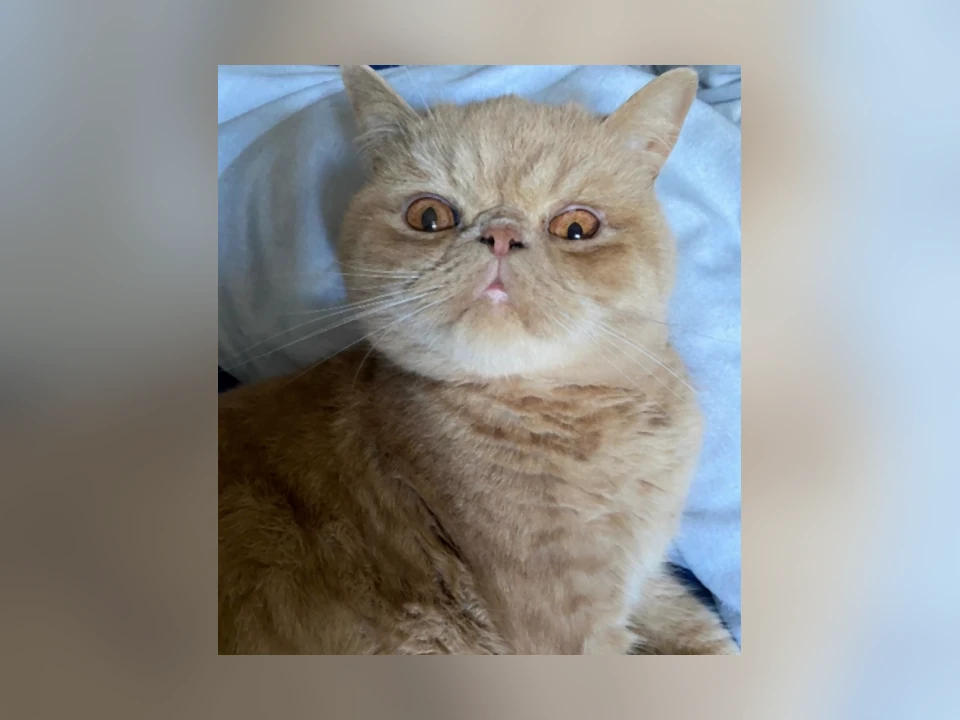
Meet the Exotic Shorthair (the “lazy man’s Persian” — a Persian in a short plush coat)
The Exotic Shorthair is what you get when you take everything people love about the Persian — the round face, big eyes, cobby body, and famously gentle disposition — and wrap it in a short, dense coat that doesn’t need daily untangling. Breeders in the United States developed it in the mid-20th century by crossing Persians with shorthaired cats and then breeding back toward Persian type. The result earned the affectionate nickname the “lazy man’s Persian,” and it’s an accurate one.
Both TICA and CFA recognize the Exotic Shorthair, and most descriptions treat it as a shorthaired Persian variety rather than a wholly separate animal. That matters: when you bring one home, you’re getting Persian looks, Persian temperament, and — honestly — Persian health considerations, with a coat that’s dramatically easier to maintain.
Personality & temperament
If you want a cat that drapes itself across your lap and stays there, this is the breed. Exotic Shorthairs are sweet, quiet, calm, and deeply affectionate. They tend to bond closely with their people and follow them softly from room to room, more like a gentle shadow than a demanding companion.
They are not busy cats. Their energy runs low, they rarely climb the curtains, and they’re among the least vocal breeds — when they do speak, it’s usually a soft, polite chirp rather than the constant commentary of a Siamese. That easygoing nature makes them excellent with children who handle them kindly, with seniors, and with other calm pets. They thrive in a peaceful household and aren’t well suited to a high-drama, high-energy home.
Living with an Exotic Shorthair
This is a low-energy companion built for indoor life. A few short play sessions and a couple of comfortable perches are usually enough; they’re happy in apartments and don’t need much room to roam. Keep their world calm and predictable, and they’ll settle in beautifully.
The one daily habit you’ll need to adopt is face care. Like the Persian, the Exotic’s flat face and short tear ducts cause tears to spill onto the fur, leaving reddish-brown stains below the eyes. A quick, gentle wipe with a soft, damp cloth each day keeps the area clean and helps prevent skin irritation in the facial folds. It takes a minute, but it’s not optional.
Grooming & care
Here’s the breed’s headline advantage: the short, plush coat needs only weekly brushing. Where a Persian demands daily combing to prevent painful mats, the Exotic Shorthair asks for a once-a-week pass with a brush to remove loose hair and keep the coat dense and even. Shedding is moderate, and the occasional bath helps during heavy sheds — see our guide on whether cats need baths and how to keep the eye area and skin folds clean without overdoing it.
Two other care tasks deserve attention. First, the eyes and facial folds: wipe them daily, as above, and watch for excessive discharge or redness that warrants a vet visit. Second, dental care. The compressed jaw of a flat-faced cat crowds and misaligns the teeth, which makes plaque and periodontal disease more likely. Regular home brushing and professional cleanings are genuinely important here — start early with our cat dental care routine so handling the mouth becomes normal and stress-free.
Health
This is where candor matters most. The Exotic Shorthair is a lovely cat, but its flat (brachycephalic) face — the very feature that makes it so appealing — is also the source of real, inherited health trade-offs. You should understand them before you commit.
Brachycephalic anatomy can cause noisy or labored breathing, snoring, reduced exercise tolerance, and poor heat regulation; the Merck Veterinary Manual catalogs these airway and structural problems in flat-faced animals. The same conformation drives chronic tear-duct overflow, an increased risk of eye conditions like entropion, and the dental crowding described above. These aren’t guaranteed in every cat, but they are common enough to plan for.
On the inherited-disease side, two stand out. Polycystic kidney disease (PKD) runs in Persian lines and can lead to kidney failure over time; one of the earliest warning signs is increased thirst and urination, so if your cat starts emptying the water bowl more often, read why your cat may be drinking so much water and call your vet. Hypertrophic cardiomyopathy (HCM), the most common feline heart disease, is also seen in the breed. The Cornell Feline Health Center is a reliable, plain-language source on both.
The single best thing you can do is choose your cat carefully. Favor breeders who deliberately select for a more moderate, less extreme face — open nostrils, a visible nose, room to breathe — and who DNA-screen their breeding cats for PKD and screen for HCM. Ask to see results; a responsible breeder will share them. If you adopt, simply stay ahead of these risks with regular veterinary checkups. Remember that individuals vary: plenty of Exotic Shorthairs live full, comfortable 12-to-15-year lives with good care.
Is an Exotic Shorthair right for you?
If you’ve ever wanted a Persian — that calm, plush, devoted lap cat — but balked at the daily grooming, the Exotic Shorthair is the answer to your wish. You get the same mellow, affectionate personality and the same teddy-bear looks with a fraction of the coat care.
Just go in clear-eyed. You’re also taking on the Persian’s flat-face health cautions: the breathing, tear-duct, dental, and kidney concerns are part of the package. For a patient owner who’s willing to do a daily face wipe, keep up with dental and vet care, and start with a thoughtfully bred or well-supported cat, the Exotic Shorthair is one of the gentlest, most rewarding companions in the cat world.