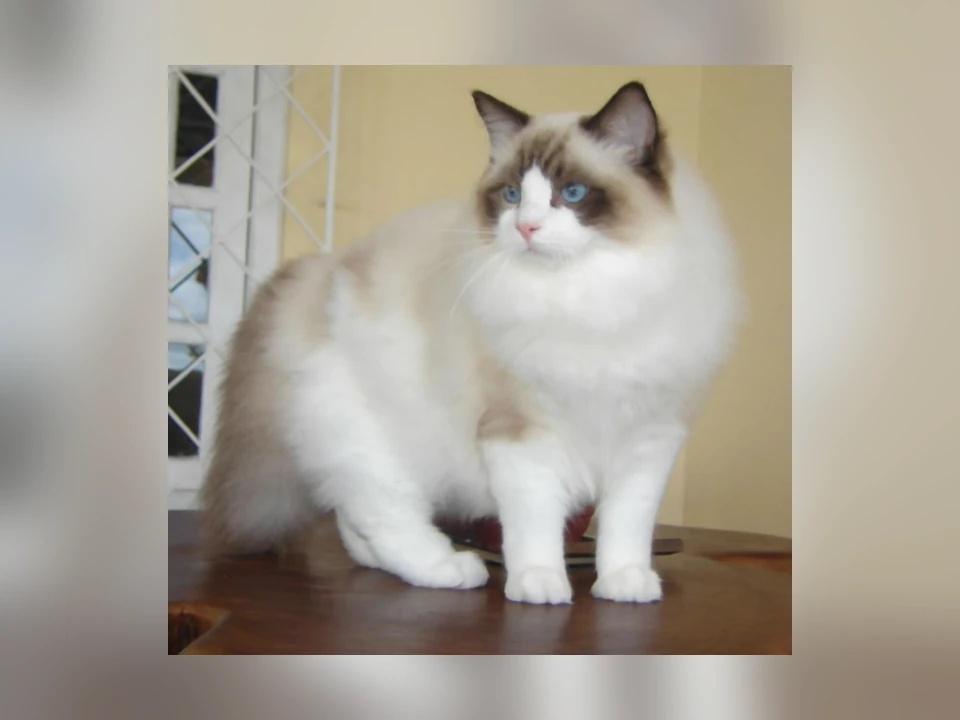
Meet the Ragdoll
If you’ve ever heard about a cat that flops into your arms like a rag doll when you lift it, you’ve met the breed’s calling card. The Ragdoll was developed in Riverside, California, in the 1960s by breeder Ann Baker, and the name comes from exactly that tendency: many of these cats relax and go limp when picked up or held. The Cat Fanciers’ Association and The International Cat Association recognize the Ragdoll as a large, slow-maturing, semi-longhaired breed with striking color-point coats and blue eyes.
Ragdolls are among the biggest domestic cats. Males commonly reach 15–20 pounds, females somewhat less, and they don’t finish filling out until around three to four years of age. Behind the size and the silky coat is a famously gentle, easygoing personality — the trait most owners fall for. This is a cat bred, and beloved, for being calm, affectionate, and almost startlingly relaxed about being handled.
Personality and temperament
The Ragdoll’s defining quality is its temperament. These are exceptionally calm, gentle cats that tend to be people-oriented rather than aloof. Many earn the nickname “puppy cat” because they’ll follow you from room to room, greet you at the door, and settle into your lap the moment you sit down. They’re typically quiet, with a soft voice they use sparingly rather than the demanding chatter of more vocal breeds.
That mellow nature makes Ragdolls some of the most tolerant cats around. Most accept handling, cuddling, and even gentle games of dress-up from children with remarkable patience. They tend to play at a leisurely pace and aren’t the climbers and counter-surfers some breeds are. None of this means a Ragdoll is a decoration, though — they still need interactive play, companionship, and attention. Their love of people is a double edge: a Ragdoll left alone too much can become lonely.
Living with a Ragdoll
A Ragdoll fits beautifully into a busy household. Their laid-back temperament makes them excellent with respectful children and usually friendly toward other cats and even dogs. They adapt well to apartments and quiet homes alike, asking for affection more than acreage.
The most important rule of Ragdoll ownership is that they should live indoors. International Cat Care and most welfare experts emphasize this for the breed in particular: a Ragdoll’s trusting, docile nature means it lacks the street smarts that help other cats avoid traffic, predators, and theft. The very temperament that makes them wonderful companions makes them vulnerable outside. A secure catio or harness walks can give them safe outdoor enrichment without the risk.
Two practical care points come with that silky semi-long coat. It needs routine brushing to stay mat-free — see our guide to hairballs in cats for how grooming reduces swallowed hair. And while cats rarely need full baths, our do cats need baths guide covers the occasional times a Ragdoll might.
Grooming and care
The Ragdoll’s coat is plush and silky, with less dense undercoat than a Persian, so it mats less readily than that breed. “Less” is not “never,” though. Without regular brushing — a few times a week, more during seasonal shedding — the coat can tangle behind the ears, under the legs, and along the britches. A weekly-to-several-times-weekly comb-through keeps mats at bay and cuts down on shed hair around the house.
Because these are big cats with a lot of fur to groom themselves, hairballs are a common nuisance. Regular brushing is the single most effective way to reduce them by removing loose hair before your cat swallows it. Keep up the basics every cat needs, too: nail trims, dental care, and a clean litter box. Their size also means they shed more than a small shorthair, so a slicker brush and a steady routine pay off.
Health
Ragdolls are generally healthy, long-lived cats, but the breed carries a few inherited risks that make responsible breeding genuinely important. The most significant is hypertrophic cardiomyopathy (HCM), the most common heart disease in cats and a documented genetic risk in Ragdolls. Reputable breeders DNA-test for the known Ragdoll HCM mutation and echo-screen their breeding cats — ask to see that paperwork before you buy.
Polycystic kidney disease (PKD) also appears in some lines, so screened parents matter here too. Like all cats, Ragdolls can develop feline lower urinary tract disease and bladder stones; encourage water intake, feed appropriately, and watch litter-box habits closely, because straining or urinating outside the box can signal a problem — our cat urinary problems (FLUTD) guide explains the warning signs. Finally, their large frame and relaxed activity level make weight gain easy to overlook, and obesity worsens nearly every other health risk. As Cornell Feline Health Center and the Merck Veterinary Manual note, knowing a breed’s hereditary risks lets your veterinarian screen proactively rather than waiting for symptoms.
Is a Ragdoll right for you?
For the right home, a Ragdoll is hard to beat — a wonderfully gentle, affectionate cat that wants to be near you, tolerates children and other pets, and brings a calm, easygoing presence to the household. If you want a companion that acts more like a devoted shadow than an independent loner, this may be your breed.
Go in clear-eyed, though. That silky coat needs regular brushing, and you’ll be committing to strict indoor living to keep a trusting cat safe. Their devotion means they don’t love being left alone for long stretches, and they’re not the self-sufficient cat for someone who wants minimal involvement. Most importantly, seek out a breeder who heart-screens for HCM and tests for PKD, or adopt from a rescue that’s honest about a cat’s health history. Do that, and you’ll likely share well over a decade with one of the most lovable cats there is. Remember that every cat is an individual — temperament and health vary even within a litter — so meet the cat, not just the breed.