Origin
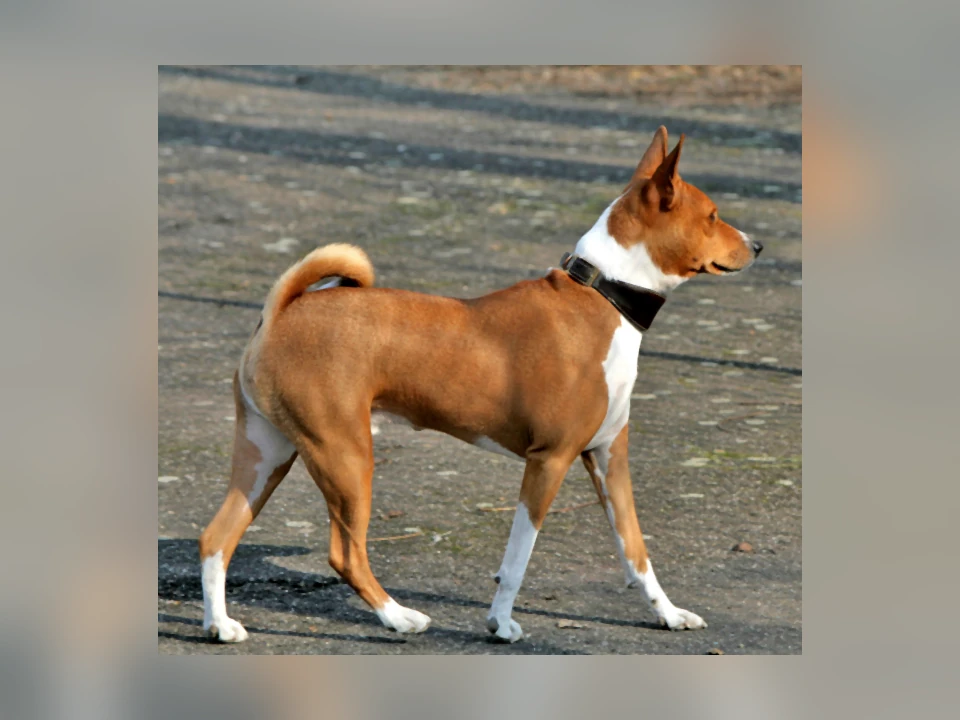
The Basenji is one of the oldest dog breeds, originating in Central Africa where it was used by Congo Basin peoples to hunt, flush game into nets, and control vermin. That ancient working role shaped a remarkably primitive, self-reliant dog. Two famous quirks come straight from its heritage: it doesn’t bark in the usual way — instead it yodels — and it grooms itself fastidiously like a cat, leaving it almost odorless.
Temperament & Daily Life
Living with a Basenji is often compared to living with a cat. They are intelligent, curious, and deeply independent, affectionate with their family but typically aloof toward strangers. They are also mischievous and can be destructive when bored — they climb, they escape, and they investigate anything left within reach. They form strong bonds but rarely show the eager-to-please devotion of a retriever; a Basenji decides for itself whether your request is worth honoring. Their hunting heritage means a high, hardwired prey drive.
Exercise & Training
Basenjis are energetic and athletic, and they need real daily exercise plus mental stimulation to stay out of trouble. A securely fenced yard is essential — they are famous escape artists and climbers — and off-leash reliability is poor because prey drive overrides recall. Training requires patience, humor, and reward-based methods; they bore quickly with repetition and respond poorly to heavy-handed correction. Channel that clever mind into games, puzzles, and short, varied sessions rather than drilling.
Grooming
Grooming is about as easy as it gets. The short, fine coat needs only occasional brushing, sheds little, and the breed’s catlike self-cleaning means minimal doggy odor and rare baths. Routine nail, ear, and dental care round out the basics.
Health
The Basenji carries several breed-specific genetic conditions, which is why DNA-tested lines matter. Fanconi syndrome, an inherited kidney disorder, is the best-known — owners are advised to strip-test urine for glucose starting around age 3, and early management on the established protocol allows many affected dogs to live near-normal lifespans. Progressive retinal atrophy (PRA) can cause blindness, and a DNA test exists for one form. The breed also has higher rates of hypothyroidism, the serious bowel disease IPSID (Basenji enteropathy), and inherited hemolytic anemia from pyruvate kinase deficiency, for which a DNA test is available. A responsible breeder screens for these.
Who This Breed Suits
The Basenji is for the experienced, patient owner who genuinely enjoys an independent, catlike, clever dog and won’t be frustrated by stubbornness or a strong prey drive. Give one secure fencing, daily exercise, mental challenges, and a sense of humor, and you’ll have a fascinating, almost odorless, endlessly entertaining companion — on its own terms.