Origin
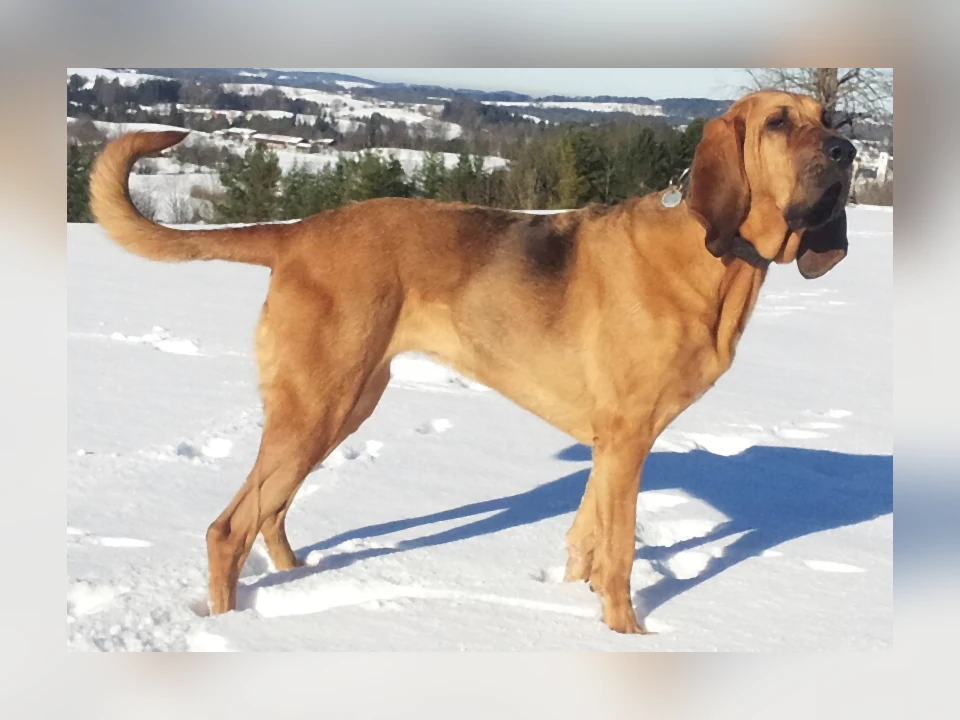
The Bloodhound is an ancient scent hound, refined in medieval Europe and later perfected as a trailing dog whose nose became legendary, capable of following a scent trail that is hours or even days old. Its work shaped the dog: the long ears that stir scent toward the nose, the loose wrinkled skin thought to help trap odor, and a relentless, methodical drive to follow a trail to its end. A Bloodhound’s tracking evidence has even been accepted in court. Understanding the breed means respecting that it was built to put its nose to the ground and keep going.
Personality and daily life
Few breeds are as gentle and good-natured. Bloodhounds are affectionate, easygoing and notably tolerant, traits that make them excellent with children and generally sociable with other dogs. They are also stubborn in the particular way of a dog bred to work independently of its handler. Expect baying and a range of expressive vocalizations, plus a powerful, single-minded focus the moment an interesting smell appears. They thrive on companionship and do not do well left alone for long stretches.
Exercise and training
Bloodhounds need daily exercise, but quality matters more than intensity. Long, unhurried walks that let them follow scents are deeply satisfying and tire them mentally as much as physically. Because they are heavy, fast-growing dogs, protect puppy joints from high-impact exercise. Training takes patience and humor: they learn, but they decide what’s worth their attention. Critically, once a Bloodhound is on a scent, recall becomes unreliable, so secure fencing and a leash are basic safety, not optional.
Grooming
The short coat is low-maintenance, but the wrinkles and ears are not. The long, low-hanging ears trap moisture and predispose the breed to ear infections, so routine cleaning and drying are part of life. The deep facial folds need regular wiping to prevent skin-fold dermatitis. And there is the drool, considerable and constant, which simply comes with the loose lips.
Health
Prospective owners should go in clear-eyed. Bloat (gastric dilatation-volvulus) is one of the leading causes of death in the breed; this deep-chested giant is highly susceptible, so learning the warning signs and discussing a preventive gastropexy with your vet is genuinely worthwhile. Hip and elbow dysplasia are common and best minimized by buying from screened parents and keeping the dog lean. The ears, eyes (ectropion, entropion, cherry eye) and skin folds all need ongoing attention. The breed’s average lifespan, 10 to 12 years, is shorter than many dogs its owners wish for, which makes preventive care all the more meaningful.
Who they suit
The Bloodhound suits patient, affectionate owners with a sense of humor, secure fencing and tolerance for drool and noise. They are a superb family companion for the right household, but a poor fit for anyone wanting a tidy, quiet, instantly obedient dog or reliable off-leash freedom. Choose this breed for who it is, an irrepressible nose with a heart of gold, not for who you wish it would be.