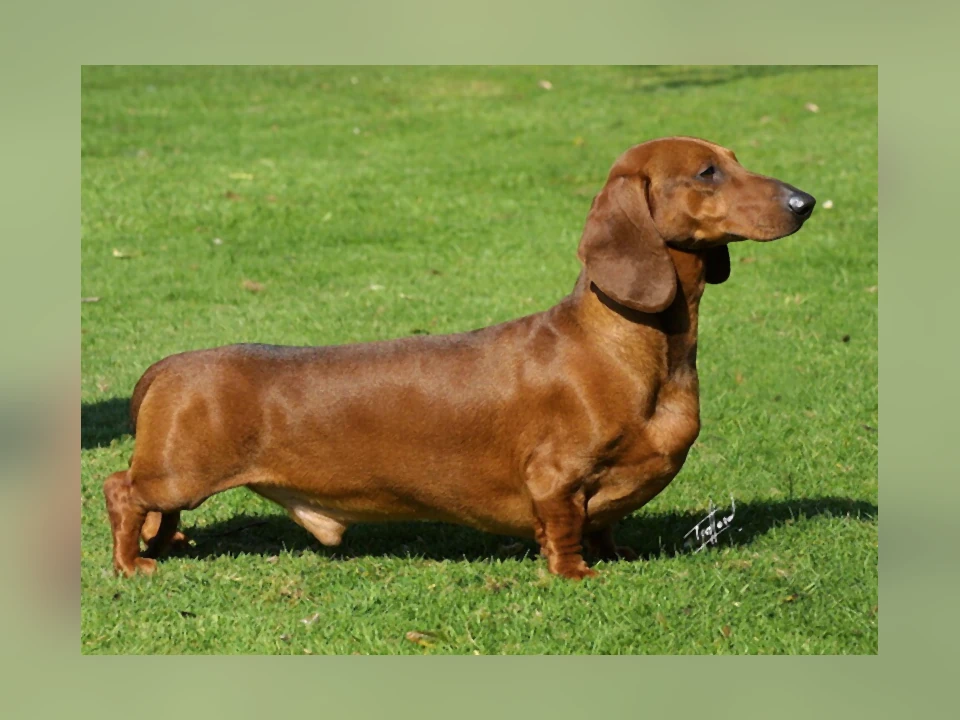
Meet the Dachshund
The Dachshund — affectionately the “wiener dog” or “sausage dog” — is one of the most recognizable breeds on earth, and one of the most misunderstood. That long body and those short legs weren’t bred for cuteness; they were engineered for a job. The name is German for “badger dog,” and Dachshunds were developed in Germany to follow badgers, foxes, and other burrowing animals right down into their dens. Everything about their build serves that purpose: the elongated spine and stubby legs to fit a tunnel, the deep chest for stamina underground, the loud bark so a hunter could locate them below the surface, and the bold, almost reckless courage to face a cornered animal alone.
That heritage is the key to understanding the breed. A Dachshund is a hound in a small package — tenacious, curious, independent, and brave well past the point of common sense. The American Kennel Club consistently ranks them among the most popular breeds in the United States, and their fans adore the comedy and confidence that come bundled with that working-dog grit. They are devoted to their people, endlessly entertaining, and far tougher in spirit than their size suggests. But the same long back that makes them iconic is also their greatest vulnerability, which is why responsible ownership starts and ends with protecting it.
Personality and temperament
Pound for pound, few dogs have a bigger personality. Dachshunds are bold, lively, and opinionated, with a clownish streak that endears them to almost everyone. They bond intensely with their families and are often described as devoted to the point of velcro — they want to be where you are, frequently burrowed under a blanket on your lap. With strangers they can be reserved or watchful, and that combination of alertness and a surprisingly deep bark makes them effective little watchdogs.
The flip side of that independence is stubbornness. Bred to make decisions alone underground, Dachshunds are smart but not especially eager to please, and they’ll happily ignore a command they find pointless. They can be barkers and enthusiastic diggers — both are instincts, not flaws to be punished. Early socialization helps a great deal, and with gentle, consistent handling they become confident, well-mannered companions. Individuals vary, of course; temperament reflects both breeding and how a dog is raised, which is one more reason to choose a thoughtful breeder or a reputable rescue.
The varieties
Dachshunds come in more flavors than most people realize. There are two sizes: the standard, typically 16 to 32 pounds, and the miniature, weighing 11 pounds or under as an adult. Both share the same proportions and temperament, but the miniature’s smaller frame appeals to apartment dwellers and those wanting a more portable companion.
On top of size, there are three coat types, each with its own care needs and a slightly different reputation. The smooth coat is short, sleek, and lowest-maintenance. The longhaired coat is silky and flowing — often described as a touch mellower in temperament, and requiring regular brushing to prevent mats. The wirehaired coat is coarse and bristly with a beard and bushy eyebrows; it tends to be the most terrier-like and spirited, and it needs occasional hand-stripping or trimming. None of these differences change the core truth of the breed: whatever the size or coat, the long back needs the same lifelong protection.
Living with a Dachshund
If you take one thing from this guide, make it this: protect the back. A Dachshund’s elongated spine is genuinely fragile, and routine activities that any other dog shrugs off — leaping off the couch, bombing down a flight of stairs, twisting while being scooped up — can injure a disc. Discourage jumping on and off furniture, provide ramps or pet steps for beds and sofas, and when you lift your dog, support both the chest and the hindquarters so the spine stays level. Never lift a Dachshund by the front end alone and let the back end dangle.
Weight is the other half of back care. Every extra pound presses on that long spine and multiplies the odds of injury, so keeping a Dachshund lean isn’t about looks — it’s preventive medicine. Learn to feel for the ribs and check body condition regularly; our guide on whether your dog is overweight walks through how. If the scale has crept up, ease the weight off carefully with the steps in our guide on how to help a dog lose weight, and talk to your vet about a low-impact plan.
Exercise should be moderate and sensible: a couple of daily walks and some sniffing or play are plenty, with no high-impact jumping or rough stair work. Mentally, they thrive on scent games and puzzle feeders that echo their hunting roots. Be ready for training to test your patience, too — that independent streak makes recall unreliable off-leash and housetraining notoriously slow, so a consistent potty schedule and crate training pay off.
Grooming and care
Grooming depends almost entirely on coat type. Smooth Dachshunds are wash-and-go, needing little more than an occasional wipe-down and a weekly brush. Longhaired dogs need brushing several times a week to keep the feathering free of tangles, especially behind the ears and on the legs. Wirehaired coats want regular brushing plus periodic hand-stripping or clipping to maintain texture. All three shed moderately, so expect some hair regardless. Bathe only as needed, trim nails every few weeks, and clean those drop ears, checking for odor or redness.
Dental care deserves special attention. Like many small breeds, Dachshunds have a lot of teeth crowded into a small mouth, which sets them up for plaque, tartar, and periodontal disease. Daily toothbrushing at home plus professional cleanings as your veterinarian recommends are the foundation of keeping their mouths healthy — our guide to dog dental care covers a routine that actually sticks.
Health
Dachshunds are generally long-lived, often reaching their mid-teens, but the breed carries clear, predictable risks — and one that dominates all the rest.
That risk is intervertebral disc disease (IVDD), the spinal condition tied directly to their long-backed build. Research initiatives such as Dachshund-IVDD and the DachsLife studies have helped quantify how common it is and which factors influence it, and the prevention message is consistent: minimize jumping, use ramps, support the body when lifting, and keep the dog at a healthy weight. Obesity isn’t a separate side issue here — it directly multiplies IVDD risk and strains the knees and hips, which is why weight control is treated as medical care for this breed. Beyond the spine, Dachshunds can develop patellar luxation (slipping kneecaps), inherited eye conditions such as progressive retinal atrophy, and dental disease from crowded teeth.
The throughline is the same as for any breed with known risks: choose health-tested parents. A responsible breeder follows Dachshund Club of America guidance, screens for inherited problems, and can talk frankly about IVDD in their lines. Adopting is a wonderful option too — a good rescue or your veterinarian can help you assess an individual dog and set up the back-protective habits that matter most.
Is a Dachshund right for you?
A Dachshund can be a tremendous companion: charming, comedic, fiercely loyal, and frequently around for 12 to 16 years. They fit apartments, adapt to many households, and pack more personality into a small body than seems physically possible. For the right owner, the bond is deep and the daily entertainment is constant.
But be honest about the trade-offs. The back-injury risk is real and demands lifelong vigilance — no jumping, ramps everywhere, careful lifting, and a strict commitment to keeping your dog lean. They’re famously stubborn, slow to housetrain, and prone to barking and digging. Around very young, rough children, their fragile spine is a genuine concern. Choose a Dachshund because you love the bold little hound and you’re ready to safeguard that long back for life — not in spite of it. Do that, and you’ll have one of the most devoted, delightful companions a home can hold.