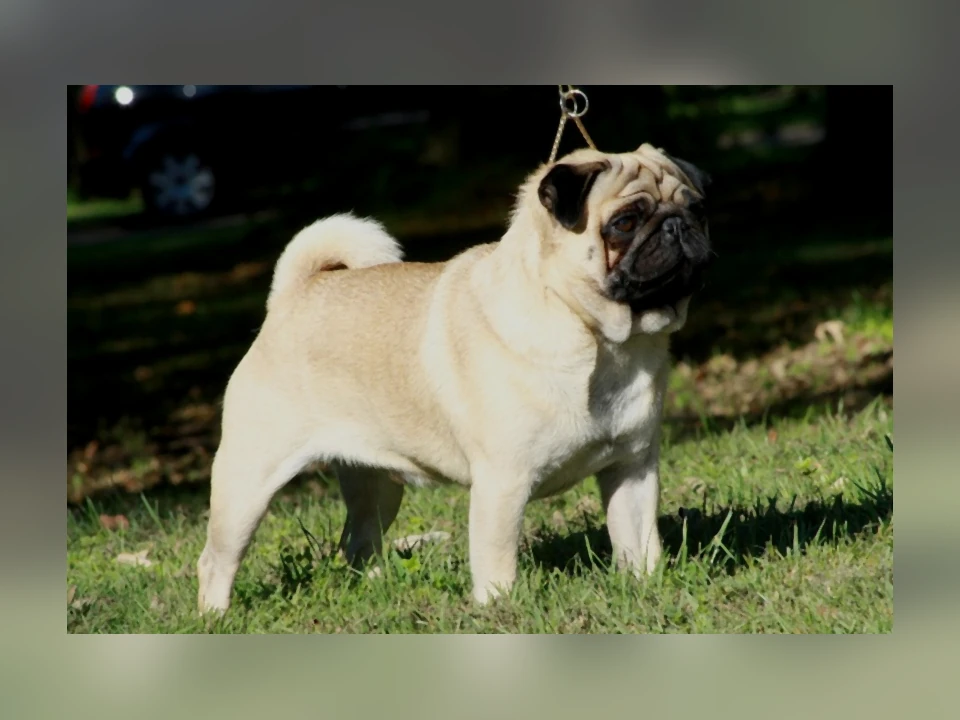
Meet the Pug (charming, comedic flat-faced companion — “multum in parvo”)
Few small dogs carry as much personality per pound as the Pug. Compact, round, and unmistakably expressive, the Pug has been charming people for centuries—its wrinkled brow and big, soulful eyes give it a face that seems built for comedy. The breed’s traditional motto, multum in parvo (“a lot in a little”), captures it perfectly: a sturdy, dignified clown packed into a small, sociable frame. Originating in China and prized by emperors before traveling to Europe, the Pug has long been a companion dog above all else.
But this is a breed where affection and honesty have to travel together. The same flat face that makes a Pug so endearing is also the source of its most significant health problems—and the Pug is among the most affected of all brachycephalic (flat-faced) breeds. Research from the Royal Veterinary College (RVC) has made clear that flat-faced dogs carry meaningfully higher risks of breathing difficulty, heat intolerance, and eye disease. None of this means you shouldn’t fall for a Pug—plenty of people do, happily. It means you should choose carefully, plan financially, and adjust your expectations. Individuals vary, and responsible breeding and thoughtful adoption genuinely change outcomes.
Personality and temperament (affectionate, sociable, even-tempered, loves people)
If temperament alone decided things, the Pug would be hard to beat. They are deeply affectionate, sociable, and famously even-tempered—happy to greet strangers, mingle with other dogs, and fold themselves into family life without drama. The AKC describes the Pug as even-tempered and charming, and that’s exactly how owners experience them: a small dog with a steady, sunny disposition and a real sense of humor.
Pugs live for their people. They bond closely and want to be wherever you are—on the couch, underfoot, or curled in a lap. That makes them wonderful companions for families, seniors, apartment dwellers, and first-time owners, but it also means they don’t love being left alone for long stretches. They’re intelligent and eager to please, though they can be a touch stubborn; short, upbeat, reward-based training sessions work far better than repetition. Above all, the Pug is a companion breed through and through—its job is to be close to you, and it does that job magnificently.
Living with a Pug
For the right home, a Pug fits beautifully. They thrive in apartments, suit low-exercise lifestyles, and don’t demand a yard. But day-to-day life with this breed comes with non-negotiable safety rules built around its flat-faced anatomy.
Heat is the big one. A Pug’s exercise needs are modest, but the real issue is that they genuinely cannot handle heat or hard exertion. Because their airways can’t move air efficiently, they overheat with frightening speed, and heatstroke is a leading, preventable emergency in the breed. Walk them in the cool morning or evening, never leave them in a warm car even briefly, provide shade and water, and learn the warning signs in our guide to dog heatstroke signs and what to do.
Weight management matters more here than for most breeds. Pugs are notorious food lovers and gain weight easily, and every extra pound makes a compromised airway work harder and adds strain to small joints. Keeping your Pug lean is one of the most protective things you can do—our advice on helping a dog lose weight is a good starting point. A trim Pug breathes more easily, moves more comfortably, and tends to live a fuller life.
Grooming and care (sheds more than expected; face folds and eyes need cleaning)
People often assume a short-coated dog is low-shedding. The Pug cheerfully proves otherwise. That dense double coat sheds more than most owners expect, particularly in spring and fall, so plan on regular brushing and a tolerance for fur on your clothes and furniture. A weekly (or more frequent) brush helps manage the volume and keeps the coat healthy.
The bigger care commitment is the face. Those signature wrinkles—especially the deep nose fold—trap moisture, debris, bacteria, and yeast, and left alone they develop skin-fold dermatitis, which the Merck Veterinary Manual describes as inflammation in folds where air can’t circulate. Wipe and gently dry the folds regularly, and watch for redness, odor, or your Pug rubbing its face. The eyes need the same routine attention: their prominence makes them prone to irritation and dryness, so keep them clean and watch closely for squinting, discharge, or cloudiness. Many Pugs also live with environmental or food allergies that drive itching and repeat skin flare-ups; if that sounds familiar, our overview of dog allergies explains how to work with your vet on a plan.
Health (the honest center of this breed)
There’s no responsible way to discuss Pugs without putting health front and center. This is a breed shaped by extreme conformation, and that shape has consequences.
Breathing (BOAS). Many Pugs have Brachycephalic Obstructive Airway Syndrome—pinched nostrils, an overlong soft palate, and a narrow windpipe that make breathing genuinely hard. Snorting and snoring may sound cute, but loud, labored, or noisy breathing is a sign of struggle, not character. The Merck Veterinary Manual treats BOAS as a recognized, sometimes life-limiting condition, and severe cases benefit from corrective airway surgery.
Heat intolerance. Because they can’t move air efficiently, Pugs overheat dangerously fast; RVC research consistently flags brachycephalic breeds as at elevated risk of heat-related illness.
Eyes. Large, prominent, shallow-set eyes are vulnerable to corneal ulcers and even proptosis—where trauma displaces the eye from its socket, a true emergency. Any eye change deserves urgent veterinary attention.
Skin and allergies. Fold dermatitis, allergies, and recurrent skin infections are common lifelong management issues.
Obesity. Pugs gain weight easily, and excess weight worsens breathing and joint strain—lean is healthier.
Neurological and spinal conditions. Pug Dog Encephalitis, a serious and often fatal inflammation of the brain seen disproportionately in this breed, and hemivertebrae (malformed spinal bones that can press on the spinal cord) are both documented concerns.
The single most important thing a buyer can do is choose a breeder who breathe-tests (BOAS-screens) their dogs and deliberately breeds toward a more moderate, less-flattened face with more open nostrils—not the most extreme, ultra-flat look. Adoption through breed-specific rescue is another wonderful route. Pet insurance is worth pricing out before you commit.
Is a Pug right for you?
A Pug can be one of the most loving, funny, devoted companions you’ll ever share a couch with—ideal for apartments, gentle homes, and people who simply want a dog that wants them. That’s the real, warm truth, and it’s why the breed has been treasured for centuries.
The equally real truth is this: you should go in eyes-open about breathing, eye, and heat issues, and accept the likelihood of meaningful vet costs over a Pug’s life. If you live somewhere hot, dream of a running or hiking partner, or can’t absorb the financial risk of airway, eye, or skin care, another breed will serve you better. But if you can offer a cool, calm, attentive home—keep your Pug lean, protect it from heat, and do your homework on the breeder—you’ll be rewarded with a comedic, affectionate devotion that few breeds can match.