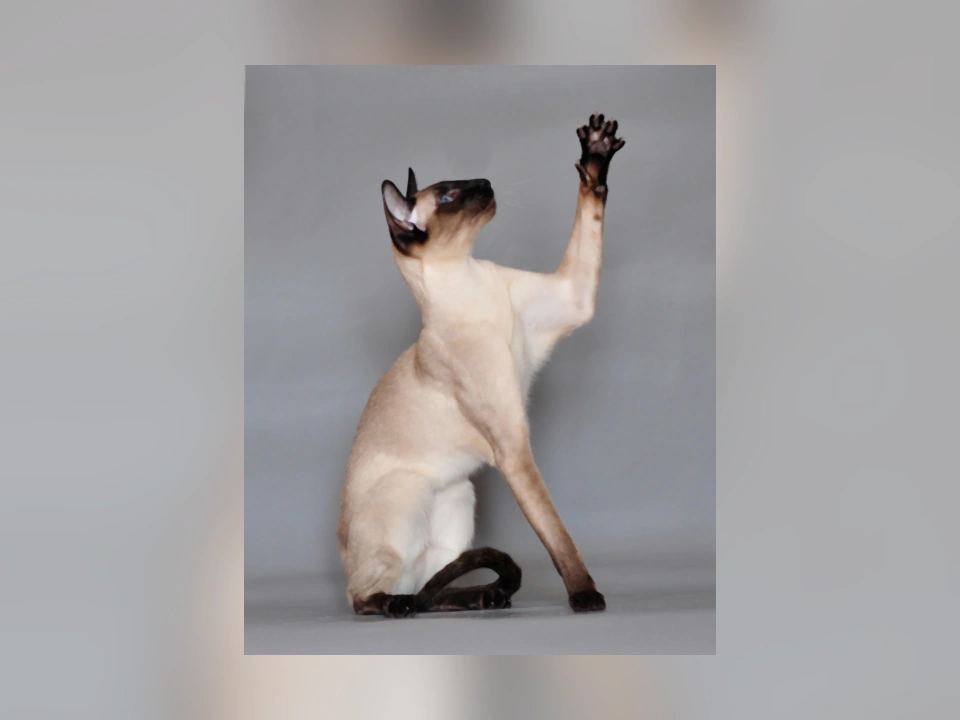
Meet the Siamese
Few cats are as instantly recognizable as the Siamese. With its sleek body, striking blue almond-shaped eyes, and signature color-point coat — a pale body that darkens to deeper “points” on the face, ears, paws, and tail — the breed has been a fixture of cat fancy for well over a century. The Cat Fanciers’ Association (CFA) recognizes the Siamese as one of the oldest and most influential cat breeds, with roots tracing back to Thailand (historically Siam), where the cats were prized and appeared in centuries-old manuscripts.
The color points are not just decoration. They’re the result of a temperature-sensitive form of partial albinism: pigment develops more on the cooler parts of the body, which is why the extremities are darkest. Kittens are born nearly white and develop their points as they grow.
Personality and temperament
If you want a cat that fades into the background, the Siamese is the wrong choice. This is among the most social, intelligent, and outright demanding breeds you can live with. Siamese form intense attachments to their people — often described as “velcro cats” — and they want to be part of whatever you’re doing, whether that’s working, cooking, or sleeping.
And they will tell you about it. The Siamese voice is legendary: loud, persistent, and surprisingly expressive, with a distinctive low-pitched call that many owners describe as a genuine conversation. They “talk” to greet you, to ask for food, to protest a closed door, and sometimes simply for the pleasure of being heard.
That intelligence cuts both ways. Siamese learn quickly, can be taught tricks and to walk on a harness, and will figure out how to open cabinets and demand attention if under-stimulated. Bored, lonely Siamese can become anxious or destructive, so mental engagement is not optional.
Living with a Siamese
The single most important thing to understand before bringing one home is that a Siamese needs company. They do not do well alone for long stretches, and a household where everyone is gone all day is genuinely a poor fit. Many owners adopt them in pairs or alongside another sociable pet so they always have a companion.
The vocal reality deserves an honest warning. The talking that charms one person can exhaust another, especially at night or in an apartment with thin walls. It’s worth spending time around the breed before committing. That said, a sudden change in how much or how your cat vocalizes is different from baseline chattiness — it can signal pain, stress, or illness, and our guide on why your cat may be meowing so much can help you tell normal Siamese conversation from a warning sign.
Beyond the voice, expect an active, playful, athletic cat. Climbing trees, puzzle feeders, interactive wand play, and rotating toys all help burn energy and keep that sharp mind occupied.
Grooming and care
Here, at least, the Siamese is easy. The short, fine, close-lying coat sheds modestly and needs little more than an occasional weekly brushing to remove loose hair and keep it glossy. There’s no undercoat to mat and no elaborate grooming routine.
The real care priority is the mouth. Like many purebred cats, Siamese are prone to dental and periodontal disease, which is one of the most common — and most under-treated — health problems in cats overall. Establishing a routine of toothbrushing at home plus professional cleanings as your veterinarian advises pays off over a lifetime. Our cat dental care guide walks through how to start brushing and what warning signs to watch for.
Health
The Siamese is generally a long-lived, robust breed, but it carries a handful of breed-linked health considerations that responsible owners should know about. According to resources like the Cornell Feline Health Center and International Cat Care, areas to watch include:
- Dental and periodontal disease, as noted above, which is common and benefits enormously from preventive care.
- Respiratory issues — the breed can be somewhat more prone to upper respiratory infections and feline asthma; persistent coughing or wheezing should be evaluated.
- Progressive retinal atrophy (PRA), an inherited, vision-reducing eye disease that good breeders screen against.
- Amyloidosis, a breed-associated condition involving abnormal protein deposits that can affect the liver and other organs.
- Certain cancers, which some lines may be predisposed to; regular veterinary checkups support early detection.
Because Siamese are routine-driven and often food-motivated, a cat that suddenly stops eating is a meaningful red flag. Cats are physiologically vulnerable to liver complications after even a short period without food, so don’t “wait and see” — our guide on what to do when your cat isn’t eating explains when it becomes an emergency. Choosing a health-screening breeder who tests for inherited conditions, and keeping up with routine veterinary care, are the two best things you can do for long-term health.
Is a Siamese right for you?
A Siamese is a brilliant, affectionate, deeply engaged companion — but only for the right home. If you’re home often, enjoy a cat that talks back and shadows your every move, and want a genuinely interactive relationship, few breeds give back more. If you’re hoping for a quiet, independent cat who entertains itself while you’re away all day, this is honestly the wrong breed, and both you and the cat will be happier with a different match.