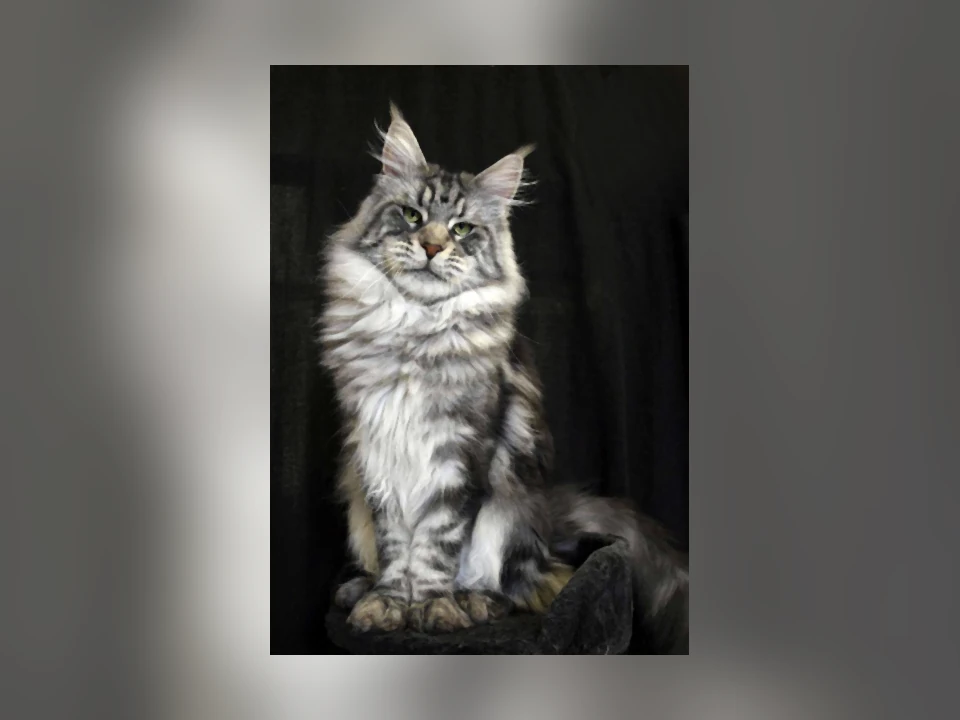
Meet the Maine Coon
The Maine Coon is one of the largest domestic cats — and one of the most charming. A true natural breed, it developed in the harsh winters of the northeastern United States, most associated with the state of Maine, where its dense, water-resistant coat, tufted ears and toes, and long bushy tail were practical survival gear rather than show points. The Cat Fanciers’ Association (CFA) recognizes it as a beloved native American breed, and TICA describes the same gentle, substantial cat that fanciers have prized for generations.
Their nickname — “gentle giant” — captures the appeal exactly. Maine Coons combine an imposing size with an easygoing, friendly disposition that makes them one of the most popular pedigreed cats in the world. They look like a lot of cat, and they are, but the temperament inside that big frame is famously sweet. For the right home, a Maine Coon is a sociable, dog-like companion you’ll find following you from room to room.
Personality and temperament
If you want a cat that acts a little like a dog, the Maine Coon is the classic choice. They’re known for being friendly, sociable, and people-oriented, often greeting visitors, tagging along on household errands, and settling in wherever the family happens to be. Many learn to play fetch, walk on a harness, or come when called — the kind of trainability that’s unusual in cats and a big part of the breed’s appeal.
They’re also wonderfully vocal in a soft way. Rather than the demanding meow of some breeds, Maine Coons are known for their chirps, trills, and chatter — a gentle running commentary that owners adore. They tend to be playful well into adulthood, enjoy interactive toys and puzzle feeders, and generally get along with children, other cats, and dogs. This is not an aloof, standoffish cat; it’s a companion that wants to be involved.
Living with a Maine Coon
Living with a Maine Coon means planning for a big, active-ish cat. They appreciate room to move, sturdy cat trees and shelves that can take their weight, and a large litter box sized for a long body — a standard box can feel cramped. Climbing, play, and a window to watch the world go by all help keep an intelligent cat content and out of trouble.
That impressive coat needs hands-on care. Regular brushing is the heart of it — it prevents the mats their long fur is prone to and reduces the loose hair they swallow while self-grooming, which directly cuts down on hairballs. Our guide on hairballs in cats explains how grooming and diet work together to keep them in check. Maine Coons tolerate the occasional bath better than many cats, and if you’re wondering whether yours needs one, our guide on whether cats need baths covers when it helps and when to skip it. Finally, a big cat has a bigger appetite, so portioning matters: feeding a complete diet to body condition — not just filling the bowl — keeps a large cat lean, and how much to feed a cat walks through getting the amounts right.
Grooming and care
The Maine Coon’s long, shaggy, water-resistant coat is the breed’s signature and its biggest maintenance task. Brush a few times a week — toward daily during heavy seasonal sheds — paying special attention to the friction zones where mats form: behind the ears, in the “armpits,” along the belly, and around the britches and tail. A mat left too long becomes tight and uncomfortable and may need a groomer to remove safely, so prevention is far kinder than cure.
Beyond the coat, the basics are routine. Keep nails trimmed, check ears and clean them gently if needed, and brush teeth regularly to support dental health. Bathe only as needed — overbathing can dry the skin and coat. Because the breed is prone to swallowing hair, a consistent grooming habit plus plenty of fresh water and a quality diet is the simplest, most effective way to keep both the coat and the hairballs under control.
Health
Here’s where honesty matters most. The Maine Coon is a robust cat, but the breed carries some well-documented inherited risks, and the most important is hypertrophic cardiomyopathy (HCM) — a thickening of the heart muscle that the Cornell Feline Health Center describes as the most common heart disease in cats. Maine Coons have a known genetic predisposition, and a specific gene mutation associated with HCM in the breed can be tested for. Responsible breeders should both DNA-test and have their breeding cats echo-screened (a cardiac ultrasound) by a veterinary cardiologist, because a normal DNA result alone doesn’t fully rule out the disease.
The breed is also associated with a few other inherited or size-related conditions. Hip dysplasia — a malformation of the hip joint described in the Merck Veterinary Manual — is more likely in a large, heavy cat than in smaller breeds, and keeping your cat at a lean weight protects the joints. Spinal muscular atrophy (SMA), an inherited condition affecting the muscles, has a DNA test that lets breeders avoid producing affected kittens, and polycystic kidney disease (PKD) is another inherited issue worth screening for. None of this means an individual Maine Coon will develop these problems — most live full, healthy lives — but it’s exactly why health-screened parents matter so much.
The single best thing a prospective owner can do is choose a breeder who tests and screens — heart, hips, and the relevant DNA panels — and is transparent about results, or adopt from a reputable rescue that’s honest about a cat’s history. Pair that with keeping your cat lean, feeding a complete diet, and staying current on veterinary checkups, and you’ve given a gentle giant the best possible start.
Is a Maine Coon right for you?
For the right home, the Maine Coon is hard to beat: an affectionate, sociable, dog-like companion that loves being part of everything, chirps and trills its way through the day, and gets along with kids, cats, and dogs alike. That sweetness inside such a striking, substantial cat is the whole reason the breed has so many devoted fans.
But it’s a commitment, and worth being honest with yourself about. Expect real grooming time to keep that long coat mat-free, more food and more space than an average cat needs, and a litter box and furniture sized for a big body. Most of all, expect to screen breeders carefully for heart disease — the breed’s HCM risk is the most important thing a buyer can act on. If that all sounds manageable, few cats will reward you with as much company and personality as a Maine Coon.