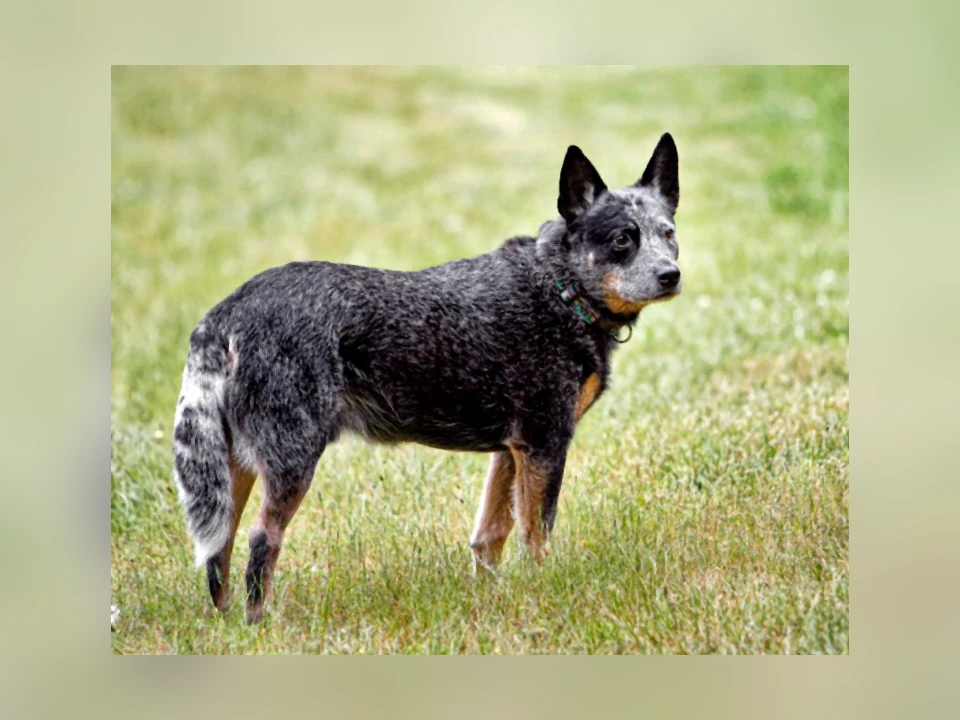
Meet the Australian Cattle Dog (the tough, tireless “Blue/Red Heeler”)
The Australian Cattle Dog is a compact, muscular herding dog built for one of the hardest jobs in the dog world: moving stubborn, half-wild cattle across the vast, punishing distances of the Australian outback. To do that, it nips at the heels of the herd — which is exactly how it earned its everyday name, the “Heeler.” You’ll hear it called a Blue Heeler or a Red Heeler; those are just the two speckled coat colors of the same breed.
This is a working animal through and through — quick, athletic, weatherproof, and almost impossible to tire out. It’s also famously tough, both in body and in mind. We want to be candid up front: the Australian Cattle Dog is a brilliant dog and a deeply demanding one. In an active, experienced home it’s an extraordinary partner. In a quiet one, it becomes a problem fast.
Personality & temperament
Extremely smart, driven, and fiercely loyal — that’s the honest core of this breed. A Cattle Dog bonds hard to its person, often shadowing one owner from room to room, and it brings relentless focus to whatever it’s asked to do. It learns quickly, works tirelessly, and tends to be reserved or downright wary with strangers, which makes it a natural watchdog.
That same wiring has a sharp edge. The herding instinct doesn’t switch off at the back door. Many Cattle Dogs will stalk, circle, and nip at anything that moves the wrong way — joggers, bikes, other pets, and, worryingly, running children’s heels. It isn’t aggression; it’s a hardwired job instinct firing with no livestock to aim at. Around kids it needs real training and supervision, which is why we steer most families with young children toward a softer breed.
Above all, this dog needs a job. Give it purpose and structure and it’s magnificent. Leave it idle and it will find its own work — usually something destructive.
Living with an ACD
Here’s the part people consistently underestimate. An Australian Cattle Dog needs hours of genuine daily activity — not one neighborhood loop, but sustained physical exercise plus serious mental work. Think long runs, herding, agility, flyball, obedience, scent work, or an actual role on a farm. Its body and brain both demand a workout, every single day.
When that need goes unmet, the dog doesn’t simply get bored — it unravels. Under-stimulated Cattle Dogs commonly become destructive (chewing, digging, dismantling fences), develop compulsive habits, and turn nippy and reactive. Many also struggle when left alone, and pent-up energy frequently spills out as relentless barking. If that worries you, our guides on separation anxiety in dogs and why dogs bark so much explain what’s really driving the behavior and how to manage it.
There’s good news, too: the Australian Cattle Dog is one of the longest-lived breeds, routinely staying fit and active well into its teens. But long life and high drive cut both ways — you’re signing up for well over a decade of a demanding, high-output dog. This is not a casual companion, and it is emphatically not an apartment pet.
Grooming & care
Coat care is one area where this breed makes life easy. The Australian Cattle Dog wears a short, dense, weather-resistant double coat that needs little more than a quick weekly brush to remove loose hair and keep it healthy. There are no mats to fight and no trips to a groomer for trimming.
Expect modest year-round shedding with a couple of heavier seasonal “blows” when the undercoat lets go — a thorough brushing during those stretches keeps the fur off your furniture. Otherwise, stick to the basics: routine nail trims, ear checks, and regular dental care. The real “maintenance” of this breed was never the coat; it’s the mental and physical work.
Health
Australian Cattle Dogs are generally hardy and impressively long-lived, but the breed carries several inherited conditions worth understanding before you commit.
The most notable is congenital deafness, which is recognized in the breed and may affect one or both ears — partly tied to the genetics behind the white, speckled coat. Responsible breeders BAER-test puppies (and ideally parents) so hearing status is known before a dog goes home; a one-eared or even fully deaf dog can live a great life, but you deserve to know. The breed is also prone to progressive retinal atrophy (PRA), an inherited disease that slowly destroys vision, and to hip dysplasia and elbow dysplasia, joint malformations that can cause arthritis and lameness.
None of this should scare you off, but it should shape how you find your dog. Insist on health-tested parents — BAER hearing tests, current eye exams with relevant DNA testing, and OFA or PennHIP hip and elbow clearances — consistent with AKC and OFA recommendations. Individuals vary, and responsible breeding (or thoughtful adoption from a breed-savvy rescue) is your best protection. Because Cattle Dogs are easy keepers, keep yours lean to spare those joints over a long life; our guide on whether your dog is overweight shows you how to check. For inherited-disease specifics, the Merck Veterinary Manual is a solid reference.
Is an Australian Cattle Dog right for you?
For the right person, there’s little that compares. If you work livestock, compete in dog sports, run or hike for hours, or simply build your days around an intensely active, trainable partner, an Australian Cattle Dog will meet everything you ask and then ask for more — with a loyalty that runs bone-deep and a working life that lasts well into old age.
But be honest with yourself. If you want a dog that fits neatly around a full-time job, relaxes on the couch most days, lives happily in an apartment, or forgives a quiet weekend, this is the wrong breed — and choosing one anyway usually ends in a frustrated owner and a miserable, destructive dog. For most pet households, a calmer, less demanding breed is the kinder choice for everyone, the dog included.