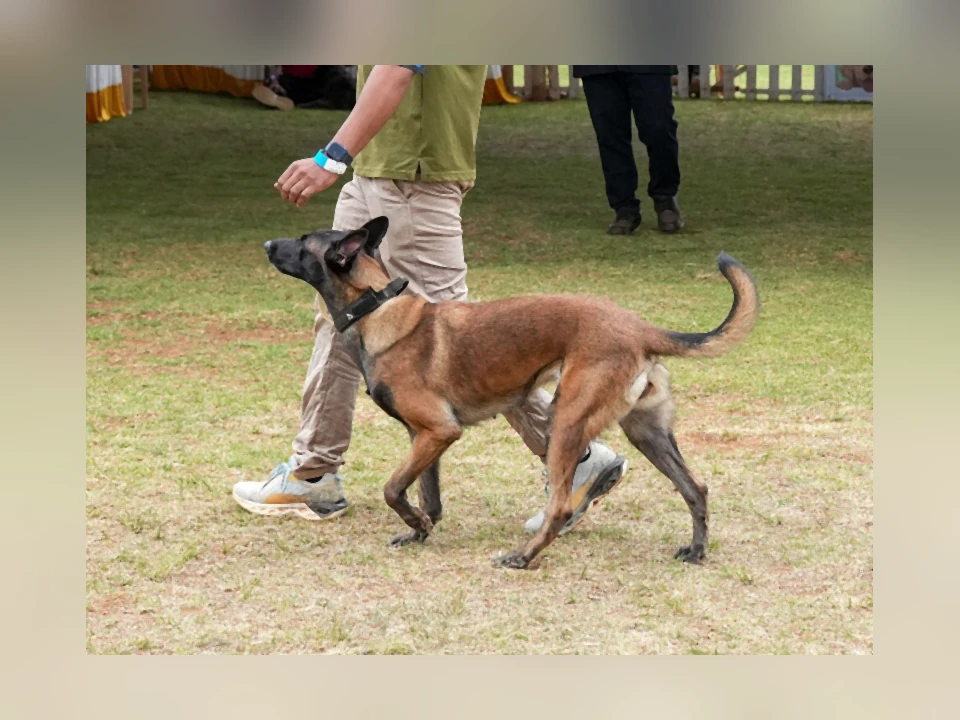
Meet the Belgian Malinois
The Belgian Malinois is the dog you’ve seen, even if you didn’t know its name — leaping from helicopters with military units, working airport security lines, and tracking suspects beside police officers. Developed in Belgium near the city of Malines as a herding and all-purpose working dog, the Malinois (the American Kennel Club places it in the Herding group) has become the world’s premier police and military K-9. Agile, lightning-fast, and relentlessly driven, it was bred to work hard all day and to want nothing more.
That résumé is exactly why this profile leads with a warning rather than a sales pitch. The qualities that make the Malinois extraordinary in a working role — extreme drive, intensity, and an almost bottomless need to do a job — are the same qualities that make it a poor fit for the average home. This is not a German Shepherd that happens to have a short coat. It is, for most people, simply too much dog. Read on with clear eyes.
Personality and temperament
A Belgian Malinois is brilliant, driven, intense, and deeply devoted to its handler. The breed’s work ethic is enormous: a well-bred Malinois doesn’t tolerate work, it craves it, and it bonds hard to the person who provides direction and purpose. Trainability is off the charts — this is one of the most responsive, switched-on breeds you’ll ever handle, which is precisely why elite working programs rely on it.
But that brilliance comes with a sharp edge. Malinois are sensitive, reactive, and easily over-aroused. They notice everything, react fast, and need careful, early, lifelong socialization to settle into a stable adult. Without an experienced handler shaping that intensity, the same intelligence curdles into nervousness and trouble. This is emphatically not a casual pet — it is a working partner that demands a partner in return.
Living with a Malinois
Here is the honest core of it: a Belgian Malinois needs a job and hours of training and exercise every single day. Not a walk. A job — structured obedience, scent work, agility, herding, protection sport, or some real outlet for a body and brain built to run all day. Physical exercise alone won’t do it; an exhausted Malinois with an unoccupied mind is still a problem.
Deny that outlet and the consequences are predictable and severe. An under-worked Malinois commonly develops intense anxiety, destructive behavior, and obsessive compulsions — spinning, pacing, light-chasing, self-mutilation, relentless barking. If you’re already wondering how to manage non-stop noise, our guide on why dogs bark so much is a useful read, but with this breed the real fix is meeting its needs, not muffling the symptom. The same goes for the panic and damage that erupt when one of these dogs is left alone and bored; our guide on separation anxiety in dogs explains how quickly that can take hold.
This is why the Malinois is the wrong dog for almost all pet homes. It is not a question of love or good intentions — plenty of devoted owners are simply overwhelmed. Apartments, full work schedules, young children, and a quiet life are all mismatches for a dog engineered to never stop.
Grooming and care
Grooming is the one genuinely easy part. The Malinois wears a short, straight double coat that needs only weekly brushing and the occasional bath. It does shed steadily year-round, with heavier seasonal “blowouts” in spring and fall, so a sensible brushing and vacuuming routine helps — our guide on managing dog shedding covers tools that actually work. Round things out with routine nail trims, ear checks, and dental care. The catch is that low grooming demand does nothing to offset the breed’s enormous behavioral demands; an easy coat is not an easy dog.
Health
The good news, relatively speaking, is that the Belgian Malinois is generally a robust, athletic, and long-lived breed — many remain working well into their senior years. But “generally robust” is not “trouble-free,” and a responsible owner buys with eyes open.
Hip and elbow dysplasia are the orthopedic concerns to screen for; insist on a breeder who tests both parents through the Orthopedic Foundation for Animals (OFA) or PennHIP. The breed also sees inherited eye conditions, including cataracts and progressive retinal atrophy, so ask for current ophthalmologist (CAER) exams on the parents. Because Malinois are lean, low-body-fat athletes, some are more sensitive to anesthesia, and a good vet will dose-adjust accordingly. The Merck Veterinary Manual and AAHA are reliable references for the clinical details. As always, individuals vary, and health-tested parents plus proactive veterinary care stack the odds in your dog’s favor.
Is a Belgian Malinois right for you?
For the overwhelming majority of people, the honest answer is no — and that honesty is a kindness. The Belgian Malinois belongs with experienced working and dog-sport handlers: people who do bite work, agility, herding, or scent sports, who have the time and skill to channel relentless drive into purpose, and who find that work genuinely rewarding rather than exhausting.
For a typical family hoping for a loyal, manageable companion, this is a serious mismatch, and a Malinois acquired on impulse too often ends up surrendered, rehomed, or living a frustrated, anxious life. If you have the experience, the lifestyle, and the commitment, few dogs are more capable or more devoted. If you don’t, choose another breed — and consider that the right working home, through a responsible health-testing breeder or a breed-specific rescue, is the only place this remarkable dog can truly thrive.