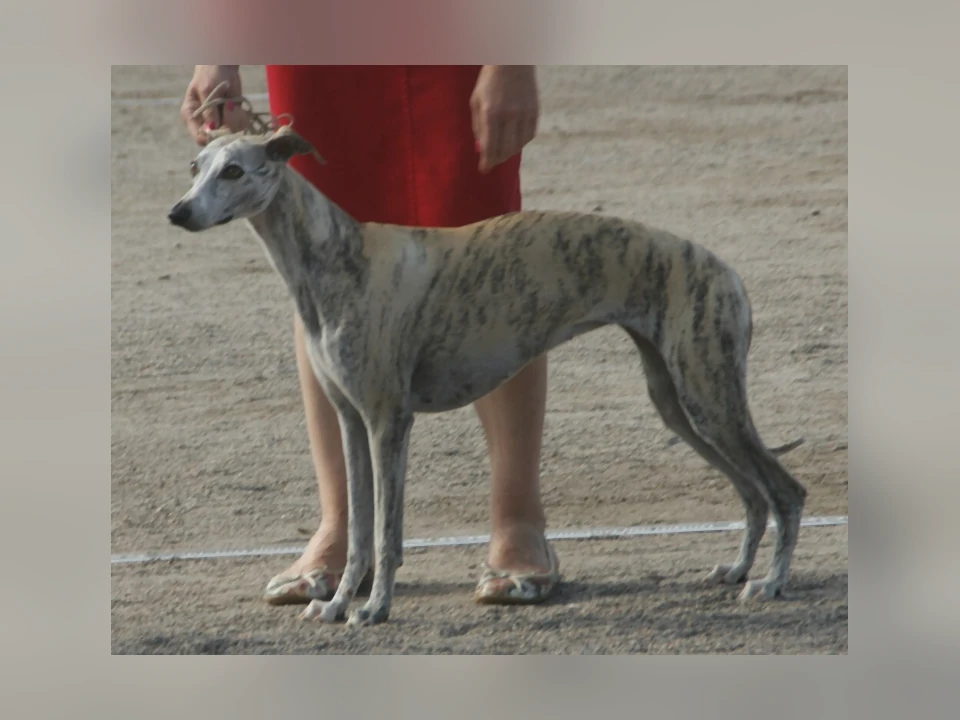
Meet the Whippet (the “poor man’s racehorse” — a gentle, sprinting sighthound)
The Whippet is a medium-sized sighthound built for one thing: speed. Developed in 19th-century England, the breed earned the nickname “the poor man’s racehorse” because working families could keep one affordably yet still enjoy the thrill of the chase and informal racing. Today’s Whippet keeps that aerodynamic, deep-chested frame — but pairs it with one of the most easygoing temperaments in the dog world.
What surprises most newcomers is the contrast. A dog capable of hitting speeds over 30 mph is, at home, a quiet, almost catlike companion who wants nothing more than to nap against you. The Whippet is a study in extremes: explosive outdoors, serene indoors.
Personality & temperament
Whippets are gentle, affectionate, and notably sensitive. They bond closely with their people and tend to be more reserved than boisterous — soft-spoken dogs who rarely bark and dislike harsh handling. Because they’re emotionally tuned in, they respond best to patient, reward-based training; raised voices or rough corrections tend to shut them down rather than motivate them.
The flip side of that calm demeanor is a deeply ingrained prey drive. Bred to spot and pursue fast-moving game by sight, a Whippet may bolt after a squirrel, rabbit, or even a windblown bag with startling commitment. This isn’t disobedience — it’s instinct, and it’s the single most important thing to understand about the breed. Many Whippets coexist beautifully with cats they’re raised alongside, but small fleeing animals can still trigger the chase reflex.
Living with a Whippet
Whippets follow a simple daily rhythm: short bursts of hard running, then long, contented naps. A couple of chances to truly gallop — in a fenced yard, a sighthound-safe enclosure, or on a long line — usually leave them satisfied for hours. This makes them excellent apartment dogs, provided you commit to giving them real sprint time. A bored, under-exercised Whippet is far less pleasant than a properly run one.
Two non-negotiables come with the breed. First, secure fencing and reliable leashing. The combination of high prey drive and extraordinary speed makes off-leash recall genuinely unreliable; a Whippet can be out of sight before you finish calling its name. Second, warmth. Their thin, single-layer coat and lean, low-fat build offer almost no insulation, so they feel the cold quickly. Expect to use a dog coat in winter and to find your Whippet burrowing under blankets year-round. Watch their weight too — that athletic frame should stay lean but not bony; our guide to telling if your dog is overweight can help you judge the line.
Grooming & care
Grooming is about as low-effort as it gets. The short, smooth coat needs little more than an occasional wipe-down or a quick rubber-mitt grooming to manage modest shedding. Bathing is rarely necessary, and there’s no clipping, stripping, or de-matting to worry about.
What does demand attention is dental health. Like many breeds with finer muzzles, Whippets are prone to tartar and gum disease, so regular tooth brushing and veterinary cleanings matter more than their tidy coats might suggest — see our dog dental care guide for a practical routine. Round out their care with routine nail trims and ear checks.
Health
Honestly, the Whippet is one of the healthier purebred dogs you can choose — a relatively sound, athletic breed that often lives 12 to 15 years. That said, a few issues deserve awareness.
Heart conditions, including murmurs and mitral valve disease, can appear, particularly as a Whippet ages; responsible breeders screen breeding stock through cardiac evaluation. Anesthesia sensitivity is a well-known sighthound trait: their lean build and low body fat mean standard drug protocols may need adjusting, so use a veterinarian familiar with sighthounds before any surgery or dental procedure. Dental disease and occasional inherited eye conditions round out the list, and their poor cold tolerance is a daily management point rather than a true illness.
The best protection is choosing health-tested parents. Look for breeders who screen through programs like the Orthopedic Foundation for Animals (OFA), and follow AAHA-aligned preventive care with your vet. As your Whippet grays, our senior dog care guide covers the gentle adjustments that keep older sighthounds comfortable.
Is a Whippet right for you?
A Whippet is an outstanding fit if you want a quiet, affectionate, low-maintenance companion and can offer two things: safe space to run flat-out, and a soft, warm place to sleep. They suit apartments, families, and seniors alike, and they ask remarkably little in grooming or noise.
They’re a poor match if you can’t provide secure fencing, if you dream of an off-leash adventure dog, or if you can’t commit to keeping a thin-skinned dog warm. Meet those needs, though, and you’ll have one of the most gracious, gentle housemates in dogdom — a racehorse in the yard and a cuddle-seeking shadow on the couch. As always, individual dogs vary in temperament and health, so choose a responsible breeder or rescue and let the dog in front of you guide your expectations.