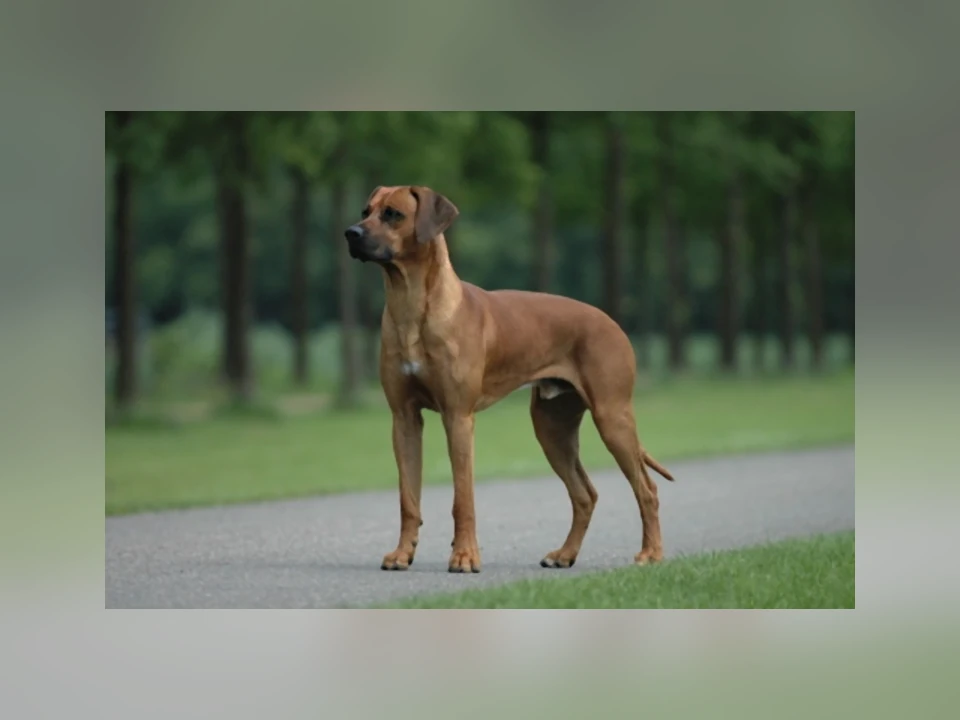
Meet the Rhodesian Ridgeback (athletic African lion-hound with the signature back ridge)
There is no mistaking a Rhodesian Ridgeback. Run your hand down its back and you’ll feel the breed’s calling card — a clearly defined ridge of hair growing in the opposite direction to the rest of the coat, formed by two symmetrical whorls (crowns) just behind the shoulders. Developed in Southern Africa by combining European hunting breeds with the ridged dogs kept by the region’s Khoikhoi people, the Ridgeback was bred to track and bay big game — including lions — alongside hunters, then guard the homestead at night. According to the American Kennel Club, the breed belongs to the Hound group, and its build tells the story: muscular, balanced, and capable of covering ground all day.
A typical Rhodesian Ridgeback stands 24–27 inches at the shoulder and weighs 70–85 pounds, making it a genuinely large, powerful dog in a sleek, handsome wheaten coat. Individuals vary in drive and temperament, but as a breed the Ridgeback combines athletic stamina with a famously dignified, even reserved, presence. This is not a frantic dog — it’s a confident one. Bring one home and you take on a strong, intelligent partner that needs structure, exercise, and respect rather than a casual companion content to drift through the day.
Personality & temperament
Rhodesian Ridgebacks are dignified, independent, strong-willed, devoted, and aloof with strangers. With their own people they are deeply loyal and affectionate, often quietly bonded and happiest near the family. With unfamiliar people they tend to be reserved rather than effusive — a watchful aloofness that traces straight back to their guarding heritage. Early, thorough socialization is essential to make sure that natural reserve stays confident and discerning rather than tipping into shyness or suspicion.
Make no mistake about the “intelligent” part: Ridgebacks are smart, but they are not pushover-trainable. They have strong opinions and an independent streak, so they will weigh whether your request is worth their effort. That means consistency, patience, and reward-based methods win the day, while repetition for its own sake — or any heavy-handed correction — tends to shut this sensitive hound down. Their hound heritage also brings a powerful prey drive, so small, fast-moving animals can trigger an instinctive chase. Because Ridgebacks bond so closely with their families, some can struggle when left alone too much; if yours does, our guide on separation anxiety in dogs can help you build a calmer routine.
Living with a Ridgeback
This is the heart of the matter: Ridgebacks have high exercise needs and a serious prey drive, so both daily activity and containment have to be planned for. Aim for at least an hour or more of real exercise every day — brisk walks, running, hiking, or hard play — plus mental enrichment to keep that capable brain busy. A well-exercised Ridgeback is a calm, easy housemate; an under-exercised one grows restless and can find its own (usually unwelcome) entertainment.
Equally important is a tall, secure fence. Driven by scent and sight, a Ridgeback that spots a squirrel, cat, or rabbit may take off with startling speed, and the breed is athletic enough to clear a low barrier. Off-leash freedom should be reserved for genuinely enclosed spaces. Pair that with firm, consistent, positive training and clear household rules, and the strong-willed hound flourishes. For all these reasons, the Ridgeback is not a great match for novices. It rewards experienced owners who can lead calmly, follow through every time, and physically manage a large, powerful, independent dog.
Grooming & care
Here’s the easy part. The Ridgeback’s short, dense, sleek coat is about as low-maintenance as grooming gets. A weekly once-over with a rubber curry brush or grooming mitt lifts loose hair and keeps that wheaten coat gleaming. Shedding is light to moderate, so you’ll find far less hair around the house than with a heavy double-coated breed.
Beyond brushing, stick to the basics: trim nails every few weeks, brush teeth regularly, and bathe only when your dog is genuinely dirty. Check the ears periodically for redness or odor and keep up with routine veterinary care. The short coat offers little insulation, so a Ridgeback feels the cold — a coat for winter walks is worth having in colder climates, and shade and water are a must in the heat.
Health
Most Rhodesian Ridgebacks are healthy, hardy dogs with a typical lifespan of 10–12 years, but the breed has several conditions worth knowing about. Buying from — or supporting rescues that work with — breeders who health-test their stock makes a real difference.
- Dermoid sinus. This is the breed’s most distinctive health concern: a congenital neural-tube defect, present at birth, in which a tube-like tract of skin extends inward along the spine. Responsible breeders carefully screen newborn puppies, and affected dogs can often be treated surgically. Always ask a breeder directly about dermoid sinus screening.
- Hip and elbow dysplasia. Malformation of these joints is common in larger, athletic breeds. The Orthopedic Foundation for Animals (OFA) recommends hip and elbow screening (OFA or PennHIP) for breeding dogs.
- Bloat / GDV. As a deep-chested breed, the Ridgeback is at elevated risk for gastric dilatation-volvulus, a sudden, life-threatening emergency. Learn the signs — a swollen belly, unproductive retching, restlessness — in our dog bloat (GDV) guide, and call your vet immediately if you see them.
- Hypothyroidism. An underactive thyroid can cause weight gain, lethargy, and coat changes; it’s diagnosed with a blood test and managed well with daily medication.
- Certain cancers. Mast cell tumors and other cancers are seen in the breed, so report any new lumps, bumps, or unexplained changes to your vet promptly.
Because Ridgebacks gain weight quickly when their exercise drops off, keep an eye on body condition — our is my dog overweight guide shows you how to assess it at home. For clinical detail on any of these conditions, the Merck Veterinary Manual is a trustworthy reference. As always, individual dogs vary, and your veterinarian is your best partner for breed-specific care.
Is a Rhodesian Ridgeback right for you?
A Rhodesian Ridgeback is a superb dog for the right home: an athletic, dignified, low-grooming companion who asks for relatively little fuss over its coat and a great deal of partnership in return. If you’re an active, experienced owner who can deliver firm and consistent positive training, give a strong hound real daily exercise, and contain a serious prey drive behind a tall, secure fence, few breeds offer more quiet devotion and rugged good looks.
But be honest with yourself. If you’re a first-time owner, have a low-activity lifestyle, or can’t provide secure containment and steady leadership, a strong-willed Ridgeback can become a frustrating handful — and that’s not the dog’s fault. Whether you buy from a responsible, health-testing breeder (one who screens for dermoid sinus and joint health) or adopt from a breed-specific rescue, go in clear-eyed about the exercise, training, and containment commitment. Meet it, and you’ll have one of the most loyal and impressive partners the hound world has to offer.