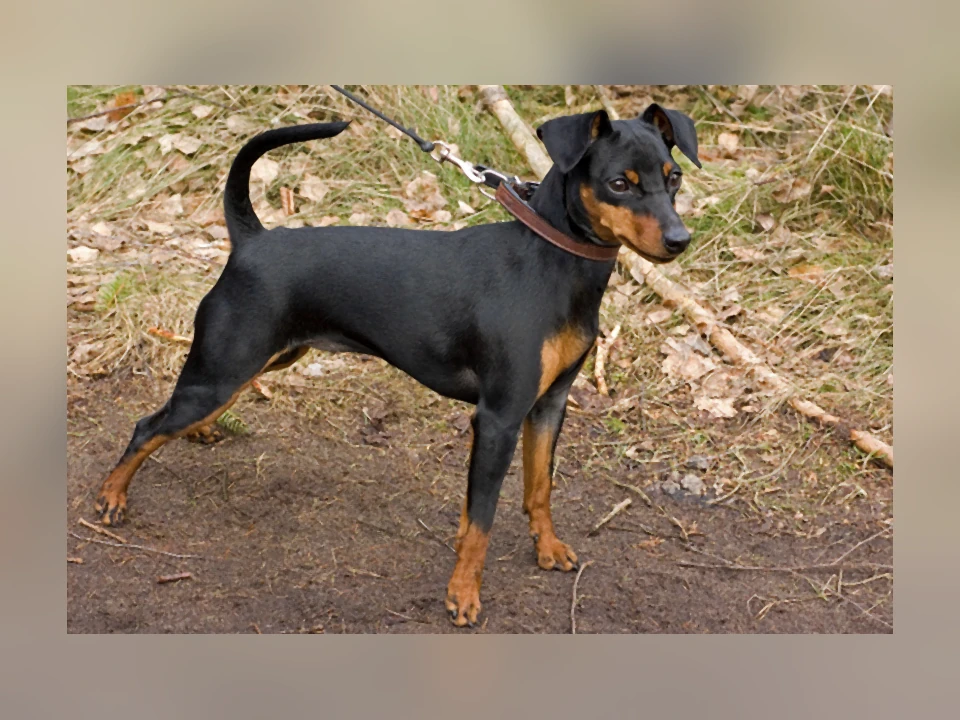
The ‘King of Toys’
The Miniature Pinscher earned its nickname for a reason: it carries itself with the swagger of a dog ten times its size. Developed in Germany centuries ago to hunt rats and vermin in homes and stables, it is a genuine working ratter shrunk into a toy package. One persistent myth deserves correcting up front—the Min Pin is not a miniaturized Doberman. It is the older breed, and any resemblance is coincidence.
Personality: fearless and full of opinions
Min Pins are spirited, curious, and utterly self-assured. They’re alert little watchdogs, quick to sound off, and bold to the point of having no idea how small they are. They form strong bonds with their people and are entertaining, almost comedic companions, but they have a stubborn, independent streak from their ratting roots. They tend to be busy: investigating, climbing, and testing boundaries—literally. This is a breed that needs a household ready to engage with it, not one expecting a quiet ornament.
Daily life, exercise, and training
For a toy dog, the Min Pin has serious energy. It needs daily brisk walks plus active play and mental stimulation; an under-exercised one barks, digs, and gets into mischief. Their fearless curiosity makes them genuine escape artists, so secure fencing (they can dig under and squeeze through gaps) and supervision are essential. Training works best with consistent, upbeat, reward-based methods—they’re smart and capable but won’t tolerate dull repetition or harshness. Early socialization tempers the natural boldness and wariness. Because of their prey drive, they’re a risky match for pet rodents and need careful introductions to cats.
Grooming: refreshingly simple
This is one of the lowest-maintenance coats in dogdom. The short, smooth, hard single coat needs little more than an occasional wipe or quick brush, routine nail trims, dental care, and ear checks. The flip side of that thin coat is poor insulation: Min Pins feel the cold and genuinely benefit from a sweater in winter, and they shouldn’t be housed outdoors.
Health: hips, knees, and eyes
Min Pins are often long-lived, reaching 12 to 16 years, but several real, documented conditions define the breed. Legg-Calvé-Perthes disease—degeneration of the femoral head—appears in young dogs as hind-leg lameness and usually needs surgery, after which most do well. Patellar luxation (slipping kneecaps) is common and ranges from mild to surgical. Progressive retinal atrophy is the main inherited eye disease, and a rare metabolic storage disorder, mucopolysaccharidosis, has been reported in the breed; DNA tests exist for both, so responsible breeders screen. Watch the waistline too—their food drive makes obesity easy and hard on those small joints.
Who this breed is for
The Miniature Pinscher fits active, attentive owners who want a bold, low-grooming, high-spirited companion and can deliver consistent training, real exercise, and escape-proof containment. It suits experienced owners and homes with older, considerate kids. It’s a poor match for anyone wanting a placid lapdog, for households with toddlers or pet rodents, and for owners who can’t keep one step ahead of a curious escape artist. Match its energy and you get a confident, hilarious, devoted little dog that truly believes it’s king.