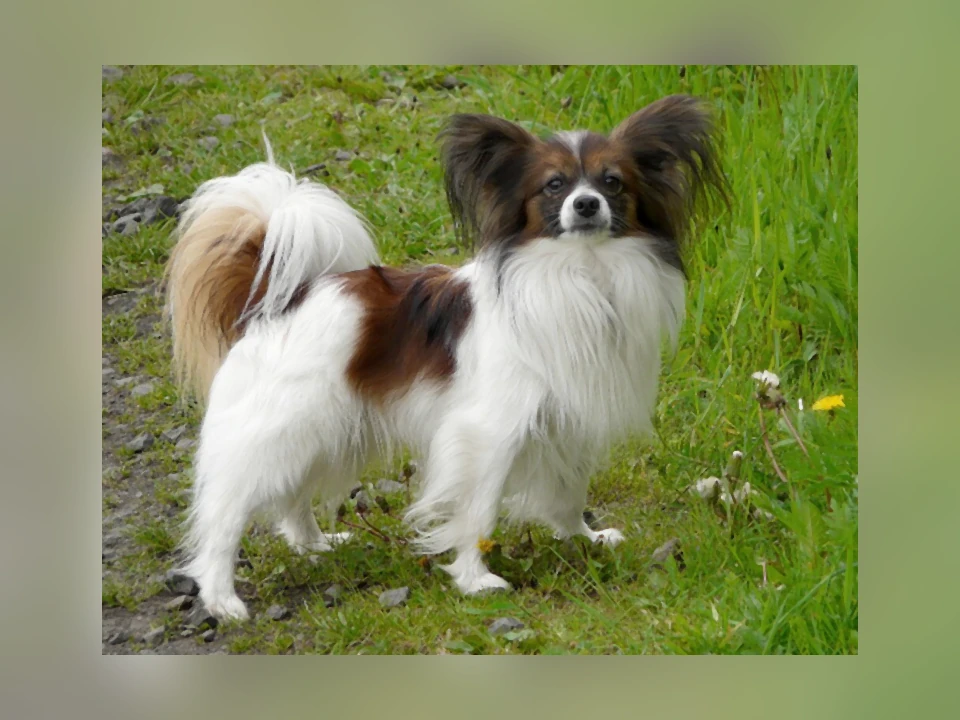
The butterfly dog of European courts
The Papillon takes its name from the French word for butterfly, after the breed’s large, fringed, upright ears that frame the face like wings. (The drop-eared variety is called the Phalène, or ‘moth.’) These little dogs appear in European court paintings going back centuries and were favorites of the nobility, but don’t mistake an aristocratic history for fragility—the Papillon is one of the brightest, most capable small dogs you can own.
Personality: a big brain in a tiny body
Papillons are alert, curious, friendly, and genuinely eager to please—an unusual and very trainable combination in a toy breed. They bond hard with their people, enjoy being involved in everything, and tend to be confident rather than timid. They are typically sociable with people and other dogs when well socialized. The flip side of all that intelligence is that an under-stimulated Papillon gets bored, and a bored Papillon invents jobs for itself, often noisy ones.
Daily life, exercise, and training
This is where the Papillon shines. They are athletic and energetic for their size, thriving on daily walks plus games, puzzle toys, and training. They are perennial standouts in agility and obedience precisely because they combine drive with a desire to work with you. Reward-based training is effortless and fun; they soak up tricks and cues fast. Because they’re so small, take care around big dogs and on stairs or furniture, and supervise play with children. A harness is wiser than a neck collar given the breed’s risk of tracheal irritation.
Grooming
Despite the elegant fringe, grooming is moderate. The Papillon has a single silky coat with no heavy undercoat, so it sheds modestly and rarely mats. Brushing a few times a week, occasional baths, and attention to the ear feathering and leg fringe keep it looking its best. The most important grooming task is dental care: brush the teeth regularly and schedule professional cleanings, because crowded small-breed mouths develop periodontal disease readily.
Health: watch the knees and the eyes
Papillons are long-lived, frequently reaching 14 to 16 years, and generally hardy for a toy dog—but a few real issues define the breed. They have one of the highest rates of patellar luxation (slipping kneecaps) among toy breeds, often first noticed as a skipping gait. Progressive retinal atrophy, an inherited path to blindness, is the key eye concern; responsible breeders DNA-test and obtain annual eye exams. A persistent open fontanelle (soft spot on the skull) occurs in the breed and raises head-injury risk, so protect puppies and affected dogs from falls. Collapsing trachea and dental disease round out the practical concerns. Buy from breeders who screen patellas and eyes.
Who this breed is for
The Papillon is a superb fit for owners—including capable first-timers, active families with gentle kids, and seniors who stay engaged—who want a small, smart, trainable companion and will actually use that intelligence through walks, play, and training. It’s an excellent dog-sport partner. It’s a poor match for anyone wanting a purely placid lapdog, for very rough households, or for owners who can’t commit to daily mental and physical engagement. Give a Papillon a job, even a fun one, and you get one of the most rewarding little dogs in the world.