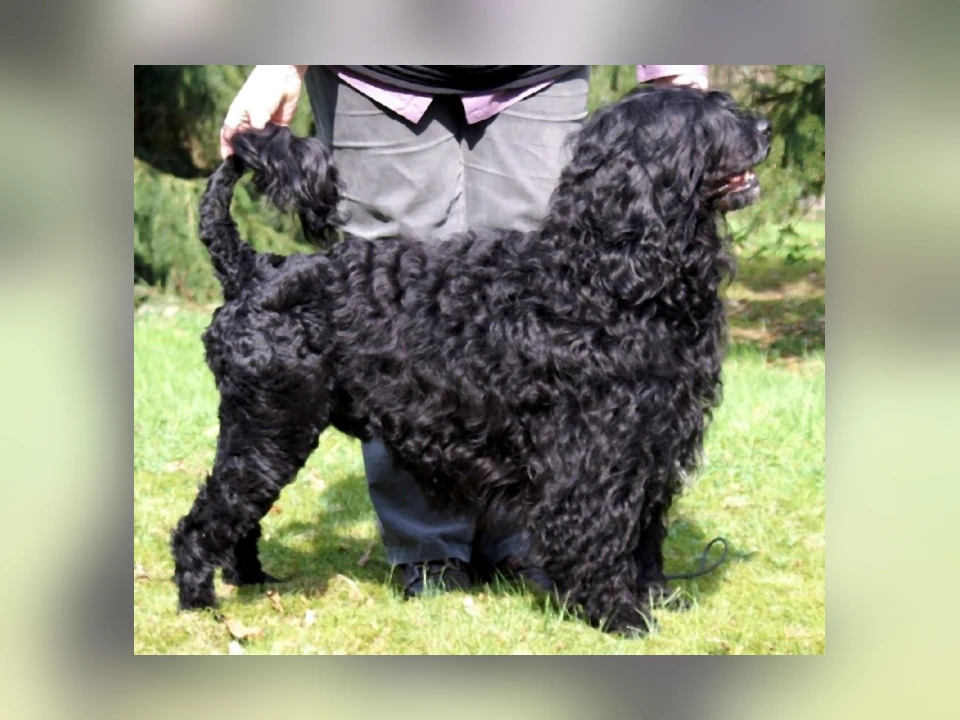
Meet the Portuguese Water Dog (a tireless working partner)
The Portuguese Water Dog, or “Portie,” was developed along the coast of Portugal to work alongside fishermen—herding fish into nets, retrieving lost gear, and carrying messages between boats and shore. Everything about the breed reflects that job: a strong, athletic medium-sized body, webbed feet, exceptional swimming ability, and a waterproof single coat that comes in curly or wavy types. Weighing 35 to 60 pounds, the Portie is robust, agile, and built for long days of work.
Gained wider fame as a presidential pet, the breed is prized for being smart, affectionate, and low-shedding—but it remains, at heart, a high-energy working dog.
Personality & temperament
Porties are intelligent, lively, and deeply people-oriented. They form strong bonds with their families, love to be involved in everything, and tend to be playful and affectionate well into adulthood. That devotion has a flip side: they don’t do well left alone for long stretches and can develop separation-related behaviors if isolated.
They are highly trainable and genuinely enjoy learning, excelling in obedience, agility, water trials, and dog sports. Their intelligence and energy mean they need an outlet—a bored Portie is an inventive one. Early socialization and consistent, positive training bring out the best in them. Individual temperament varies with breeding and upbringing.
Exercise & training needs
This is a high-energy breed that needs serious daily exercise: vigorous walks or runs, fetch, and ideally swimming, which they adore. Just as important is mental work—training sessions, puzzle toys, and games keep that quick mind satisfied. A Portie that gets enough physical and mental stimulation is a delightful companion; one that doesn’t may chew, dig, or bark out of frustration. Plan to invest real time daily.
Grooming & care
The Portie’s single, non-shedding coat is a big draw, but it is not low-maintenance. Whether curly or wavy, it grows continuously and needs regular brushing to prevent mats plus professional clipping every one to two months. Many owners keep a practical “retriever” or “lion” clip. Routine ear cleaning matters too, since the floppy ears and love of water can trap moisture. Add regular nail trims and dental care to the routine.
Health
Porties are generally healthy and typically live 11 to 13 years, and many of the breed’s most serious risks are DNA-testable—which makes choosing a careful breeder especially powerful. Hip dysplasia occurs, so look for OFA-screened parents and keep your dog fit. Progressive retinal atrophy (PRA), which gradually causes blindness, has a reliable DNA test. The breed also carries two serious, breed-specific inherited diseases—GM1 gangliosidosis, a fatal storage disease in puppies, and juvenile dilated cardiomyopathy (JDCM), a sudden heart condition in young pups—both of which are avoidable when breeders test parents. Finally, the breed has an above-average rate of Addison’s disease, a hormonal disorder whose vague symptoms make it easy to overlook.
The takeaway: buy from a breeder who performs the recommended DNA and joint screening, or adopt from a reputable rescue that shares health history.
Is a Portuguese Water Dog right for you?
A Portuguese Water Dog is a brilliant, affectionate, low-shedding companion for an active household—especially one that loves the outdoors and the water. The breed rewards owners who can commit to vigorous daily exercise, ongoing mental work, regular grooming, and plenty of companionship. If that’s you, a Portie can be an extraordinary partner. If you’re away long hours, prefer a calm dog, or can’t keep up with the exercise and grooming, a lower-energy breed will be a kinder match for both of you.