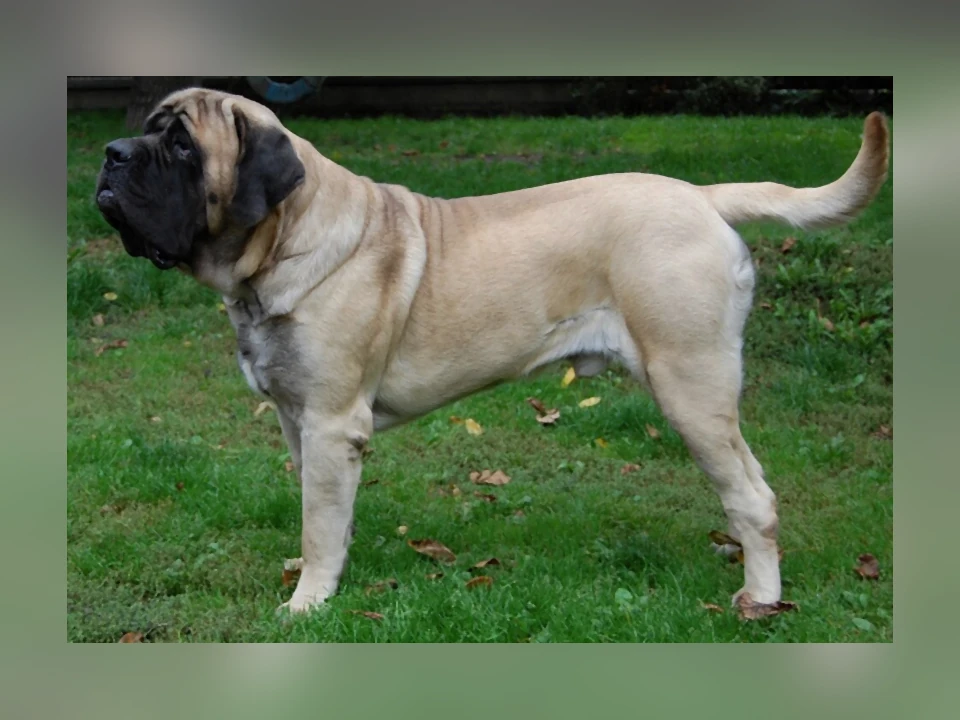
Meet the Mastiff (massive, gentle, dignified guardian)
Few dogs command a room by simply lying in it the way a Mastiff does. One of the most massive breeds in the world, the English Mastiff pairs a heavy, powerful frame with a famously calm, good-natured presence. This is an ancient guardian breed—dogs of its type were prized in Britain for guarding home and hearth long before the modern show ring—and that heritage shows in its steady, watchful dignity.
What strikes people who live with a Mastiff isn’t aggression; it’s gravity. A good Mastiff is quiet, self-assured, and slow to anger, content to keep one eye on its family while it dozes. The breed’s whole demeanor says guardian rather than attacker: imposing enough to deter trouble, gentle enough to be a couch companion. As with any breed, individuals vary, and a Mastiff’s adult temperament owes far more to genetics, socialization, and upbringing than to the breed label alone.
Personality & temperament
Mastiffs are calm, devoted, and good-natured, forming deep bonds with their people and often quietly attaching themselves to one favorite spot near the family. They tend to be patient and even-tempered at home, and many are wonderful with children they’ve grown up with. At the same time, the Mastiff is a natural protector—territorial and discerning with strangers—which is exactly what the breed was shaped to be.
That combination is why early socialization is essential, not optional. A confident, well-adjusted Mastiff needs broad, positive exposure to people, places, and other animals from puppyhood, so its protective instincts stay measured and stable rather than fearful or reactive. Mastiffs are intelligent and willing, but they can be independent and sensitive; they respond best to calm, consistent, positive-reinforcement training and don’t tolerate harsh methods.
For all those reasons, this is generally not a breed for novice owners—and the deciding factor is sheer size. A 150-pound dog that pulls, leans, or guards without manners is genuinely hard to manage and can be a liability. The Mastiff’s gentleness is real, but it has to be paired with an owner who can guide and contain a giant.
Living with a Mastiff
Despite their bulk, Mastiffs have surprisingly modest exercise needs—low to moderate, with a couple of daily walks and some easy play usually sufficient for an adult. They are not endurance athletes and overheat easily, so keep activity gentle, especially in warm weather.
Puppyhood, by contrast, demands real care. Giant-breed puppies grow at an astonishing rate, and growing too fast on an over-rich diet stresses developing joints and bones. Feed a diet formulated for large- or giant-breed growth, keep your puppy lean, and avoid forced exercise or repetitive jumping while the skeleton matures. For a sense of how quickly your puppy will balloon—and why slow, steady growth matters so much—our guide on how big will my puppy get walks through the timeline.
Then there’s the cost of scale. Food, crates, beds, medications, and vet bills all run large with a Mastiff, and that budget is a lifelong commitment—plan for it honestly before you bring one home. Two everyday realities round out the picture: drool (loose jowls mean slinging, especially after drinking or eating) and feeding habits. For this deep-chested breed, many owners use raised, divided meals and avoid heavy exercise around mealtimes to help reduce bloat risk. None of that guarantees safety, but it’s sensible practice where bloat is a genuine threat.
Grooming & care
Grooming is the easy part of Mastiff ownership. The short, dense coat needs only a weekly brush with a soft brush or rubber curry to remove loose hair and keep it healthy; shedding is moderate and manageable. Bathe occasionally—no small task with a dog this size, so get a young Mastiff comfortable with bathing and handling early.
Beyond the coat, stick to the basics: regular nail trims (long nails throw off a heavy dog’s gait), routine ear checks, and consistent dental care. Many owners also wipe facial folds and keep a cloth handy for drool. Because cooperative handling is so valuable in a giant dog, build all of these routines into puppyhood.
Health
Health is where prospective owners need the most honesty. Most significant is lifespan: as a giant breed, Mastiffs typically live only about 6 to 10 years. That short window is the steepest trade-off of loving the breed, and it’s far better understood up front than discovered later.
The biggest acute threat is bloat, or gastric dilatation-volvulus (GDV). In GDV, the stomach fills with gas and can twist, cutting off blood flow; it is a life-threatening emergency requiring immediate surgery. Because the risk is elevated in deep-chested giants, many owners and veterinarians discuss a prophylactic gastropexy, a procedure (often done at spay or neuter) that tacks the stomach to the body wall to help prevent twisting. Learn the warning signs—a distended belly, restlessness, drooling, and unproductive retching—and treat them as an emergency; our dog bloat & GDV guide explains what to watch for and do.
Other notable concerns include:
- Hip and elbow dysplasia. Common in giant breeds; ask for OFA hip and elbow clearances on both parents.
- Heart disease. Mastiffs can be predisposed to cardiac conditions; responsible breeders screen breeding dogs with cardiac exams.
- Cancer. Like many giant breeds, Mastiffs carry an above-average risk; watch for persistent lumps, limping, or unexplained changes, especially in older dogs.
- Heat sensitivity. Their bulk makes overheating a real danger—limit exertion in the heat and know the signs.
Careful large-breed puppy growth and diet, as noted above, also protect long-term joint and bone health. Because Mastiffs age quickly, senior care arrives sooner than with most breeds—our senior dog care guide covers what an aging giant needs. Always consult your veterinarian for screening and care tailored to your individual dog.
Is a Mastiff right for you?
A Mastiff can be one of the most devoted, dignified, and quietly reassuring companions you’ll ever share a home with—a gentle guardian that asks for little more than to be near its people. For the right owner, that steady presence is worth everything.
But “the right owner” is specific. You need experience to guide and contain a dog this large, the space to house one comfortably, the budget to care for one at giant-breed scale, and a tolerance for drool. Most of all, you have to go in clear-eyed about the two hardest realities: a short lifespan and a serious, ongoing risk of bloat. If you can accept those trade-offs—and ideally start with a responsible, health-testing breeder or a breed-specific rescue—a Mastiff will repay you with years of calm, immovable devotion.