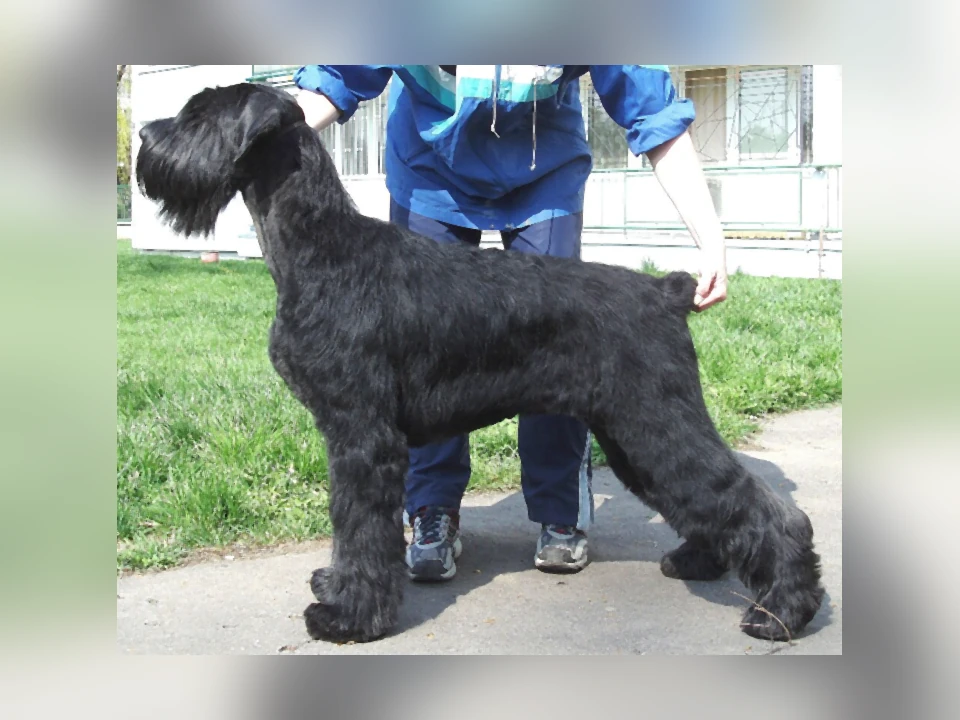
Meet the Giant Schnauzer (a working dog in every sense)
The Giant Schnauzer is the largest of the three Schnauzer breeds, developed in the Bavarian region of Germany to drive cattle and later to guard breweries, stockyards, and farms. It is fundamentally a working dog: powerful, athletic, and bred to think and act with its handler. Standing up to 27.5 inches and weighing 55 to 85 pounds, it carries the breed’s signature wiry coat, bushy beard, and arched eyebrows on a much bigger, more imposing frame.
This is not a scaled-up Miniature Schnauzer in temperament. The Giant is a serious, high-drive breed that thrives with a job to do and a person who knows how to lead it.
Personality & temperament
Giant Schnauzers are intelligent, bold, and deeply loyal to their families. That loyalty comes with a strong protective streak—they were guard dogs by design—so early, thorough socialization is essential to raise a confident, discerning adult rather than a suspicious or reactive one. With their people they are affectionate and playful, but they can be reserved with strangers.
They are highly trainable and excel in obedience, protection sports, tracking, and agility, but they need a handler who is consistent and fair. Harsh methods backfire; so does inconsistency, which a smart, strong-willed dog will exploit. Individual temperament varies with breeding, socialization, and training.
Exercise & training needs
This breed needs substantial daily exercise—think one to two hours of vigorous activity—plus genuine mental work. Long walks alone will not cut it. Channel that drive into training, scent work, dog sports, or structured play. A Giant Schnauzer that is under-exercised and under-stimulated will often find its own outlets, and they are rarely the ones you want.
Start training and socialization early and keep it going for life. These dogs are quick studies who enjoy learning, which makes the work rewarding once you commit to it.
Grooming & care
The wiry double coat sheds relatively little but is not low-maintenance. Brush several times a week to prevent mats, and plan on clipping or hand-stripping every four to eight weeks. The beard traps food and water and needs regular cleaning. Routine nail trims, ear checks, and dental care round out the basics.
Health
Giant Schnauzers are generally robust and often live 12 to 15 years, but they share the health risks of large, deep-chested breeds. Hip dysplasia is a concern, so look for a breeder who screens parents through OFA or PennHIP and keep your dog at a healthy weight. Gastric dilatation-volvulus (bloat) is a true emergency in deep-chested dogs—learn the warning signs of a distended abdomen and unproductive retching, and act fast. Hypothyroidism, which causes weight gain, lethargy, and coat changes, shows up in the breed and is manageable with medication. Hereditary eye disorders make annual eye exams worthwhile in breeding stock. The breed also has a documented predisposition to toe (digital) squamous cell carcinoma, so have any persistent toe swelling, lameness, or lost toenail evaluated promptly.
The best safeguard is responsible breeding. Choose a breeder who health-tests parent dogs, or adopt from a reputable rescue that shares health history.
Is a Giant Schnauzer right for you?
A Giant Schnauzer can be a magnificent partner—brilliant, devoted, and endlessly capable—for the right person. That person is active, experienced, and ready to commit to daily exercise, ongoing training, and regular grooming. If you want a working dog and a true companion, few breeds give back more. If you are new to dogs, short on time, or hoping for a low-key apartment pet, this is not the breed for you, and an honest assessment now will save both of you frustration later.