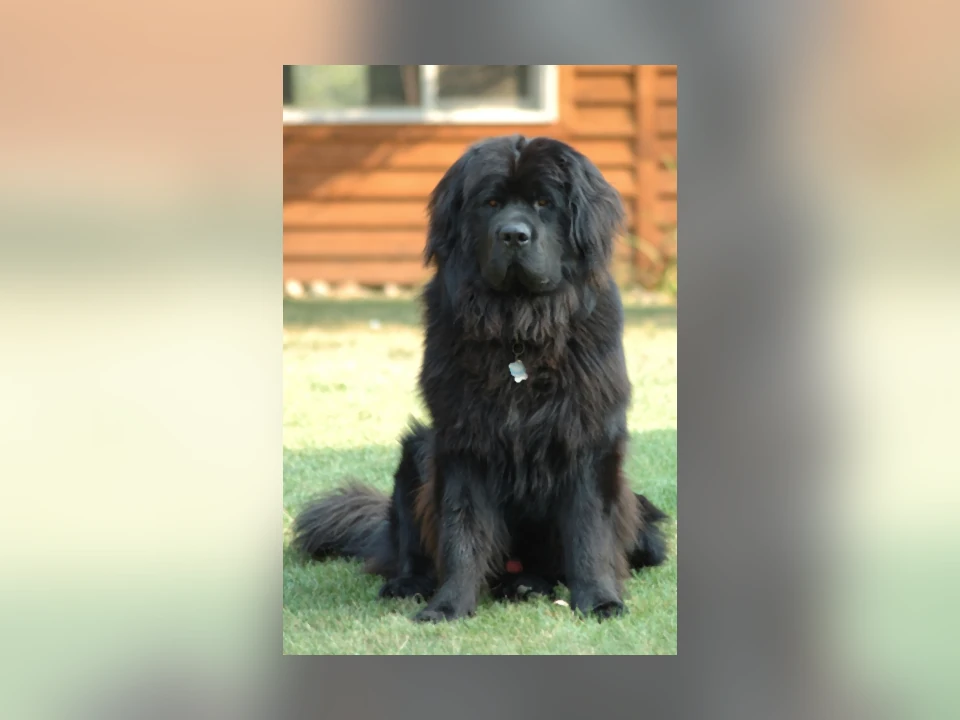
Meet the Newfoundland (giant, sweet “nanny dog” + water rescuer)
Few breeds wear “gentle giant” as naturally as the Newfoundland. Developed on the rugged Canadian island it’s named for, this is a massive working dog bred to haul nets, pull carts, and—most famously—work in the water beside fishermen, hauling lines and even pulling people to safety. The AKC describes the breed as sweet-tempered and devoted, and that easygoing nature, paired with its bear-like size, is the whole appeal.
What strikes people who live with a Newfoundland isn’t just the bulk; it’s the calm, watchful kindness. A good “Newfie” is mellow, patient, and deeply bonded to its family, with a long-standing reputation as a “nanny dog” for the way many seem to keep a gentle eye on the children of the household. Beneath that placid exterior is a powerful swimmer with webbed feet and a water-resistant coat, built to work cold seas all day.
Personality & temperament
Newfoundlands are the archetypal gentle giants—typically sweet, patient, and devoted, forming strong bonds with their people and thriving on companionship. Many are wonderful with children and other animals when raised with them, and the breed’s disposition leans warm and steady rather than sharp or anxious. This is a dog that would rather greet a visitor than guard against one, though its size and deep bark can still give pause to a stranger.
Energy-wise, Newfoundlands are on the calm end—a surprise to people who assume a giant working dog must be a dynamo. Adults are often content to lounge much of the day, happy with a couple of walks and, ideally, a swim. They are intelligent and generally eager to please, which makes them quite trainable, but their size means good manners aren’t optional: a dog this large that pulls or jumps is hard to manage. Early socialization and consistent, positive-reinforcement training pay off enormously. As always, individuals vary—genetics, upbringing, and socialization shape an adult Newfie’s personality far more than the breed label, whether you adopt through a breed rescue or buy from a responsible breeder.
Living with a Newfoundland
This breed’s exercise needs are moderate, not extreme—daily walks and room to move are usually enough, and most Newfoundlands love nothing more than a chance to swim. Water is where the breed comes alive, so safe access to swimming is a real gift if you can offer it. Just supervise around pools and open water; their rescue instinct can mean an unsolicited “save.”
The harder day-to-day realities are physical. Newfoundlands drool—often generously, especially around meals and water—so this is not a breed for the fastidious. They also carry a heavy double coat that sheds year-round and blows out dramatically during seasonal changes, leaving hair on everything; our guide on managing dog shedding covers how to keep it under control.
Heat is a genuine concern. That thick, insulating coat is built for cold water, not warm weather, and Newfoundlands can overheat easily. In hot climates or summer months, keep them cool, exercise during the cooler parts of the day, provide shade and water, and never leave them in heat. Knowing the signs of overheating matters with this breed—our guide on heatstroke signs and what to do is worth reading before the first warm day. Finally, plan for the cost of scale: food, beds, crates, and vet care all run large.
Grooming & care
Grooming is a real commitment with a Newfoundland. The thick, water-resistant double coat needs frequent brushing—several times a week at minimum, and daily during heavy seasonal sheds—to prevent mats and manage the constant loose hair. Pay special attention to the dense undercoat and the feathering on the legs and tail, where tangles hide.
Beyond the coat, stick to the basics: regular nail trims (long nails throw off a heavy dog’s gait), routine ear checks, and consistent dental care. Many owners also keep a towel handy for drool. Because handling a dog this size is far easier when it’s cooperative, build all of these grooming routines into puppyhood.
Health
Health is where prospective owners need the most honesty. Most significant is lifespan: as a giant breed, Newfoundlands typically live only about 9 to 10 years. That short window is one of the steepest trade-offs of loving the breed, and it’s better understood up front than discovered later.
A major threat is bloat, or gastric dilatation-volvulus (GDV), a risk for deep-chested giants. In GDV, the stomach fills with gas and can twist, cutting off blood flow; it is a life-threatening emergency requiring immediate surgery. Many owners feed smaller, divided meals and avoid heavy exercise around mealtimes, and discuss a prophylactic gastropexy with their veterinarian. Learn the warning signs—a distended belly, restlessness, drooling, and unproductive retching—and treat them as an emergency; our dog bloat & GDV guide explains what to watch for and do.
Other notable concerns include:
- Subaortic stenosis (SAS). A serious inherited heart defect the breed is predisposed to; responsible breeders screen breeding dogs with cardiac exams.
- Hip and elbow dysplasia. Common in giant breeds; ask for OFA hip and elbow clearances on both parents.
- Cystinuria. An inherited disorder that predisposes dogs to kidney and bladder stones; a DNA test is available, and reputable breeders screen for it.
Heat sensitivity, covered above, is an everyday health issue with this breed rather than a rare event—take it seriously. Because Newfoundlands age quickly, senior care arrives sooner than with most breeds. Consult your veterinarian for screening tailored to your dog.
Is a Newfoundland right for you?
A Newfoundland can be one of the sweetest, most devoted companions you’ll ever share a home with—a calm, patient giant with a soft heart for its family and a swimmer’s joy in the water. For the right owner, that’s worth everything.
But “the right owner” is specific. You need space to house a dog this large comfortably, the budget to care for one at giant-breed scale, real tolerance for drool and heavy shedding, and a willingness to keep a heat-sensitive dog cool. Most of all, you have to go in clear-eyed about the hardest reality: a short giant-breed lifespan. If you can accept those trade-offs—and ideally start with a responsible, health-testing breeder or a breed-specific rescue—a Newfoundland will repay you with years of gentle, devoted, lean-into-your-side love.