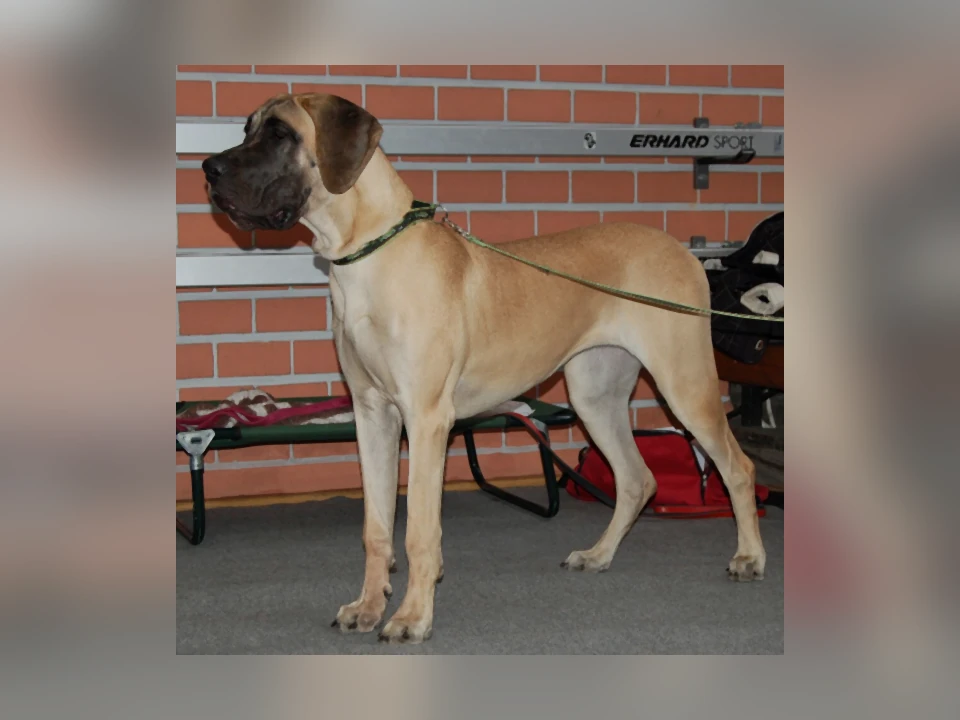
Meet the Great Dane (the “Apollo of dogs” — giant, gentle, dignified)
Few dogs make a first impression like a Great Dane. Standing as tall as a small pony at the shoulder, this is one of the largest breeds in the world—and the AKC fittingly calls it the “Apollo of dogs.” Despite its origins as a German boar-hunting and estate-guarding dog, the modern Great Dane is bred above all for companionship, and its towering frame houses one of the sweetest temperaments in dogdom.
What strikes people who live with a Dane isn’t the size; it’s the dignity and gentleness. A good Great Dane is calm, friendly, and self-assured, with an almost regal poise—yet it wants to be physically close to you, often leaning its full weight against your legs or trying to climb into your lap as if it weighed fifteen pounds rather than a hundred.
Personality & temperament
Great Danes are the archetypal “gentle giants”—typically sweet, patient, and deeply people-oriented, forming strong bonds with their families and thriving on companionship. Many are wonderful with children and other pets when raised with them, and their disposition leans friendly rather than fearful or sharp. This is a dog that would rather greet a guest than guard against one, though its sheer presence can still deter trouble.
Energy-wise, Danes are moderate—a surprise to people who assume a giant dog must be a powerhouse. Adults are often happy to nap away much of the day, content with a couple of walks and some affection. They are intelligent and generally eager to please, but their size means good manners aren’t optional: a dog this large that pulls, jumps, or leans without invitation is hard to manage. Early socialization and consistent, positive-reinforcement training pay off enormously. As always, individuals vary—genetics, upbringing, and socialization shape an adult Dane’s personality far more than the breed label, whether you adopt through a breed rescue or buy from a responsible breeder.
Living with a Great Dane
This is a breed that needs room. Great Danes do best in homes with space to stretch out, and while their exercise needs are only moderate, they appreciate a securely fenced yard and a couple of daily walks. The bigger commitment is the cost of scale: food, crates, beds, medications, and vet bills all run large. Budget honestly before you bring one home.
Puppyhood deserves special care. Giant-breed puppies grow at a staggering rate, and growing too fast on an over-rich diet can stress developing joints and bones. Feed a diet formulated for large- or giant-breed growth, keep your puppy lean, and avoid forced exercise or repetitive jumping while the skeleton matures. For a sense of how quickly your puppy will balloon—and why slow growth matters—our guide on how big will my puppy get walks through the timeline.
One habit is non-negotiable for this deep-chested breed: feed thoughtfully to reduce bloat risk. Many owners divide meals into two or more smaller portions and avoid heavy exercise around mealtimes. None of this guarantees safety, but it’s sensible practice for a breed where bloat is a genuine threat.
Grooming & care
Grooming is the easy part of Great Dane ownership. The short, smooth single coat needs only a weekly brush with a soft brush or rubber curry to keep it clean and minimize loose hair; shedding is moderate and manageable. Bathe occasionally—no small feat with a dog this size, so get a young Dane comfortable with bathing early.
Beyond the coat, stick to the basics: regular nail trims (long nails throw off a heavy dog’s gait), routine ear checks, and consistent dental care. Their size makes a cooperative attitude toward handling especially valuable, so build these routines into puppyhood.
Health
Health is where prospective owners need the most honesty. Most significant is lifespan: as a giant breed, Great Danes typically live only about 7 to 10 years. That short window is the steepest trade-off of loving a Dane, and it’s better understood up front than discovered later.
The single biggest health threat is bloat, or gastric dilatation-volvulus (GDV)—the number-one killer of the breed. In GDV, the stomach fills with gas and can twist, cutting off blood flow; it is a life-threatening emergency requiring immediate surgery. Because the risk is so high in deep-chested giants, many owners and veterinarians discuss a prophylactic gastropexy, a procedure (often done at spay or neuter) that tacks the stomach to the body wall to prevent twisting. Learn the warning signs—a distended belly, restlessness, drooling, and unproductive retching—and treat them as an emergency; our dog bloat & GDV guide explains what to watch for and do.
Other notable concerns include:
- Dilated cardiomyopathy (DCM). A serious heart-muscle disease the breed is predisposed to; responsible breeders screen breeding dogs with cardiac exams.
- Hip dysplasia. Common in giant breeds; ask for OFA or PennHIP clearances on both parents.
- Wobbler syndrome. A neck-and-spinal-cord condition producing a wobbly, uncoordinated gait, often linked to rapid growth.
- Osteosarcoma (bone cancer). Great Danes carry an above-average risk; watch for persistent limping, swelling, or unexplained lameness, especially in an older dog.
Careful large-breed puppy growth and diet, as noted above, also protect long-term joint and bone health. Because Danes age quickly, senior care arrives sooner than with most breeds—our senior dog care guide covers what an aging giant needs. Consult your veterinarian for screening tailored to your dog.
Is a Great Dane right for you?
A Great Dane can be one of the most affectionate, dignified, and rewarding companions you’ll ever share a home with—a loving gentle giant that wants nothing more than to be near you. For the right owner, that’s worth everything.
But “the right owner” is specific. You need space to house a dog this large comfortably, the budget to care for one at giant-breed scale, and the willingness to socialize and train early. Most of all, you have to go in clear-eyed about the two hardest realities: a short lifespan and a serious, ongoing risk of bloat. If you can accept those trade-offs—and ideally start with a responsible, health-testing breeder or a breed-specific rescue—a Great Dane will repay you with years of devoted, lean-into-your-legs love.