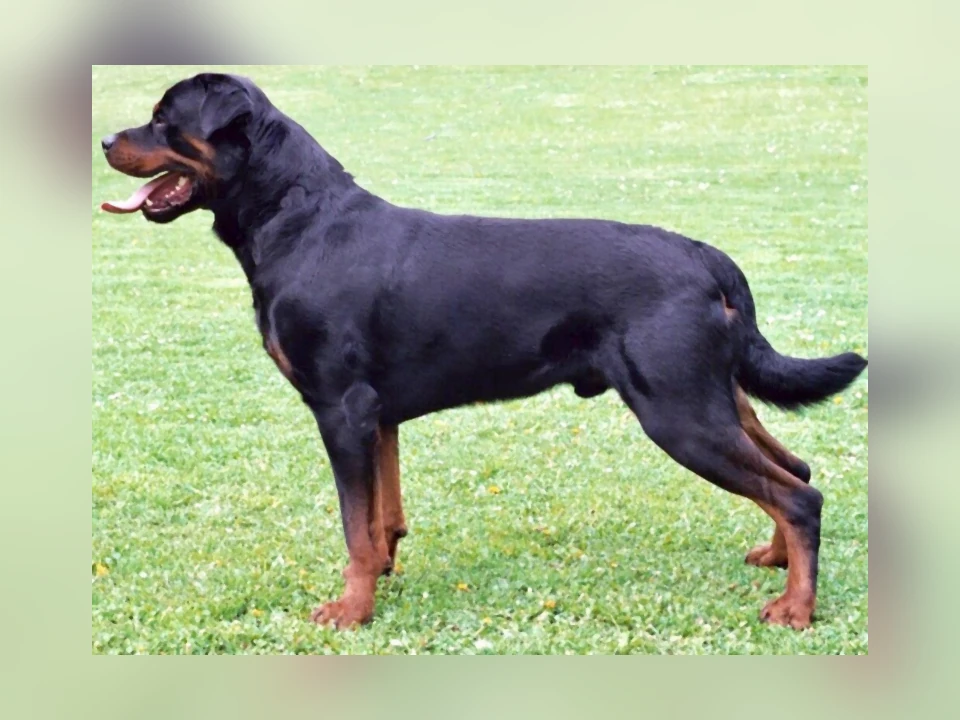
Meet the Rottweiler
The Rottweiler is one of the oldest working breeds, descended from Roman drover dogs that herded and guarded cattle across the Alps. The breed took its name from the German town of Rottweil, where it became the butchers’ dog—pulling carts and protecting both livestock and money. That heritage shows today: the Rottweiler is a confident, powerful, and deeply devoted guardian.
A good Rottweiler carries itself with quiet self-assurance. It isn’t frantic or nervous; it’s steady, watchful, and slow to overreact. Built broad and muscular, with a glossy black coat and warm rust markings, this is a dog that turns heads. But the strongest impression most owners describe isn’t the physique—it’s the loyalty. A Rottweiler wants to be near its people, and it takes its role as family protector seriously.
Personality & temperament
At their best, Rottweilers are calm, confident, and intensely loyal. They tend to be aloof with strangers rather than friendly or fearful, and warmly affectionate with the family they trust. Many are surprisingly clownish at home, leaning into their owners with their full weight (a habit affectionately called the “Rottie lean”).
It’s worth pushing back on the stereotype honestly. A properly bred and raised Rottweiler is not an aggressive dog—the AKC describes the breed as good-natured, devoted, and self-confident. What’s true is that the Rottweiler’s size, strength, and protective drive raise the stakes. A poorly socialized or harshly handled Rottweiler can become reactive or insecure, and a 100-pound dog’s mistakes carry more weight than a small dog’s. So the breed demands responsible ownership: early, ongoing socialization and consistent training are not optional extras.
This is not a dog for hands-off owners. Rottweilers are intelligent and want a job, a leader, and clear structure. Give them that, and they’re among the most trainable and reliable companions you’ll find. Of course, individuals vary—genetics, early socialization, and how a dog is raised all shape adult temperament far more than the breed label alone.
Living with a Rottweiler
Plan on at least an hour of real exercise a day—brisk walks, structured play, and ideally a job to do. Rottweilers excel at obedience, rally, tracking, carting, and protection sports, and they genuinely enjoy the work. Just as important is mental stimulation; a bored Rottweiler will find its own entertainment, and you won’t like the results.
Training is where this breed’s strength makes everything else possible. A Rottweiler that pulls, jumps, or guards on its own terms is hard to manage simply because it’s so physically powerful—so training is non-negotiable. Use firm, consistent, positive-reinforcement methods. These dogs respond to fair leadership and shut down under harsh handling. Start socialization in puppyhood: introduce a wide range of people, dogs, sounds, and environments while the window is open.
Watch the waistline, too. Rottweilers love food and gain weight easily, and extra pounds strain their joints and heart. If your dog is creeping up the scale, our guide on how to help a dog lose weight walks through safe, vet-aligned steps.
Grooming & care
Grooming is one of the easy parts of Rottweiler ownership. The short, dense double coat needs only a weekly brushing most of the year, with heavier shedding twice annually when a quick going-over with a rubber curry or shedding tool keeps loose hair under control. Bathe occasionally, as needed.
Otherwise, stick to the basics every dog needs: regular nail trims, ear checks, and—because dental disease is common and often overlooked—routine teeth brushing. Our dog dental care guide covers a simple at-home routine.
Health
Rottweilers are generally robust, but the breed carries some serious health risks that committed owners should understand up front. Buying from a breeder who health-tests both parents is the single best thing you can do to improve your odds.
- Hip and elbow dysplasia. Like most large breeds, Rottweilers are prone to joint malformation. Ask to see OFA or PennHIP clearances on the sire and dam.
- Bloat / GDV. As a deep-chested breed, Rottweilers face an elevated risk of gastric dilatation-volvulus, a true emergency. Learn the signs—restlessness, a distended belly, unproductive retching—and act fast; our dog bloat & GDV guide explains what to do.
- Cancer, especially osteosarcoma. Rottweilers have an above-average cancer risk. Watch for persistent limping, lumps, or unexplained weight loss, and don’t dismiss subtle changes in an older dog.
- Subaortic stenosis (SAS). This inherited heart condition is why responsible breeders include a cardiac exam in their screening.
- Cruciate ligament rupture. A common knee injury in big, active dogs; keeping your Rottweiler lean meaningfully lowers the risk.
Rottweilers are not an especially long-lived breed, and senior care matters. Our senior dog care guide covers the extra attention older Rotties need. Consult your veterinarian for screening and prevention tailored to your individual dog.
Is a Rottweiler right for you?
A Rottweiler is a magnificent dog for the right person and a poor fit for the wrong one. If you’re a committed, experienced owner who will socialize early, train consistently, exercise daily, and supervise interactions with children and strangers, you’ll be rewarded with a loyal, capable, deeply bonded guardian.
If you want a low-effort pet, travel often, or aren’t prepared to be the steady leader a powerful working breed requires, this isn’t your dog. And whether you go to a responsible, health-testing breeder or adopt through a breed-specific rescue, prioritize health clearances and honest temperament information over looks. Get the foundation right, and a Rottweiler will give you years of devotion in return.