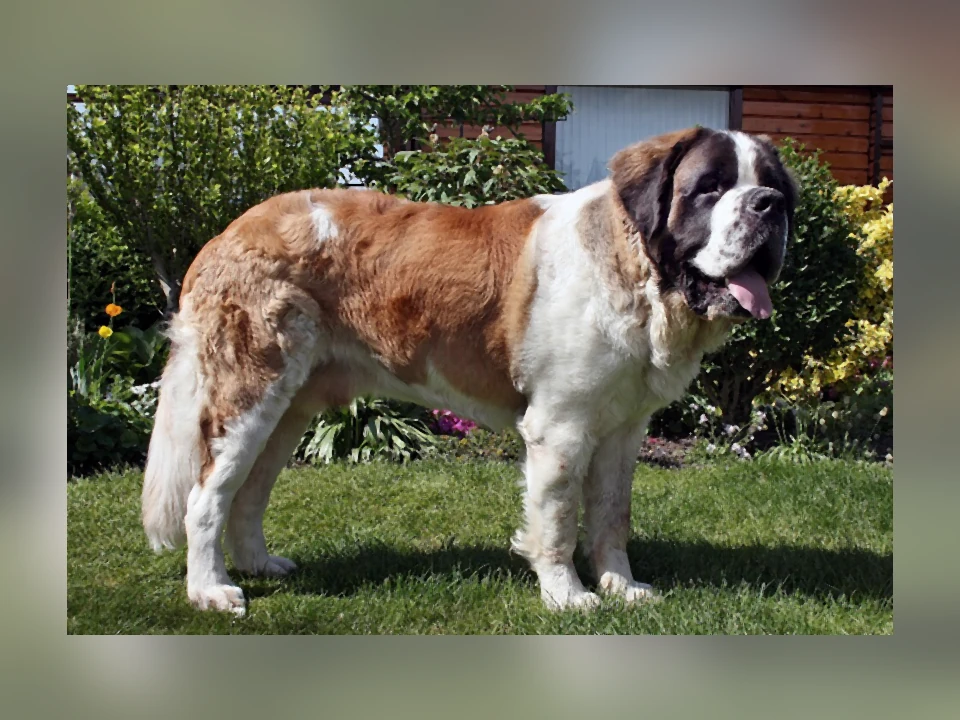
Meet the Saint Bernard (gentle alpine rescue giant)
Few dogs carry a more romantic history than the Saint Bernard. Bred by monks at the Great St. Bernard Hospice in the Swiss Alps, these massive dogs found and warmed lost travelers in deep snow, saving many lives over the centuries. That heritage gave the breed its enduring image: a huge, warm-hearted dog with a soft spot for people in need. Today the Saint Bernard is loved less as a rescuer than as one of the gentlest of all family giants.
What strikes people who live with one is the calm sweetness packed into all that bulk. A good Saint is mellow, patient, and devoted, famously tolerant of children and content to lean its considerable weight against the people it loves. But that gentle nature comes wrapped in giant-breed realities, drool, hair, heat sensitivity, and a short life, that every prospective owner should weigh honestly.
Personality & temperament
Saint Bernards are the archetypal gentle giants, typically friendly, devoted, patient, and calm. They bond deeply with their families and are renowned for their tolerance and steadiness with children, which is the breed’s signature trait. They tend to be welcoming rather than sharp with strangers, though their sheer size and deep bark can still deter trouble.
Energy-wise, the Saint is on the calm end, often content to lounge much of the day. They are intelligent and willing but can be a touch stubborn, so early, consistent, positive-reinforcement training matters enormously, simply because a dog this size that pulls or jumps is genuinely hard to manage. Socialize and train while they are young and still liftable. As always, individuals vary, and upbringing shapes an adult Saint’s manners as much as the breed label.
Living with a Saint Bernard
Exercise needs are moderate, not extreme: a couple of daily walks and room to move usually suffice, and you should avoid hard exercise in warm weather and go easy on growing puppies’ joints. What the breed truly needs is space, companionship, and a cool environment.
The harder day-to-day realities are physical. Saint Bernards drool, often generously, thanks to their loose jowls, so this is not a breed for the fastidious; many owners keep a towel on hand at all times. They also carry a dense double coat that sheds heavily year-round and blows out in seasonal changes, leaving hair on everything. Heat is a genuine danger, since that insulating coat and large body make overheating easy; keep them cool, exercise in the cooler parts of the day, and never leave them in the heat. Finally, plan for the cost of scale, since food, beds, crates, and veterinary care all run large.
Grooming & care
Grooming is a real but manageable commitment. Both the smooth and the longhaired (rough) varieties need regular brushing, several times a week, and daily during heavy seasonal sheds, to control loose hair and prevent mats, with the longhaired coat asking more. Clean the facial folds and around the eyes regularly, since the loose skin can trap moisture and debris. Stick to the basics too: regular nail trims (long nails throw off a heavy dog’s gait), routine ear checks, and consistent dental care, all far easier when started in puppyhood.
Health
Health is where prospective owners need the most honesty. As a giant breed, the Saint Bernard typically lives only about 8 to 10 years, and that short window is one of the steepest trade-offs of loving the breed. Hip and elbow dysplasia are very common, so insist on OFA clearances on both parents and keep your dog lean. Bloat, or gastric dilatation-volvulus (GDV), is a life-threatening emergency in deep-chested giants; learn the warning signs, such as a distended belly, restlessness, drooling, and unproductive retching, treat them as an emergency, and ask your vet about a prophylactic gastropexy. The breed is also predisposed to dilated cardiomyopathy (DCM), an inherited heart-muscle disease that responsible breeders screen for with cardiac exams, and like many giants it carries an elevated risk of osteosarcoma (bone cancer), so report persistent lameness promptly. The loose facial skin predisposes Saints to eyelid problems, including entropion, ectropion, and cherry eye, which often need surgical correction, and epilepsy is documented in the breed. Heat sensitivity, covered above, is an everyday health issue rather than a rare event. As the Merck Veterinary Manual notes, knowing a dog’s hereditary risks lets your vet screen proactively, so start with a breeder who health-tests both parents.
Is a Saint Bernard right for you?
A Saint Bernard can be one of the sweetest, most devoted companions you will ever share a home with, a calm, patient giant with a soft heart for its family and endless tolerance for children. For the right owner, that is worth everything. But the right owner is specific: you need space to house a dog this large comfortably, the budget for giant-breed care, real tolerance for drool and heavy shedding, a commitment to keeping a heat-sensitive dog cool, and the willingness to face a short lifespan with eyes open. If you can accept those trade-offs, and ideally start with a responsible, health-testing breeder or a breed rescue, a Saint Bernard will repay you with years of gentle, lean-into-your-side devotion.