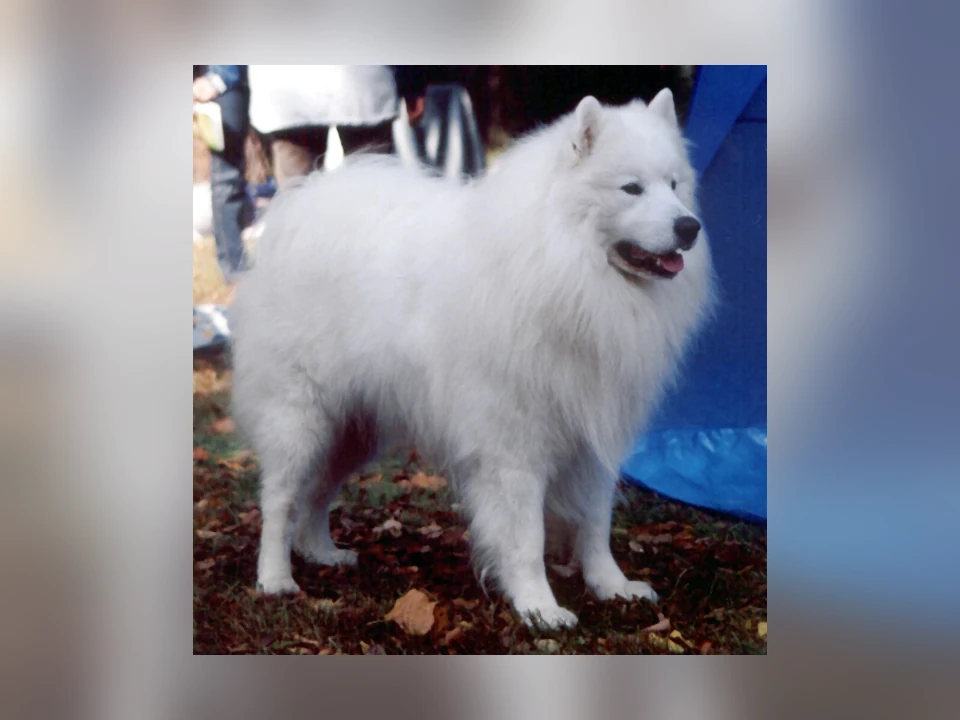
Meet the Samoyed (the smiling, fluffy white “Sammy” sled dog)
Few dogs look as much like a walking cloud as the Samoyed. With its dense, sparkling-white double coat, dark expressive eyes, and the famous upturned “Sammy smile,” this is one of the most photogenic breeds alive. That smile isn’t just charm, either — the upturned corners of the mouth are thought to help keep the dog from drooling and forming icicles in extreme cold, a small clue to where this breed comes from.
The Samoyed was developed by the Samoyedic peoples of Siberia, who relied on these dogs to herd reindeer, haul sleds, and hunt — and, crucially, to sleep alongside their families for warmth. The American Kennel Club places the Samoyed in the Working group, and that close human partnership shaped a dog that is hardworking, hardy, and deeply bonded to people. A Samoyed is not built to live at arm’s length; it’s built to be in the middle of everything you do.
Personality & temperament
If you want a friendly dog, it’s hard to do better. Samoyeds are gentle, social, and famously good-natured — typically warm with strangers, patient with children, and happy in the company of other dogs. They are playful well into adulthood, often described as mischievous and a little clownish, and they thrive on interaction. This is a dog that wants to participate, not observe.
All that friendliness comes with a catch: a Samoyed makes a poor guard dog. It’s far more likely to greet a visitor than to warn one off. They are, however, genuinely vocal. Samoyeds bark, “talk,” and sing, and a bored or lonely one can become a serious noise problem for you and your neighbors — our guide on why dogs bark so much covers how to get ahead of it. Above all, this is a breed that needs companionship. Bred to live shoulder-to-shoulder with their people, Samoyeds do not do well alone for long stretches and can become unhappy and destructive when isolated.
Living with a Samoyed
Plan for an active dog with a job to do. Samoyeds need substantial daily exercise — brisk walks, hikes, play, or dog sports like agility — to stay physically and mentally satisfied. They’re intelligent and capable of learning a great deal, but they also carry an independent, working-dog streak, so training works best when it’s consistent, positive, and engaging rather than repetitive.
Two realities deserve special attention. First, this is an Arctic breed, and that gorgeous coat that protects against Siberian winters also makes a Samoyed overheat easily. In warm weather, exercise in the cool of early morning or evening, provide constant shade and water, and learn the signs of heatstroke and what to do. Second, a Samoyed that doesn’t get enough exercise and company doesn’t just mope — it acts out. Bored Sammies are notorious for digging up yards, barking excessively, and finding clever ways to escape. The fix isn’t a bigger fence so much as a fuller life: enough activity, enough stimulation, and enough time with their people.
Grooming & care
There is no soft way to put this: Samoyeds shed, a lot. The thick, weatherproof double coat sheds steadily year-round and then “blows” its dense undercoat once or twice a year, releasing fur in clumps over a few weeks. White fluff will find its way onto your clothes, your furniture, and your floors. Frequent brushing — several times a week, and daily during a coat blow — is essential to prevent matting and to keep the shedding under some kind of control; our guide on managing dog shedding walks through the tools and routines that genuinely help.
One rule is non-negotiable: never shave a Samoyed. The double coat insulates against both cold and heat and shields the skin from sun, and shaving it can cause real harm and may not grow back properly. Beyond brushing, the coat is naturally somewhat dirt- and odor-resistant, so baths are occasional rather than frequent. Round out care with routine nail trims, dental care, and regular ear checks.
Health
Samoyeds are generally a hardy, robust breed, but several conditions deserve a prospective owner’s attention. The most breed-specific is Samoyed hereditary glomerulopathy, an inherited, X-linked kidney disease that can cause progressive kidney failure — a strong reason to ask breeders directly about the kidney health and family history of the parents. The breed is also prone to hip dysplasia, making OFA hip screening of breeding stock worthwhile, and to eye conditions including progressive retinal atrophy (PRA) and cataracts, which responsible breeders monitor with annual OFA/CERF eye exams.
Samoyeds carry an above-average risk of diabetes mellitus, so it’s worth knowing the early signs — increased thirst, urination, and weight changes — and reporting them promptly. The heart defect subaortic stenosis, an inherited narrowing below the aortic valve, also turns up in the breed and may first reveal itself as a murmur on a routine exam. The single best protection is choosing a breeder who health-tests both parents, or adopting and budgeting for proactive veterinary care. Every dog is an individual, and good genetics paired with attentive care — guided by trusted references like the Merck Veterinary Manual and AAHA — stack the odds in your favor.
Is a Samoyed right for you?
A Samoyed is a joyful, beautiful, deeply affectionate companion — for the owner who can meet what it asks. That owner has the time and energy for daily exercise, the patience for consistent training, a tolerance for living with a great deal of white fur, and, above all, a household where the dog won’t be left alone for hours on end. In a home like that, few breeds are more rewarding.
If you’re away all day, live somewhere hot, or want a tidy, low-maintenance, off-duty guard dog, the Samoyed will frustrate you on every count — and that mismatch is how wonderful Sammies end up needing new homes. If you can handle the shedding, the grooming, the exercise, and their genuine need for company, consider a health-testing breeder or one of the Samoyeds waiting in breed-specific rescue. Go in clear-eyed, and you’ll be rewarded with one of the warmest, smiliest companions a home can have.