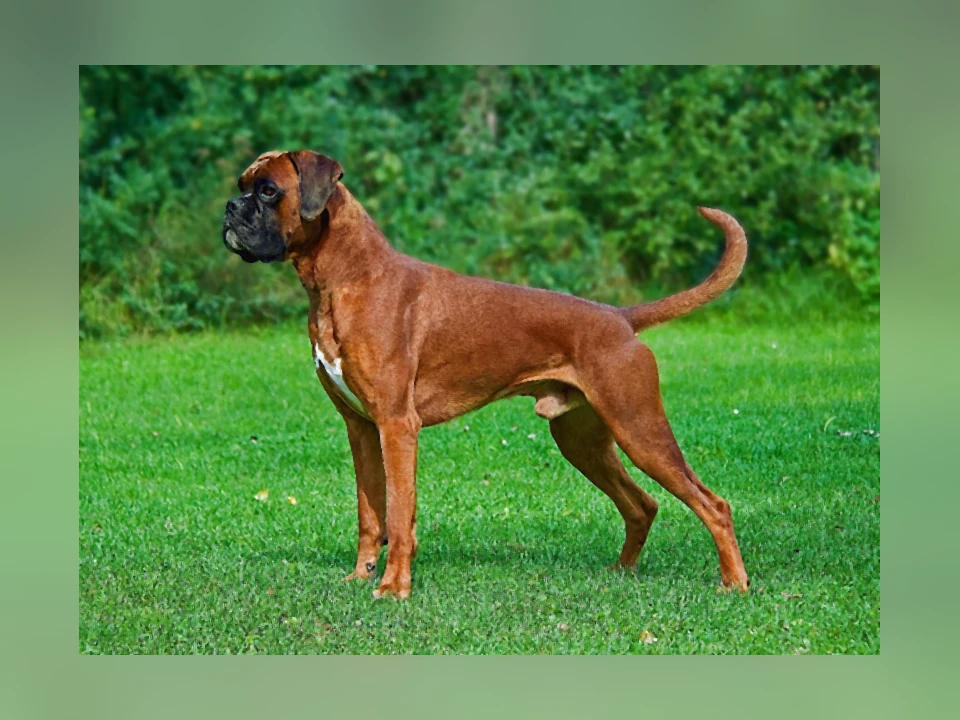
Meet the Boxer
If there were an award for “most likely to make you laugh out loud,” the Boxer would be a perennial favorite. Developed in Germany in the late 1800s from older mastiff-type and bulldog ancestors, the Boxer was originally bred for work — hunting, guarding, and later police and military service. The American Kennel Club places the breed in the Working group, and that heritage still shows in its athletic build and courage. But ask anyone who lives with one, and they’ll tell you the Boxer’s true calling is being a devoted, slightly ridiculous family clown.
Boxers are medium-large, muscular dogs with a square jaw, expressive face, and a body that seems to run on spring-loaded enthusiasm. They are famous for “kidney bean” wiggles when excited and for a habit of using their front paws like hands — the trait that helped earn the breed its name. Underneath the comedy is a dog that bonds fiercely to its people and wants, more than anything, to be in the middle of family life.
Personality and temperament
The classic Boxer is energetic, goofy, and unfailingly affectionate. This is a breed that stays puppyish well into adulthood — many Boxers act like overgrown clowns for years, full of bounce and silliness. With their own families they are patient and loving, and they tend to be especially good and gentle with children, which is a big part of why they’ve stayed popular as a family dog.
That exuberance comes with a flip side: a young Boxer can be a lot of dog. Without training, all that enthusiasm turns into jumping on guests, pulling on leash, and bouncing off furniture. Boxers are intelligent and eager to please, but they can also be playful and distractible, so training works best when it’s consistent, reward-based, and started early. Channel the energy and you get a delightful companion; ignore it and you get a 70-pound dog who hasn’t learned that not everyone wants to be tackled. Early socialization helps them grow into the steady, friendly adults the breed is known for.
Living with a Boxer
Plan for an active life. Boxers need substantial daily exercise — brisk walks, play sessions, fetch, and room to run — plus the mental engagement of training and games. A bored, under-exercised Boxer often becomes a destructive one, so this isn’t a breed that thrives left alone in a yard. What they want most is to do things with you, and they’re at their best when fully included in the household.
One crucial caveat: Boxers are moderately brachycephalic. That shortened muzzle makes panting — a dog’s main cooling system — less efficient, so Boxers overheat far more easily than longer-nosed breeds. In warm weather, exercise in the cool of early morning or evening, always provide shade and fresh water, and never leave a Boxer in a parked car. Knowing the early warning signs of overheating can be lifesaving, so it’s worth reading our guide on heatstroke in dogs and what to do before summer arrives.
Boxers are also deeply social and don’t do well with long stretches of isolation. They are happiest as indoor dogs who sleep near their people and join in family routines.
Grooming and care
Grooming is the easy part of Boxer ownership. The short, smooth single coat is genuinely low-maintenance: a quick weekly brush with a rubber curry or grooming mitt removes loose hair and keeps the coat shiny, and Boxers shed only modestly. Baths are needed just occasionally, when your dog is actually dirty. Round out the routine with regular nail trims, dental care, and ear checks. One practical note: the short coat offers little insulation, so Boxers feel the cold and may appreciate a sweater on chilly walks.
Health
This is where honesty matters most, because the Boxer’s health profile is the single most important thing a prospective owner should understand. These are wonderful dogs, but the breed carries several serious, well-documented risks.
Heart disease is at the top of the list. Boxer cardiomyopathy, also called arrhythmogenic right ventricular cardiomyopathy (ARVC), is an inherited rhythm disorder the breed is specifically known for; it can cause fainting, collapse, or sudden death, and it’s why cardiac screening of breeding dogs is so important. Aortic and subaortic stenosis, a congenital narrowing near the heart, is another concern responsible breeders screen for with a veterinary cardiologist.
Cancer is the other defining risk. Boxers have notably elevated rates of cancer, particularly mast cell tumors and lymphoma, so any new lump or skin change deserves a prompt vet visit rather than a wait-and-see. The breed is also deep-chested and at real risk of bloat (gastric dilatation-volvulus, or GDV) — a true emergency every owner should be able to recognize; our bloat / GDV guide explains the warning signs and when to rush to the clinic. Add in hip dysplasia, a common large-breed joint concern, and the brachycephalic, heat-sensitive airway already discussed, and the picture is clear.
None of this should scare you away — it should make you a more informed owner. Choosing a breeder who screens parents through the American Boxer Club’s recommended health tests (including cardiac and OFA hip evaluations), or adopting with eyes open and budgeting for proactive care, stacks the odds in your favor. Because the breed’s lifespan often runs shorter than some large breeds, attentive senior care matters; our senior dog care guide covers what to watch for as your Boxer ages. The Merck Veterinary Manual and AAHA are reliable references for the clinical details. Every dog is an individual, and good genetics plus regular veterinary care make a meaningful difference.
Is a Boxer right for you?
Picture your daily life honestly. A Boxer is a fantastic choice for an active family that wants a fun, loving, deeply bonded dog and can deliver real exercise, training, and companionship every day. In the right home, few breeds are more affectionate or more entertaining — a Boxer will keep you laughing for years.
They are the wrong fit for sedentary or frequently-absent households, for anyone hoping for a calm, low-key couch dog, or for owners in hot, humid climates without good climate control. And every prospective owner should go in clear-eyed about the breed’s heart and cancer risks and its heat sensitivity. If you can offer an active, engaged, climate-aware home — and you’re prepared for the health realities — a Boxer can be one of the most joyful companions you’ll ever have. As always, health-testing breeders and the many Boxers waiting in rescue are both excellent places to start.