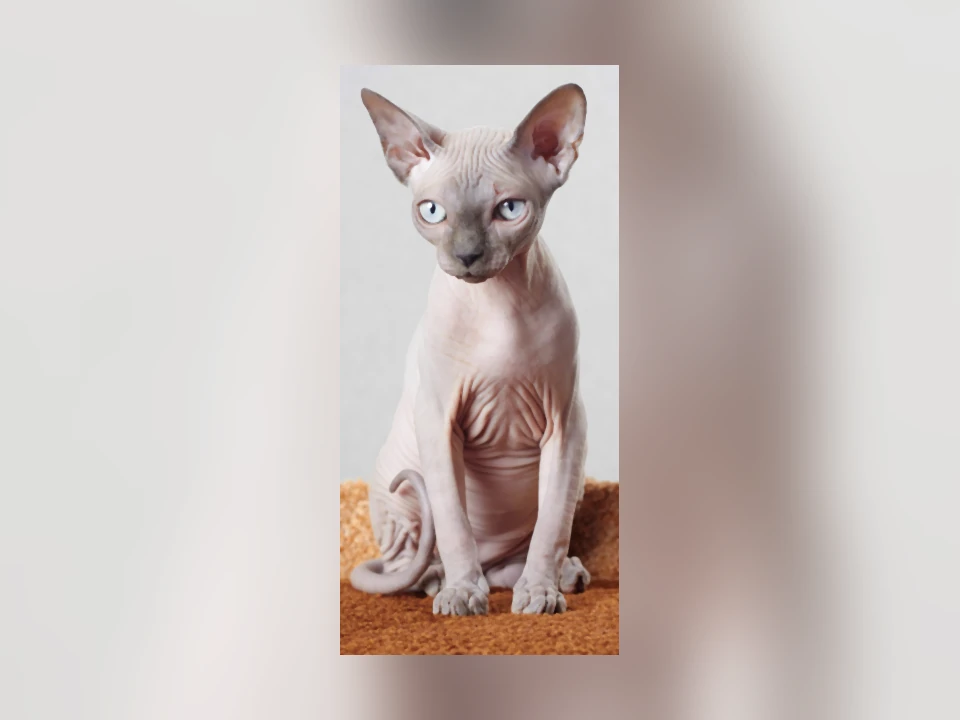
Meet the Sphynx (warm, wrinkly, hairless extrovert)
Few cats spark as strong a first reaction as the Sphynx. With its wrinkled skin, oversized ears, lemon-shaped eyes, and that famous near-naked body, it looks like nothing else in the cat world — and it feels like nothing else, too. Picking up a Sphynx is a genuinely surprising experience: the skin is soft, warm, and suede-like, often described as touching a peach or a warm chamois.
The breed traces to Toronto, Canada, in the 1960s, where a domestic cat gave birth to a hairless kitten through a natural genetic mutation. Careful, selective breeding from a handful of such cats produced the Sphynx recognized today by registries including The International Cat Association (TICA). Despite appearances, “hairless” is not quite literal — most Sphynx are covered in a fine, downy fuzz that gives the skin a chamois texture, and many have faint pigment patterns where their coat color would otherwise show.
What truly defines the Sphynx, though, is personality. This is one of the most extroverted, attention-hungry, and clownish breeds you can live with.
Personality & temperament
If you want a cat that ignores you, look elsewhere. Sphynx are relentlessly social, often following their people room to room, greeting visitors at the door, and inserting themselves into every activity. They are classic “velcro cats” — they want to be on you, under the blanket with you, draped across your keyboard, or curled in your lap, and a big part of that is simple: you’re warm, and they crave warmth.
They are also funny. Sphynx tend to be energetic, athletic, and a little mischievous, prone to acrobatic leaps, attention-getting antics, and dog-like games of fetch. They’re intelligent and reasonably trainable, learning tricks and routines, though their independent streak means training works best with patience and rewards. They’re moderately vocal — chatty when they want something, but not as constantly loud as a Siamese.
The flip side of all that sociability is that Sphynx do not cope well with being alone. A bored, lonely Sphynx can become anxious or destructive, so company, enrichment, and ideally another pet matter.
Living with a Sphynx
Here is the honest core of owning this breed: being hairless means more maintenance, not less. The very thing that makes the Sphynx fascinating also makes it higher-effort than a typical cat.
A normal coat absorbs and distributes the oils a cat’s skin naturally secretes. With no coat to soak them up, those oils build on a Sphynx’s skin, leaving a greasy film, collecting in wrinkles, and staining bedding and clothes if left unmanaged. That means regular bathing and wiping are not optional grooming luxuries — they’re routine care. Our guide on whether cats really need baths explains how to bathe a cat calmly and how often makes sense for an oily-skinned breed like this one.
Temperature is the other daily reality. A Sphynx gets cold easily and will seek out heat — sunny spots, radiators, your body, a heated bed. Many owners use cat sweaters in cooler homes, and the cat will appreciate warm resting places. At the same time, that bare skin sunburns, even through window glass, so direct sun is a hazard rather than a comfort. For both reasons — cold and sun, plus skin injury risk — a Sphynx should be an indoor-only cat. Expect them to eat a lot, too: their fast metabolism burns extra energy keeping that exposed body warm.
Grooming & care
“Hairless” fools people into thinking grooming is effortless. In practice, a Sphynx needs a consistent, hands-on care routine:
- Bathing to remove built-up skin oils and prevent greasy residue, clogged pores, and skin infections. Frequency varies by cat; your vet can help you find the right rhythm.
- Skin and wrinkle wiping between baths, using a damp cloth or vet-approved wipes to keep folds clean and dry.
- Ear cleaning, because without fur to trap debris, Sphynx ears accumulate dark, waxy buildup quickly and need regular gentle cleaning.
- Nail and claw-fold care — the skin around the nail beds traps grime and oil, so claws and claw folds need routine cleaning along with normal trimming.
- Dental care, since Sphynx, like many purebreds, are prone to dental disease. Establishing home toothbrushing plus professional cleanings pays off for life — our cat dental care guide covers how to start and what to watch for.
Health
The Sphynx is an engaging companion, but prospective owners should go in clear-eyed about its health profile, which carries a few notable breed-linked risks. Drawing on resources like the Cornell Feline Health Center and the Merck Veterinary Manual, areas to watch include:
- Hypertrophic cardiomyopathy (HCM) — a thickening of the heart muscle that is the breed’s most serious concern and relatively common in Sphynx lines. Responsible breeders echocardiogram-screen their breeding cats, and your veterinarian may recommend periodic cardiac monitoring.
- Hereditary myopathy, a breed-associated muscle disorder that can cause weakness or poor muscle tone; family history matters.
- Skin conditions, including greasy skin, blackheads, yeast overgrowth, and infections, all tied to the oil buildup that regular bathing helps control.
- Dental and periodontal disease, common in the breed and well worth preventing with consistent oral care.
Buying from a health-screening breeder who tests breeding lines — especially for HCM — is genuinely the single most important health decision you can make, and one no amount of skin care can substitute for. Adoption through Sphynx-specific rescues is another responsible route. Remember that individuals vary; not every Sphynx develops these conditions, but knowing the risks lets you partner well with your vet. Because their fast metabolism makes them hearty eaters, a Sphynx that suddenly stops eating is a meaningful red flag — see our guide on what to do when your cat isn’t eating. And as they age, their bare skin, heart health, and warmth needs all deserve closer attention, which our senior cat care guide walks through.
Is a Sphynx right for you?
A Sphynx is a devoted, funny, intensely affectionate companion — a cat that wants to be in your lap, under your covers, and in the middle of your day. For someone who’s home often, craves an interactive relationship with a cat, and is genuinely willing to do the bathing, skin care, ear and claw cleaning, and warmth-keeping the breed requires, few cats give back more. But do not choose a Sphynx because it’s hairless and you imagine that means easy. The opposite is true: this is a higher-maintenance cat with a serious heart-health risk to screen for. Go in committed to the care, and you’ll have one of the most rewarding companions in the cat world.