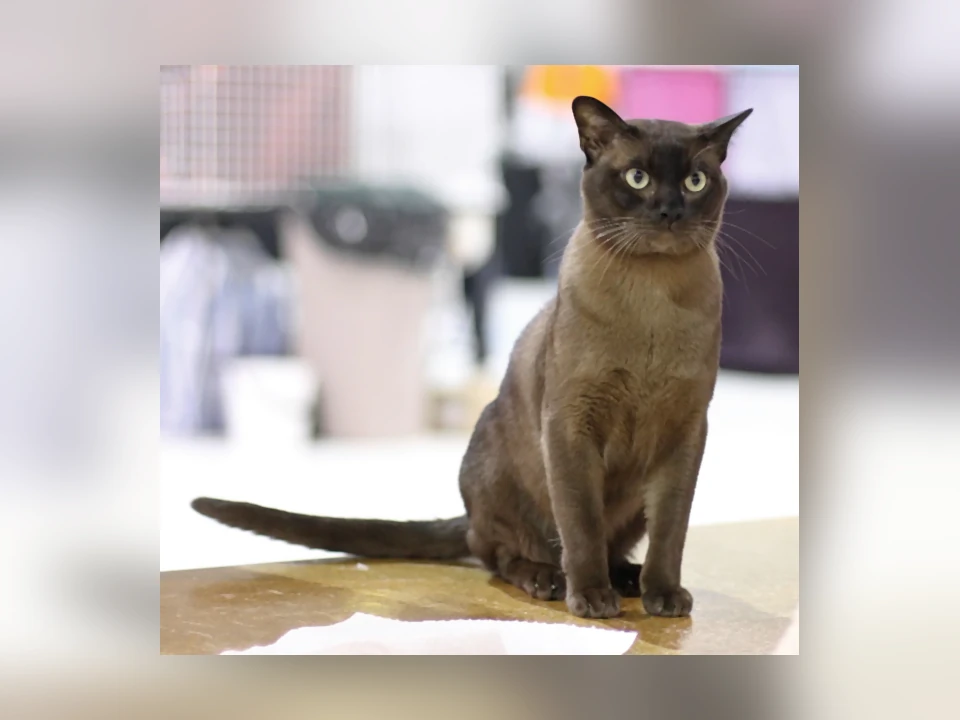
Meet the Burmese (sleek, social, people-obsessed companion)
The Burmese is a compact, muscular cat with a short, satin-glossy coat and large, expressive eyes that seem perpetually interested in whatever you’re doing. The breed traces back to a single small brown cat named Wong Mau, brought from Burma (in the region of present-day Myanmar and Thailand) to the United States in the 1930s and carefully bred to establish the modern breed. The Cat Fanciers’ Association (CFA) and TICA both recognize the Burmese, and while sable (a rich seal brown) is the classic and original color, several other shades are accepted today.
What sets the Burmese apart isn’t a flashy look — it’s personality. This is one of the most genuinely people-oriented cats you can live with: affectionate to the point of being underfoot, endlessly curious, and deeply invested in your company. If you’ve ever wanted a cat that acts a little like a small, devoted dog, the Burmese comes remarkably close.
Personality and temperament
Burmese are affectionate in a way that can surprise first-time owners. They are classic “velcro cats” — they want to be in the room you’re in, on the lap you’re using, and involved in the task you’re doing. Many stay playful and kitten-like well into adulthood, chasing toys and inventing games long after other breeds have settled into dignified napping.
They are also talkative, though their voice is typically softer and sweeter than the loud, demanding call of their Siamese relatives. A Burmese will often chat to greet you, ask for attention, or comment on dinner being late. That sociable chattiness is part of the charm, but a sudden change in how much or how your cat vocalizes can signal something is wrong — our guide on why your cat may be meowing so much helps you tell normal Burmese conversation from a warning sign.
The flip side of all that devotion is that Burmese bond intensely and genuinely dislike being alone. A Burmese left by itself for long hours can become bored, anxious, or lonely. This is not a low-maintenance, set-it-and-forget-it cat.
Living with a Burmese
Because the Burmese craves interaction, the single most important question to ask before bringing one home is: who will keep it company? These cats thrive in homes where someone is around much of the day, and they’re a wonderful match for people who work from home, retirees, or busy households with steady comings and goings. If everyone is gone all day, a second sociable pet — another cat or a cat-friendly dog — goes a long way toward meeting that need.
Physically, the Burmese is famously described as a “brick wrapped in silk.” They look sleek and slender but feel surprisingly heavy and solid when you pick them up, thanks to a dense, muscular build under that smooth coat. They’re agile, athletic climbers who enjoy interactive wand play, puzzle feeders, and a good cat tree to survey their kingdom.
Grooming and care
Grooming is about as easy as cat care gets. The short, satin coat lies close to the body, has little undercoat, and sheds modestly. A quick weekly brushing or even just a rub-down with a grooming mitt removes loose hair and keeps that signature glossy sheen — no elaborate routine, no mats to fight.
The more meaningful care priority is weight. Burmese love both food and the people offering it, which makes overfeeding easy and weight gain common. Because excess weight feeds into their diabetes risk and stresses their joints, keeping your cat lean is one of the most valuable things you can do — our guide on whether your cat is overweight shows how to assess body condition at home. Round out care with routine dental attention, since periodontal disease is one of the most common and under-treated problems in cats.
Health
The Burmese is generally a hardy, long-lived breed, but it carries several breed-linked considerations that responsible owners and breeders take seriously. Drawing on resources like the Cornell Feline Health Center and the Merck Veterinary Manual, the areas to watch include:
- Diabetes mellitus. The breed is genuinely predisposed to diabetes. Stay alert to increased thirst, more frequent urination, and weight changes; if you notice your cat drinking far more than usual, our guide on why your cat may be drinking so much water explains when it warrants a vet visit. Keeping your cat lean meaningfully lowers the risk.
- Hypokalemic polymyopathy, an inherited disorder of low blood potassium that can cause episodic muscle weakness, usually in young cats. DNA testing is available, and good breeders screen for it.
- Flat-chested kitten syndrome, a chest-wall deformity seen in some kittens; many mild cases improve as the kitten grows, but it should be discussed openly with your breeder.
- Cranial deformity, a severe head malformation present in certain Burmese lines. This is exactly why buying from a responsible, screening breeder who avoids affected pairings matters so much.
- Dental and periodontal disease, common across purebred cats and very responsive to preventive home and veterinary care.
The single best thing you can do for a Burmese’s long-term health is to choose a reputable breeder who tests for inherited conditions and is transparent about their lines — or to adopt from a rescue that’s honest about history — and then keep up with routine veterinary care.
Is a Burmese right for you?
A Burmese is a devoted, interactive, chatty companion that gives back enormous affection — for the right home. If you’re around much of the day, want a cat that follows you everywhere, talks to you, plays like a kitten for years, and genuinely wants to be involved in your life, few breeds are more rewarding. If you’re hoping for an independent, aloof cat who entertains itself quietly while you’re out all day, the Burmese is honestly the wrong choice, and both you and the cat will be happier with a different match.