Meet the Domestic Longhair (the long-haired “moggie”)
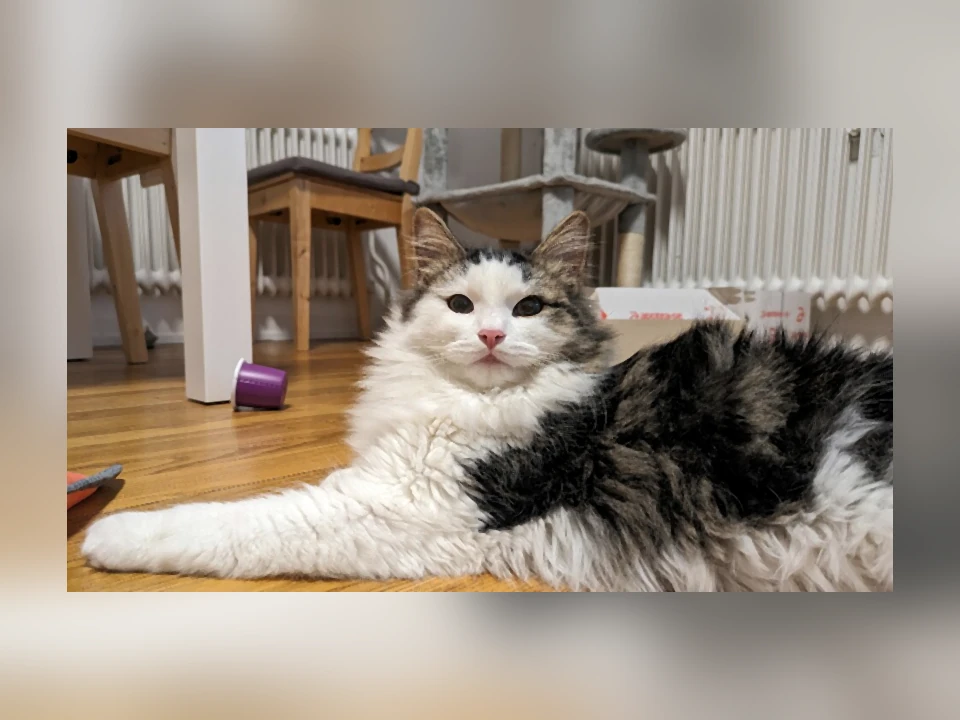
If a Domestic Shorthair is the everyday cat, the Domestic Longhair is that same everyday cat wrapped in a flowing coat. Here’s the honest part most breed guides skip: the Domestic Longhair is not a formal breed at all. There’s no registry standard, no defining ancestry, and no breeder pedigree behind it. It’s simply a long- or medium-coated cat of mixed, unknown heritage — the kind affectionately known as a moggie.
These are the long-haired members of the same enormous family of pet cats that make up the majority of cats in our homes. Think of the Domestic Longhair as the long-coated “mutt” of the cat world — the direct counterpart of the Domestic Shorthair, distinguished only by the length of its fur. That mixed background tends to bring hybrid vigor: a broad gene pool that often spreads health risk thinner than the concentrated bloodlines behind some pedigrees.
Because there’s no standard, you’ll find Domestic Longhairs in every color and pattern imaginable — tabbies, tuxedos, calicos, gingers, tortoiseshells, solid blacks, and everything between. Coat length and texture vary too, from a modest medium fluff to a near-Persian plume. Two kittens from the same litter can grow up looking, and acting, completely different.
Personality & temperament
This is where honesty matters most. With a pedigree cat, breeders select for temperament, so you can make a reasonable guess about how a kitten will turn out. With a Domestic Longhair, you can’t. Personality here is hugely variable, individual to individual — and a long coat tells you nothing about the cat underneath it.
Some are bold, talkative, and into everything. Others are quiet, reserved lap cats. You’ll find playful clowns, dignified loners, velcro cuddlers, and aloof independents — sometimes within the same household. The “Domestic Longhair” label describes the fur, not the feline.
That unpredictability is part of the charm, but set your expectations accordingly. The surest way to find a Domestic Longhair who fits your home is to meet the actual cat — ideally an adult or older kitten whose personality has already emerged — rather than leaning on the “breed” to forecast behavior. A good shelter or foster can describe a specific cat’s quirks far better than any generalization ever could.
Living with a Domestic Longhair
In most ways, this is a wonderfully adaptable cat. Domestic Longhairs settle into apartments, busy family homes, and quiet single households alike, and they’re a fine choice for first-time owners. Their core needs are the universal needs of any cat: a clean litter box, fresh water, safe places to retreat, vertical space, scratching posts, and daily interactive play.
The one genuine difference from a shorthair is the coat — and that’s the real commitment. Long fur mats if it’s neglected, and mats aren’t just unsightly; they pull on the skin and can become painful or hide sores underneath. Regular brushing keeps the coat smooth and also means your cat swallows less loose hair during self-grooming, which cuts down on hairballs. If hairballs become frequent, our guide on hairballs in cats explains when they’re normal and when they signal a problem.
Most cats keep themselves clean and rarely need a bath, but the occasional longhair gets greasy, soiled, or matted enough to warrant one. If you’re unsure whether yours needs it, do cats need baths walks through when bathing actually helps and how to do it without stress.
Grooming & care
Plan on a thorough brushing a few times a week, and daily for finer or denser coats that mat quickly. Use a comb that reaches the undercoat, not just a surface brush, and work gently down to the skin. The trouble spots to check every time are the armpits, the belly, behind the ears, and the “trousers” at the back of the hind legs — mats love to form where the fur rubs and the cat can’t easily reach.
If you find a mat, don’t yank it. Tease it apart with your fingers or a comb, and never cut blindly with scissors — it’s far too easy to nick the skin. A badly matted cat is a job for a groomer or your veterinary clinic.
Round out care with the basics every cat needs: keep nails trimmed, glance in the ears now and then, and don’t overlook the mouth. Dental disease is one of the most common problems vets see in cats of every background, and it often hides in plain sight. Brushing your cat’s teeth — even a few times a week — makes a real difference; our cat dental care guide covers how to start.
Health
Thanks to their genetic diversity, Domestic Longhairs are generally healthier than many pedigreed cats, with fewer of the inherited conditions that get concentrated in narrow bloodlines. Many live well into their teens. That’s a real advantage — but “generally healthier” is not “trouble-free.” They still face the common feline issues, and prevention is everything.
The big ones to stay ahead of:
- Obesity — the most common preventable health problem in pet cats, and a driver of diabetes, joint trouble, and a shorter life. In a longhair it has an extra cost: an overweight cat can’t twist around to groom properly, so the coat mats faster. Measure meals and check body condition with our is my cat overweight guide.
- Dental disease — extremely common by middle age, and painful when ignored.
- FLUTD and urinary problems — lower urinary tract disease is frequent in cats. Straining, frequent trips to the box, or blood in the urine warrant a vet visit, and a male cat who can’t urinate is a true emergency.
- Chronic kidney disease — a leading concern in senior cats. Annual bloodwork after about age seven helps catch it early, when it’s most manageable.
The foundation under all of it: spay or neuter, keep core vaccines current, stay on parasite control, and see your veterinarian for routine checkups. Authorities like the Cornell Feline Health Center and International Cat Care agree that this kind of preventive care is what keeps the average house cat healthy for a long, full life.
Is a Domestic Longhair right for you?
For most people, the answer is a happy yes. A Domestic Longhair is a beautiful, often very healthy, and far more affordable cat than a pedigree — both up front and, frequently, in lifetime vet bills. And there’s one thing no breeder can match: shelters are full of wonderful Domestic Longhairs waiting for homes, so adopting one literally saves a life. The ASPCA and shelters everywhere can match you with a cat whose personality you can actually meet first.
There are just two honest caveats. First, you can’t predict exactly what you’ll get — the fluffy kitten in the window might grow into a sleek-coated lap cat or a 14-pound floof, and the personality is anyone’s guess until it emerges. Second, that gorgeous coat is a standing chore: skip the brushing and you’ll be dealing with painful mats and more hairballs. Commit to the comb, embrace the surprise, and the long-haired everyday cat may be the most rewarding companion you’ll ever choose.