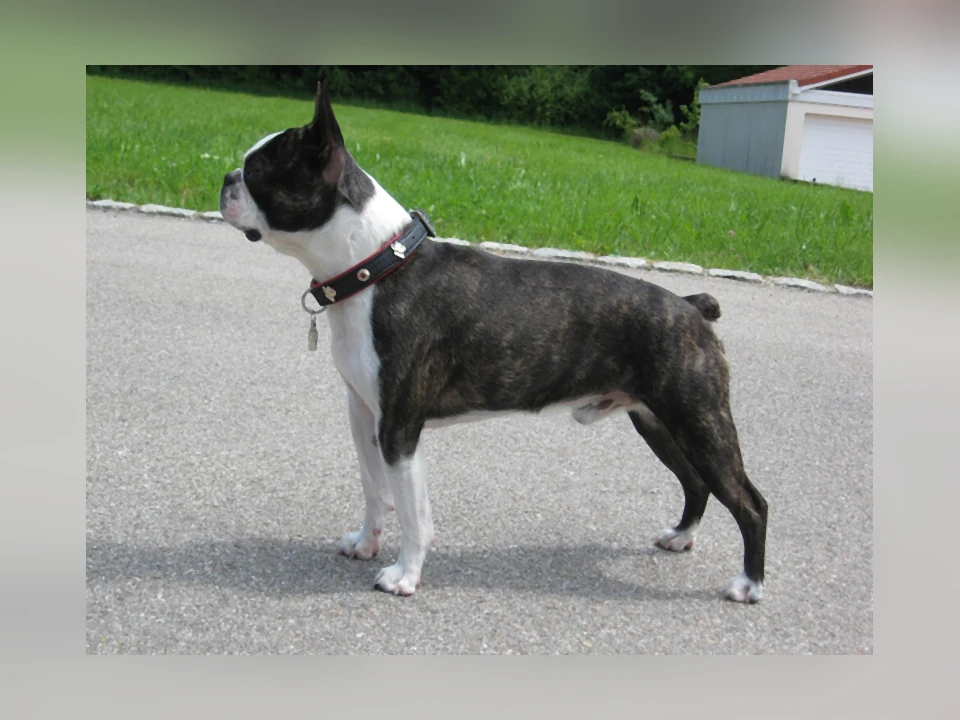
Meet the Boston Terrier (the tuxedoed “American Gentleman”)
Few small dogs make a first impression like the Boston Terrier. In their crisp black-and-white “tuxedo” markings, with bright round eyes and a friendly, expressive face, they earned the affectionate nickname the “American Gentleman”—a nod to both their dapper looks and their famously polite manners. They are also a genuinely homegrown breed: developed in Boston in the late 1800s, the Boston Terrier is one of the first dog breeds created in the United States, and the American Kennel Club (AKC) places it in the Non-sporting group.
Today the Boston is a compact, sturdy companion that typically weighs 12 to 25 pounds and stands about 15 to 17 inches tall—small enough for apartment life, solid enough to play. They tend to be hardier than some of their flat-faced cousins, but it’s important to be honest from the start: Boston Terriers are a brachycephalic (short-muzzled) breed. That short face shapes both their charm and their care, so a great Boston home plans around heat and eye health rather than being surprised by them. As with every breed, individuals vary, and responsible breeding and thoughtful adoption genuinely improve outcomes.
Personality and temperament (friendly, lively, smart, good-natured)
If you want a dog that’s easy to love, the Boston Terrier makes a strong case. They’re friendly, lively, and good-natured—playful enough to keep you laughing, gentle enough to settle on the couch when the day winds down. Most Bostons are people-oriented to the core: they bond closely with their families and want to be wherever you are.
They’re also smart and trainable. Bostons pick up cues quickly and respond best to short, upbeat, reward-based sessions; they can show a stubborn streak, but their eagerness to please usually carries the day. Their friendly disposition extends to children, seniors, and other pets, which makes them a popular pick for first-time owners and multi-pet households alike. They’re typically not excessive barkers, and their adaptable, “I’m happy wherever you are” temperament is a big part of why they make such standout companion and apartment dogs.
Living with a Boston Terrier
For day-to-day life, the Boston Terrier is refreshingly low-fuss. Their exercise needs are moderate, not extreme: a couple of daily walks plus some indoor play and a few training games usually keep both body and mind satisfied. They’re adaptable to apartments, condos, and houses alike, and they’re just as content lounging with you as they are zooming around the living room.
The one firm rule is built into that flat face: Boston Terriers are heat-sensitive. Because brachycephalic dogs can’t cool themselves efficiently by panting, they overheat far faster than long-nosed breeds, and heatstroke is a real, preventable danger. Walk your Boston in the cool of the morning or evening, never leave them in a warm car even briefly, give them constant access to shade and water, and learn the warning signs in our guide to dog heatstroke signs and what to do. Use the same caution near water—not every Boston is a confident swimmer, so supervise around pools. Keeping your dog lean also protects both breathing and joints, making weight management one of the kindest everyday habits you can build.
Grooming and care (easy short coat, with attention to the face and eyes)
Grooming a Boston Terrier is about as simple as dog care gets. The short, smooth single coat sheds modestly and needs little more than a weekly once-over with a soft brush or grooming mitt to stay sleek and remove loose hair. Baths are occasional, and there’s no clipping or elaborate styling to schedule.
Where Bostons do ask for attention is the face. Wipe around the eyes and any facial creases to keep them clean and dry, and check the eyes daily—those large, prominent eyes are wonderful but exposed, so you want to catch redness, squinting, cloudiness, or discharge early. Round out the routine with regular nail trims (overgrown nails are uncomfortable and can affect posture; see our walkthrough on how to trim a dog’s nails), routine ear checks, and consistent dental care, since small breeds are prone to dental crowding and tartar.
Health (the honest part)
Boston Terriers are often a bit more robust than the most extreme flat-faced breeds, and many live full, happy lives into their early teens. But a candid health discussion belongs at the center of any responsible breed guide.
Breathing. As a brachycephalic breed, Bostons can have narrowed airways. Some snorting and snoring is normal for the breed, but loud, labored, or noisy breathing is a sign of a dog that’s working hard to move air—not just a quirk—and warrants a vet’s attention.
Eyes. Those signature prominent eyes are a genuine vulnerability. Set in shallow sockets, they’re prone to scratches and injuries, corneal ulcers, dry eye, and cataracts. Daily eye checks and prompt vet care for any change are among the most protective habits a Boston owner can adopt.
Knees. Patellar luxation—a kneecap that slips out of place—is common in small breeds and can cause an occasional skip or limp; significant cases may need surgery.
Hearing. Congenital deafness occurs in the breed and is linked to coat-color genetics, which is exactly why conscientious breeders BAER-test their puppies.
Allergies. Environmental and food allergies can drive itching, paw-licking, and recurrent skin flare-ups; our overview of dog allergies explains how to build a plan with your vet.
Reproduction. Like many flat-faced, big-headed breeds, Boston females often have difficulty whelping naturally, and cesarean (C-section) deliveries are common—one more reason ethical breeding is demanding.
The single best thing a buyer can do is favor moderate, health-focused breeders: ones who breed toward a slightly longer, more open muzzle, BAER-test for deafness, and screen for eye and knee problems through programs like the Orthopedic Foundation for Animals (OFA). Avoid extreme, ultra-flat faces no matter how fashionable, consider breed-specific rescue, and price out pet insurance before you commit.
Is a Boston Terrier right for you?
A Boston Terrier can be one of the most delightful companions a small-dog lover could ask for—friendly, smart, adaptable, easy to groom, and tailor-made for apartment living and first-time owners. They give a lot of affection and ask for fairly little in return, and that’s the real, warm truth of the breed.
The equally real truth is the flat face. If you live somewhere hot, dream of a tireless running or swimming partner, or can’t absorb the financial risk of breathing or eye care, another breed may suit you better. But if you can offer a cool, attentive home, watch the heat, protect those eyes, and choose your breeder or rescue wisely, the dapper little American Gentleman will reward you with devotion, humor, and good company for years.