Origin
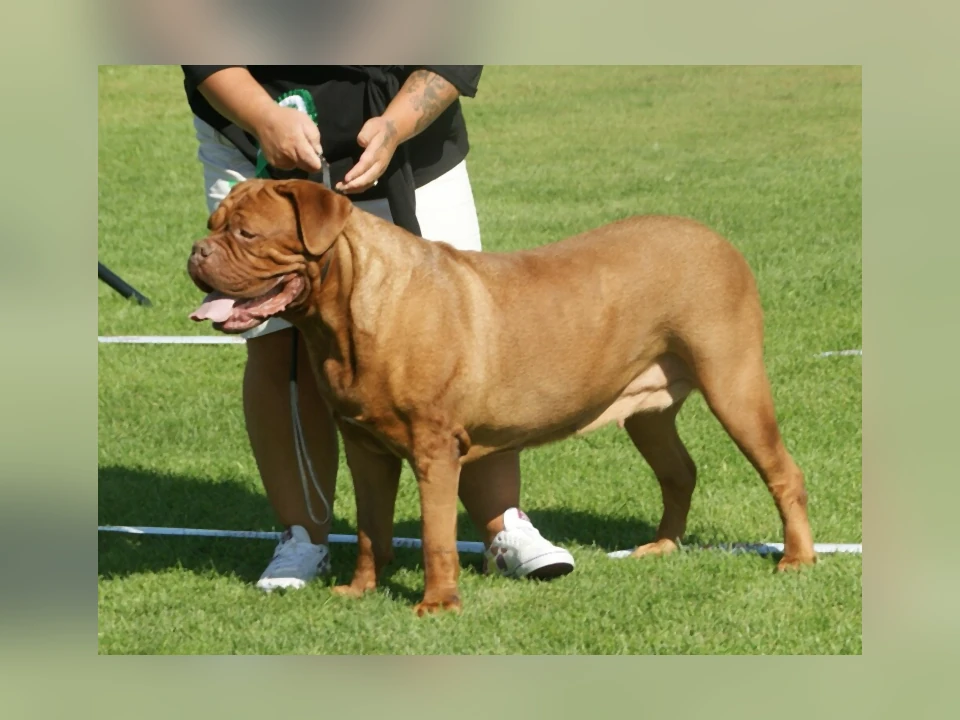
The Dogue de Bordeaux — the ‘French Mastiff’ — is an ancient French breed from the Bordeaux region, historically used to guard estates, haul heavy loads, and bait large game. It is one of the most recognizable mastiffs: massive head, soulful expression, deep wrinkles, and a powerful, low-slung body. Many people first met the breed through the film Turner & Hooch, but the real dog is calmer and more dignified than its slobbery on-screen reputation.
Temperament & Daily Life
At heart, the Dogue is a devoted, sensitive companion. Indoors they are typically mellow, leaning against their people and content to share the couch. They are naturally watchful and make confident guardians, but they should be steady rather than aggressive. Expect stubbornness — they are intelligent but not eager pleasers — and expect drool and snoring as part of the package. They bond hard and do best with owners who are home much of the day; long isolation doesn’t suit them.
Exercise & Training
This is a moderate-energy breed. Daily walks and some play keep them fit, but they are not jogging partners, and their short muzzle and heavy build make them prone to overheating — keep exercise gentle in warm weather. Because puppies grow so quickly, avoid high-impact exercise on young joints and keep them lean. Start training and socialization early; a 100-plus-pound dog that hasn’t learned manners is a genuine handful, so patient, reward-based work from puppyhood pays off.
Grooming
Grooming is easy: the short coat needs only weekly brushing and the occasional bath. The real maintenance is the face — clean the deep wrinkles regularly to prevent skin-fold infection, and keep that drool rag close.
Health
Here honesty matters most. The Dogue de Bordeaux has one of the shortest average lifespans of any breed, often just 5-8 years. The breed is predisposed to serious heart disease, including dilated cardiomyopathy and subaortic stenosis, which can cause sudden death — so insist on cardiac clearances (echocardiogram) for the parents. Hip and elbow dysplasia are common, as are heat and breathing problems tied to the short muzzle, and bloat (GDV) is a deep-chested-breed emergency. None of this means you shouldn’t own one; it means you should buy from a health-testing breeder and budget realistically for veterinary care.
Who This Breed Suits
The Dogue de Bordeaux is for the owner who wants a profoundly loyal, gentle giant and goes in with open eyes about drool, heat sensitivity, cost, and a heartbreakingly short life. If you can give one a soft place to land, a cool home, and good veterinary care, you’ll be loved completely — for as long as you have together.