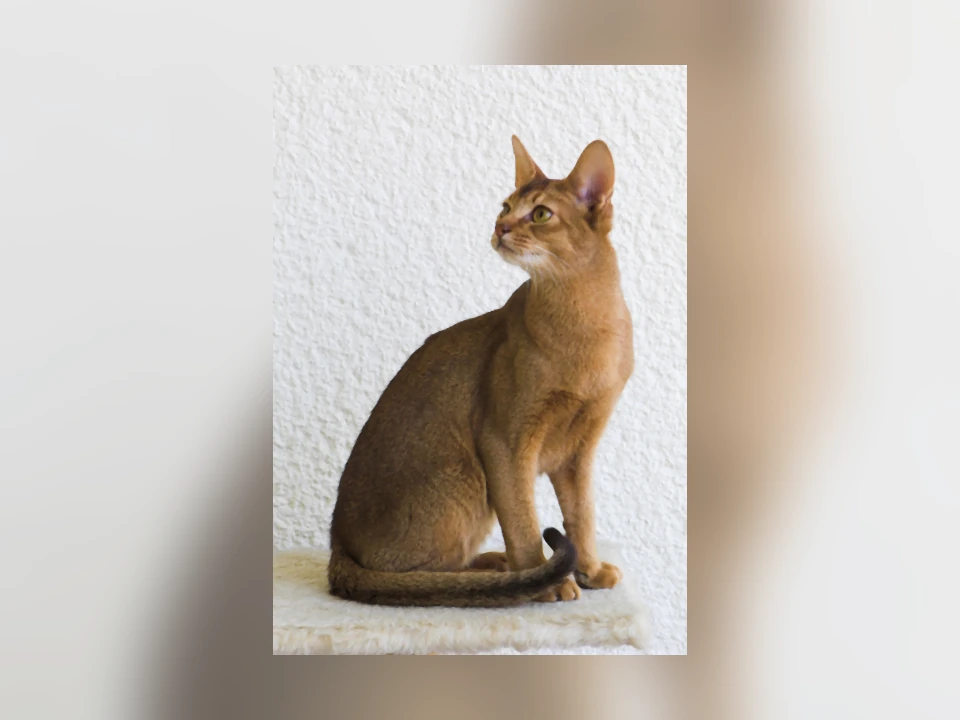
Meet the Abyssinian (the ticked-coat “clown of the cat world”)
The Abyssinian is one of the oldest and most recognizable shorthaired breeds — a lithe, fine-boned cat with large alert ears, expressive almond eyes, and a warm, glowing coat. That coat is the breed’s signature: each hair carries several bands of color, a pattern called ticking (or agouti) that gives the Aby a shimmering, wild look reminiscent of a tiny cougar.
Despite the name, the breed’s true origins trace not to Ethiopia but to the coastal regions around the Indian Ocean and Southeast Asia, where genetic studies place its roots. The “Abyssinian” label was a marketing flourish from early British cat fancy. What is beyond dispute is the personality: registries like The International Cat Association (TICA) and breed clubs alike describe the Aby as intensely active, curious, and engaged — which is exactly how it earned the affectionate nickname “the clown of the cat world.”
Personality & temperament
If you want a cat that quietly ornaments the sofa, this is not your breed. The Abyssinian is a doer. Aby owners consistently describe a cat that is on the move, investigating, climbing, and getting involved in everything — from the top of the refrigerator to the inside of an open drawer. They stay playful and kittenish well into old age, long after many cats have settled down.
They are also profoundly people-oriented. An Aby wants to be with its humans, supervising chores, riding on a shoulder, or trotting from room to room. That said, it shows affection on its own terms: it is far more likely to perch nearby and “help” than to curl up in your lap for an afternoon. Their intelligence makes them genuinely trainable — many learn to fetch, walk on a harness, or open cupboards (a skill you may come to regret). The flip side is that a understimulated Abyssinian becomes a bored, frustrated, sometimes destructive one.
Living with an Abyssinian
Plan vertically. Abyssinians are climbers and jumpers who use every cubic foot of a room, so tall cat trees, shelves, and window perches aren’t luxuries — they’re how you keep an Aby content and out of trouble. Rotate puzzle feeders and interactive toys, and budget real time each day for play that lets them chase, leap, and problem-solve.
Because they crave constant engagement, many Abyssinians do best with a companion — another active cat, a Somali (their longhaired cousin), or a cat-friendly dog — especially in homes where people are out for much of the day. They generally do well with respectful older children and other pets.
On sound: the Aby is not a loud cat. It tends to communicate in soft, chirpy chatter rather than demanding yowls. A normally quiet Aby that suddenly becomes vocal is worth paying attention to — sometimes it’s boredom, sometimes a sign that something physical is off. Our guide on why some cats meow so much can help you tell the difference.
Grooming & care
Here’s the easy part. The short, close-lying ticked coat is one of the lowest-maintenance in the cat world. A weekly once-over with a soft brush or grooming glove removes loose hair and keeps that distinctive shimmer looking its best; shedding is light. Routine nail trims, ear checks, and fresh water round out the basics.
The care priority that isn’t trivial is dental health. Abyssinians are recognized as prone to gingivitis and periodontal disease, which can become painful and affect overall health if neglected. Start a tooth-brushing routine early — ideally in kittenhood — using a feline-safe toothpaste, and keep up with professional cleanings as your veterinarian recommends. Our cat dental care guide walks through how to build the habit without a fight.
Health
Abyssinians are generally hardy, but like all purebreds they carry a handful of inherited and breed-associated conditions. Responsible breeding and informed ownership matter here:
- Pyruvate kinase (PK) deficiency — an inherited enzyme defect that can cause intermittent anemia. A reliable DNA test exists, so ethical breeders can screen it out entirely.
- Progressive retinal atrophy (PRA) — a hereditary degeneration of the retina leading to vision loss. DNA testing of breeding stock is the key safeguard.
- Renal amyloidosis — protein deposits that can compromise kidney function. Because increased thirst and urination are common early signs of kidney trouble, learn what’s normal for your cat; our guide on why a cat may be drinking so much water explains when to call the vet.
- Periodontal disease — common enough in the breed to deserve its place in any care plan (see grooming, above).
- Luxating patella — a kneecap that slips out of position; many cases are mild, but some require surgical correction.
The single most protective thing you can do is choose your source carefully. Buy only from breeders who DNA-test for PK deficiency and PRA and are transparent about results — or adopt from a rescue and stay attentive to the warning signs above. Per the Merck Veterinary Manual and the Cornell Feline Health Center, early detection makes a real difference for inherited and kidney-related conditions. Individual cats vary; a well-bred, well-cared-for Aby often lives a long, vigorous life.
Is an Abyssinian right for you?
An Abyssinian is a fantastic match for a household that genuinely wants an interactive, athletic companion — someone who will play, learn tricks, follow you around, and stay curious for life. Give it vertical space, daily engagement, and ideally a playmate, and you’ll have one of the most entertaining cats you can own.
It’s the wrong cat for anyone hoping for a placid, low-energy lap warmer, or for a home where it would be left alone and under-stimulated for long stretches. Match your energy to theirs, and the Abyssinian rewards you with years of bright, busy, affectionate company.