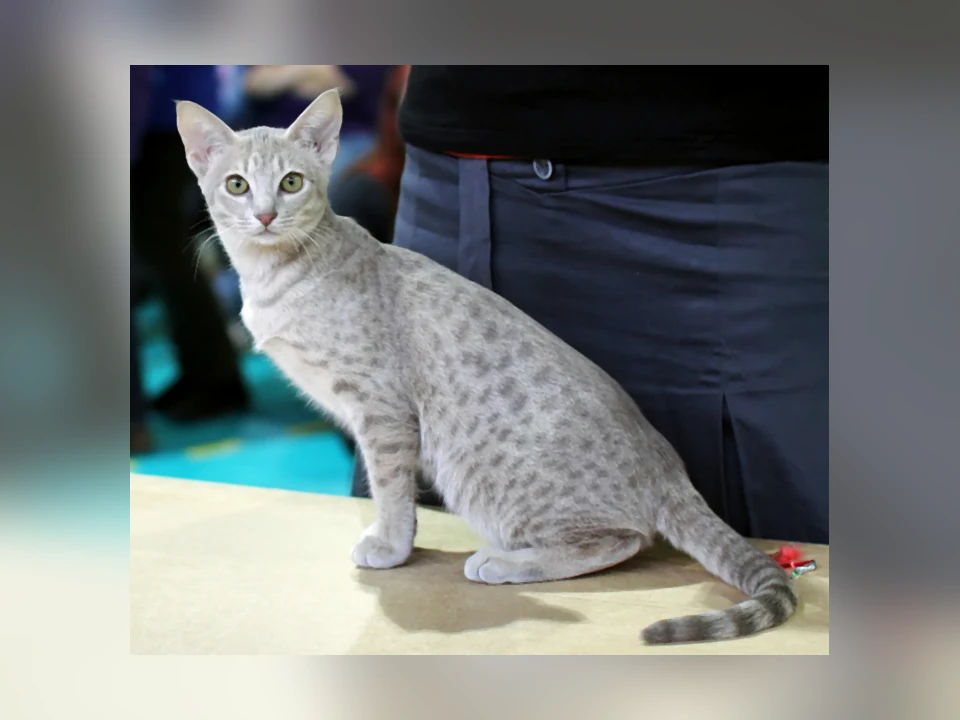
Meet the Ocicat (wild looks, no wild blood)
The Ocicat is one of feline breeding’s happiest accidents. In 1964, a Michigan breeder crossing Abyssinians and Siamese produced an unexpectedly spotted kitten that looked like a tiny ocelot — hence the name. American Shorthair was later added to the mix to deepen the bone and broaden the gene pool. The crucial point, and the breed’s most persistent myth-buster: there is no wild cat anywhere in its ancestry. The Ocicat just looks feral. It is a thoroughly domestic cat with the temperament of an extrovert.
The coat is the showpiece — large, thumbprint-shaped spots scattered over an agouti (ticked) background, arranged in a classic “bull’s-eye” or scattered pattern depending on the cat. It comes in a range of colors, but the spotted silhouette is unmistakable.
Personality & temperament
If the Egyptian Mau is the reserved athlete, the Ocicat is the gregarious host. These cats are confident, outgoing, and genuinely people-loving — many greet guests at the door rather than vanishing under the bed. They’re frequently described as dog-like because they learn so readily: come when called, fetch, sit, walk on a harness, even simple tricks. That intelligence cuts both ways; a bored Ocicat will train you to entertain it.
They are also social to the point of dependence. Ocicats want company, and they don’t do well as the only animal in an empty house all day. They bond with the whole family rather than one person, and they typically get along well with children, other cats, and dogs.
Living with an Ocicat
Give an Ocicat a job and a buddy. Daily interactive play, puzzle feeders, and trick-training channel that big brain. Vertical space — cat trees, shelves, window perches — satisfies the athletic streak inherited from the Abyssinian and Siamese sides. Because they’re so social, many Ocicat owners keep a second compatible pet, especially in households that are out during the day. They tend to integrate well into busy, noisy family homes that would overwhelm a shyer breed.
On voice: Ocicats are chatty but not as relentlessly loud as their Siamese ancestors. Expect conversation, not constant yowling.
Grooming & care
The short, sleek coat is about as easy as cat coats get. A weekly rub-down with a grooming glove or soft brush keeps it glossy and removes loose hair; shedding is modest. Add routine nail trims, ear checks, and fresh water.
The real ongoing task — true for almost every cat — is dental care. Start tooth-brushing early with feline toothpaste and keep up with professional cleanings; our cat dental care guide makes it manageable.
Health
Ocicats are generally healthy and often long-lived, but their mixed ancestry means a few inherited conditions are worth screening:
- Hypertrophic cardiomyopathy (HCM) — the most common feline heart disease; ask your vet about periodic cardiac checks.
- Pyruvate kinase (PK) deficiency — an inherited anemia-causing defect carried via Abyssinian lines; a DNA test screens it out.
- Progressive retinal atrophy (PRA) — an inherited cause of gradual vision loss, also from Abyssinian heritage; DNA-tested breeding stock is the safeguard.
- Renal amyloidosis — kidney-impairing protein deposits seen in related breeds; learn what’s normal so you can spot excessive thirst early.
- Periodontal disease — common across cats and easy to prevent with routine care.
The best protection is choosing a breeder who DNA-tests for PK deficiency and PRA and discusses heart health openly — or adopting and staying attentive to the signs above. Per the Cornell Feline Health Center and Merck Veterinary Manual, early detection genuinely improves outcomes.
Is an Ocicat right for you?
The Ocicat is a superb match for an interactive, sociable household — families with kids, homes with other pets, anyone who wants a cat that participates in family life and learns tricks. Give it company, training, and climbing space and you’ll get one of the most engaging, dog-like cats around, in a package that looks like a miniature wildcat but carries none of the complications.
It’s the wrong cat for someone who wants an aloof, independent pet or who is away long hours with no companion animal — a lonely Ocicat is an unhappy one.