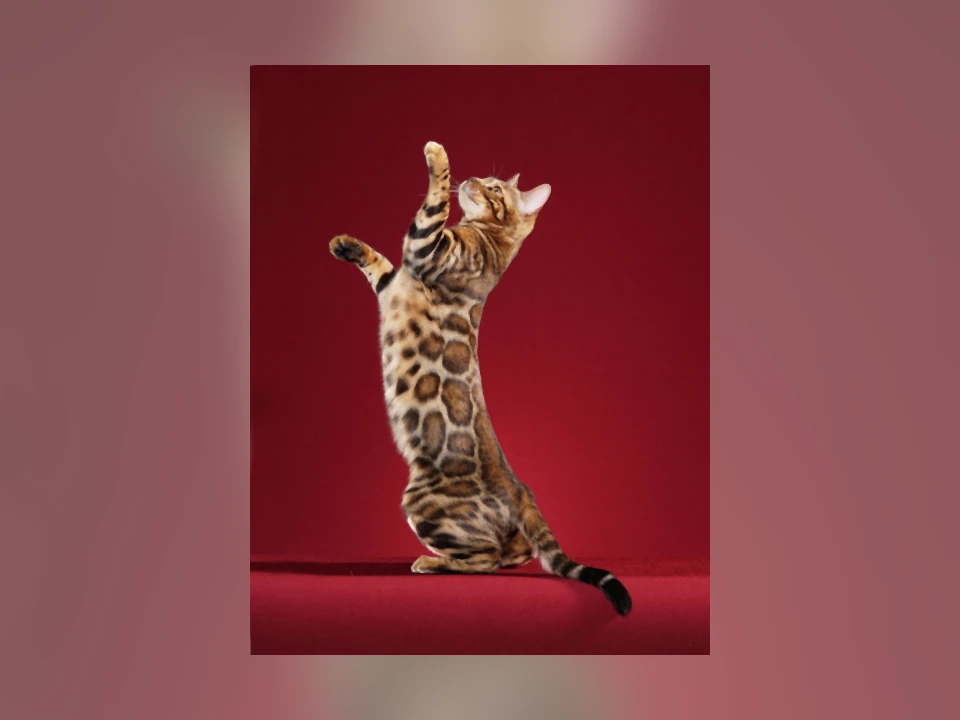
Meet the Bengal
Few domestic cats turn heads like the Bengal. Bred to look like a miniature leopard or ocelot, it carries a sleek, muscular body wrapped in a short, glittering coat marked with bold spots, rosettes, or swirling marbled patterns. The breed was developed in the United States by crossing domestic cats with the Asian leopard cat, a small wild species, and then breeding the hybrids back to domestic cats over several generations to stabilize the wild look in a pet-friendly temperament. The International Cat Association (TICA) recognizes the Bengal and maintains its breed standard.
That heritage is the whole point — and the whole catch. The cat in your living room descends from a wild ancestor, and while modern, later-generation Bengals are domestic cats, the energy, athleticism, and intensity that come with that lineage are very real. This is a cat built to climb, leap, hunt, and explore, and it expects a home that lets it.
Personality and temperament
Bengals are among the most active, intelligent, and curious cats you can live with. They are problem-solvers who learn fast, open cabinets and faucets, and invent their own entertainment when you don’t provide enough. Many can be taught tricks, walk on a harness, or play fetch, and they tend to stay kitten-like and playful well into adulthood.
They are also demanding and often quite vocal. A Bengal will tell you when it wants attention, food, or play, sometimes loudly and persistently. That chattiness is normal for the breed, but a sudden change in how much or how your cat vocalizes can signal pain or stress — our guide on why your cat may be meowing so much helps you tell baseline Bengal talk from a warning sign.
The flip side of all that intelligence is that a bored Bengal is a destructive Bengal. Without enough outlet, they climb curtains, knock things off shelves, shred, and pester. Many Bengals also have an unusual fondness for water and will splash in sinks, bathtubs, and water bowls. Individuals vary, but the common thread is the same: this is an engaged, high-octane cat, not a decorative one.
Living with a Bengal
Here is the honest truth that prospective owners most need to hear: a Bengal is not a low-key lap cat. Some are affectionate and will cuddle on their own terms, but the breed’s defining need is activity, not lounging. To live well, a Bengal needs tall cat trees and climbing space, rotating puzzle feeders and toys, daily interactive play, and ideally a companion — many Bengals do best with another active pet so they always have someone to chase and wrestle. A new home should be set up for this from day one; our new kitten checklist covers the climbing structures, enrichment, and supplies that matter most for a high-energy breed.
There is also a legal dimension unique to hybrid breeds. Early-generation Bengals — those just a few generations removed from the wild Asian leopard cat (often labeled F1 to F3) — are classified as exotic or wild animals in some U.S. states and cities and may be restricted or outright banned, while later generations are typically treated as ordinary domestic cats. The rules differ widely from place to place, so confirm exactly what is legal where you live before committing to a Bengal, and ask the breeder which generation a kitten is.
Grooming and care
Grooming is the easy part. The Bengal’s short, sleek coat is famously low-maintenance, sheds modestly, and needs little more than an occasional weekly brushing to remove loose hair and keep its shine. There is no undercoat to mat and no elaborate routine.
As with any cat, dental care is the quiet priority that pays off over a lifetime. Periodontal disease is one of the most common and most under-treated problems in cats, so building a habit of at-home toothbrushing plus professional cleanings as your veterinarian advises matters more than coat upkeep. Our cat dental care guide walks through how to start and what warning signs to watch for.
Health
Bengals are generally healthy and long-lived, but the breed carries several inherited and breed-linked considerations that responsible owners should understand. Drawing on resources like the Cornell Feline Health Center and International Cat Care, areas to watch include:
- Hypertrophic cardiomyopathy (HCM), the most common heart disease in cats, which thickens the heart muscle and can occur in Bengals; conscientious breeders periodically screen breeding cats with cardiac ultrasound.
- Progressive retinal atrophy (PRA-b), an inherited form of gradual vision loss in Bengals for which a DNA test is available — ask for results from both parents.
- Pyruvate kinase deficiency, an inherited enzyme disorder that can cause anemia and is also detectable by DNA test, so screened lines greatly reduce the risk.
- Occasional GI sensitivity or inflammatory bowel disease (IBD), which can show up as recurring vomiting or diarrhea and warrants a veterinary workup rather than waiting it out.
The single most protective choice you can make is buying from a breeder who screens for these conditions — cardiac evaluation for HCM and DNA tests for PRA-b and pyruvate kinase deficiency — and who is transparent about results. If your cat develops persistent digestive trouble, don’t dismiss it; our guide on why your cat may be vomiting explains when it crosses into something that needs a vet. Routine checkups round out a long, healthy life.
Is a Bengal right for you?
A Bengal is a stunning, brilliant, intensely interactive cat — for the right person. If you’re active, home often, and genuinely excited to provide hours of play, climbing, and problem-solving every day, few cats are more rewarding. If you want a calm cat who curls up quietly and entertains itself while you’re out, this is honestly the wrong breed, and both of you will be happier with a different match. Always confirm local laws first, and choose a responsible screening breeder or a Bengal rescue over an unverified source.