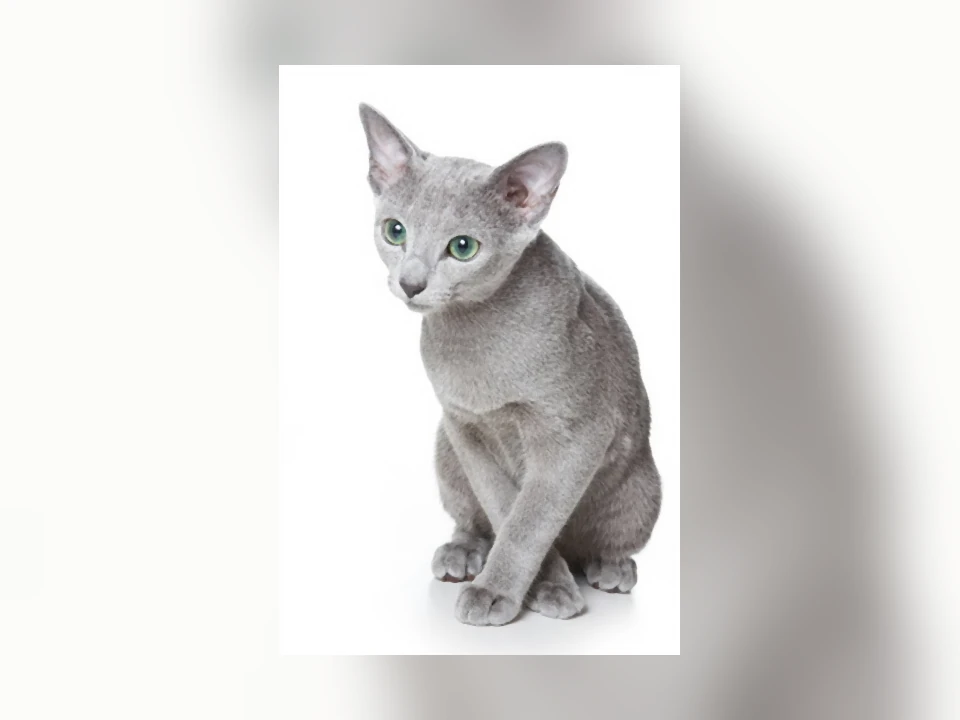
Meet the Russian Blue
The Russian Blue is one of the most recognizable cats in the world: a medium-sized, elegant feline with a short, dense, plush coat in an even shimmering blue-gray, tipped with silver so it seems to glow. Set against that cool coat are vivid green eyes — a hallmark of the breed in adulthood. The overall impression is one of quiet refinement: a fine-boned but muscular body, a gentle “smile” from the upturned corners of the mouth, and a poised, watchful expression.
As the name suggests, the breed is widely believed to have originated in northern Russia, possibly around the port of Arkhangelsk, before spreading to Europe in the 19th century. Today it is a recognized natural breed with breed standards maintained by registries such as TICA and the CFA. Importantly, the Russian Blue developed largely without the heavy inbreeding that burdens some pedigreed cats, which is part of why it enjoys a reputation as a relatively healthy, robust breed.
Personality & temperament
If you want a cat with a dramatic, in-your-face personality, the Russian Blue is not it — and that is precisely the appeal for the right owner. These are gentle, reserved, and notably quiet cats. They rarely meow much, and when they do it tends to be soft. Within their own household they are affectionate and genuinely loyal, often bonding most closely with one or two people and following them quietly from room to room.
With strangers, though, the Russian Blue is famously shy. A doorbell, a houseful of guests, or a sudden change can send one slipping under the bed until things settle. They are also sensitive cats — attuned to routine, mood, and noise — and they thrive on predictability. None of this is fearfulness in a damaged sense; it is simply a temperament that values calm and trust. Once that trust is earned, a Russian Blue is a deeply devoted, playful, and gently humorous companion, capable of learning to fetch and enjoying interactive play. Remember that individuals vary: some lines and well-socialized kittens are noticeably more outgoing than others.
Living with a Russian Blue
Russian Blues do best in calm, stable homes. Quiet apartments, households without constant upheaval, and owners who keep a fairly predictable daily rhythm suit them well. They can absolutely live happily with families, including with considerate older children, and they often get along with other gentle cats — but introductions should be slow, positive, and never forced. A skittish Russian Blue pushed too fast will simply retreat further.
This brings us to the breed’s most over-marketed claim: that Russian Blues are “hypoallergenic.” The honest answer is that no cat is truly hypoallergenic. What’s true is that Russian Blues are frequently reported to produce somewhat lower levels of Fel d1, the primary cat allergen, and some allergy sufferers do find them easier to live with. But they still produce allergens in their saliva, skin dander, and urine, and reactions are highly individual. If allergies are a concern, spend real time with an individual cat before committing, and don’t treat the breed as allergen-free.
Give them vertical space, a quiet retreat where they can decompress, and consistent feeding and play times, and a Russian Blue will reward you with quiet, steady companionship.
Grooming & care
Grooming is one of the easiest parts of Russian Blue ownership. The dense, plush double coat is low-maintenance and naturally tidy; a weekly brushing is plenty to remove loose hair, distribute oils, and keep shedding modest. They are fastidious self-groomers and tend to be low-odor cats.
The bigger day-to-day concern is the food bowl. Russian Blues are notably food-motivated and prone to overeating, which makes obesity the breed’s most common preventable health problem. Measure meals rather than free-feeding, use food puzzles to slow them down, and monitor body condition over time — our guide on whether your cat is overweight walks through the body-condition checks vets use. As with nearly all cats, dental disease creeps in quietly, so build a routine of tooth brushing and veterinary checks early; see our cat dental care guide for a realistic at-home plan.
Health
By pedigreed-cat standards, the Russian Blue is genuinely one of the healthier breeds, and many live long, robust lives. There is no single severe genetic disease strongly associated with the breed in the way some others carry, for example, inherited heart or kidney conditions. That said, “relatively healthy” is not “trouble-free.”
The most important issue is obesity, driven by that hearty appetite; excess weight stresses joints and raises the risk of diabetes and other problems. Some individuals also develop bladder/urinary stones (struvite or calcium oxalate), so watch for straining in the litter box, blood in the urine, or going outside the box, and see a vet promptly. Routine dental disease is common, as in most cats. Responsible breeders still screen their cats and prioritize sound temperament and general health, and adopting from a reputable breeder or rescue — rather than chasing a bargain — remains the best way to start with a healthy cat. If you’re bringing one home, our new kitten checklist covers the early vet visits and setup that catch problems early.
Is a Russian Blue right for you?
A Russian Blue is an ideal match if you want a quiet, devoted, low-drama companion and you respect a cat that takes its time. People in calm households — singles, seniors, working professionals, and gentle families — often find them perfect: clean, undemanding, affectionate on their own terms, and beautiful to live with.
They are a poorer fit for chaotic, high-traffic homes, for households with very young or boisterous children, or for anyone wanting an instantly social, lap-on-demand cat who shrugs off change. And if you’re choosing the breed mainly because you believe it’s allergy-proof, reset that expectation first. For the right person, though, the Russian Blue offers something rare: a serene, loyal presence that, once it trusts you, is yours for fifteen years or more.