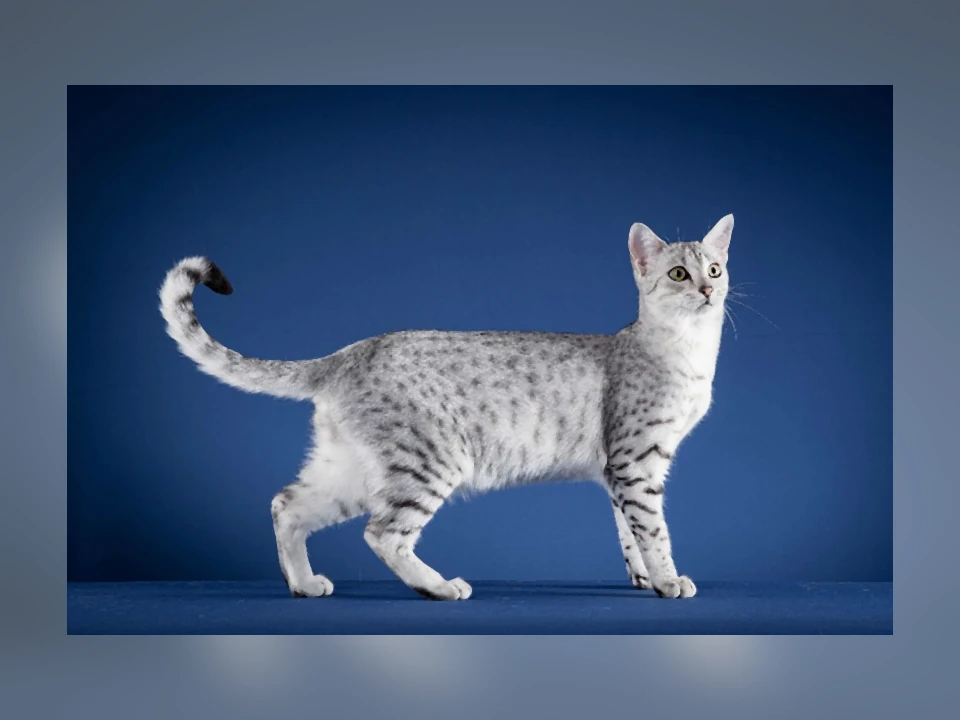
Meet the Egyptian Mau (the spotted sprinter)
The Egyptian Mau is a striking, medium-sized shorthair and the only domestic cat with a naturally occurring spotted coat — the spots aren’t engineered, they sit on the hair shaft itself, scattered randomly across the body like an animal that walked out of an ancient fresco. Cats resembling the Mau appear in Egyptian art going back thousands of years, and “Mau” is simply the Egyptian word for cat. The modern breed was developed in the mid-20th century from cats brought out of Egypt, which is why the gene pool is comparatively small.
Beyond the coat, the Mau is built to move. It has slightly longer hind legs and a distinctive loose flap of skin running from the flank to the back knee — anatomy that lengthens its stride. The result is the fastest of the domestic cats, with sprint speeds reported above 30 mph.
Personality & temperament
Maus are loyal in a way that surprises people who expect cats to be aloof. They tend to attach intensely to their family, often choosing a favorite person to shadow, greet, and “talk” to in a soft, chirpy, almost musical voice. Many wag or quiver their tails and do a little kneading dance when they’re delighted.
The flip side of that devotion is caution with the unfamiliar. Maus are alert, sensitive cats that can be shy or reserved around strangers, loud chaos, or sudden change. They are not skittish if raised well, but they thrive on routine and a calm, stable household where they feel secure. Earn a Mau’s trust and you have a deeply affectionate companion; rush it and you’ll meet a cat watching warily from the top of the bookshelf.
Living with an Egyptian Mau
This is an athlete, so plan for it. Maus want to climb, leap, and sprint, and a bored Mau will invent its own (sometimes destructive) entertainment. Give them tall cat trees, window perches, and daily interactive play that lets them chase and pounce. Many enjoy fetch, puzzle feeders, and even harness walks. They generally do well with respectful older children, other cats, and cat-savvy dogs, especially when introduced patiently.
Because they bond so tightly, Maus do not love being left alone for very long stretches. A second compatible cat or simply more interaction goes a long way.
Grooming & care
The coat is easy. A weekly once-over with a soft brush or grooming glove removes loose hair and keeps the spotted pattern looking crisp; shedding is light. Round it out with routine nail trims, ear checks, and fresh water.
As with nearly all cats, dental care is the maintenance task that actually matters. Build a tooth-brushing habit early using feline-safe toothpaste and keep up with professional cleanings — our cat dental care guide shows how to make it painless.
Health
Maus are generally robust, but a few conditions deserve attention:
- Hypertrophic cardiomyopathy (HCM) — the most common feline heart disease, reported in the breed. Ask your vet about periodic cardiac screening, especially as a cat ages.
- Pyruvate kinase (PK) deficiency — an inherited enzyme defect that can cause anemia; a DNA test lets ethical breeders avoid it.
- Lower urinary tract problems — bladder crystals and stones can cause straining or blood in the urine. Encourage water intake and treat any litter-box changes as a reason to call the vet promptly.
- Periodontal disease — common enough in cats generally to keep on every care plan.
The most protective step is sourcing carefully: buy from breeders who screen for PK deficiency and discuss heart health openly, or adopt and stay alert to the signs above. Per the Cornell Feline Health Center and Merck Veterinary Manual, early detection makes a real difference, particularly for heart and urinary disease.
Is an Egyptian Mau right for you?
The Mau suits an active, fairly settled home that wants a devoted, athletic cat and is willing to let a slightly reserved animal come to trust on its own timeline. Give it space to run, daily engagement, and a calm base, and you’ll have a beautiful, loyal companion that’s genuinely thrilling to watch in motion.
It’s a poor fit for anyone wanting an instantly social cat that loves every visitor, a low-energy lap warmer, or a turbulent household with nowhere quiet to retreat.