Origin
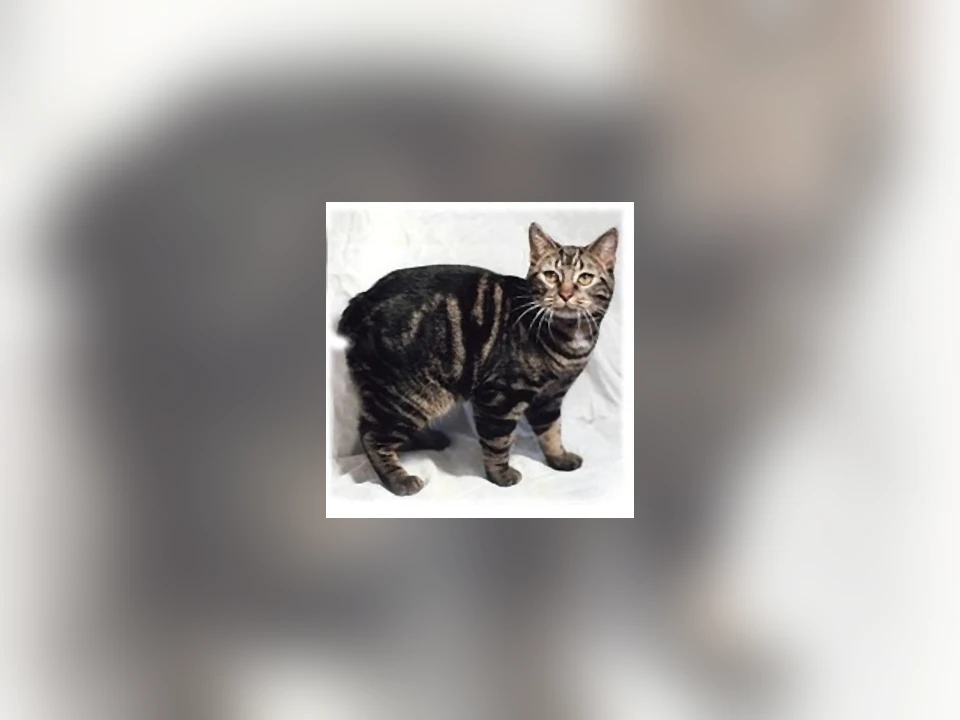
The Manx is a natural breed from the Isle of Man, where a spontaneous mutation for taillessness took hold in an isolated island cat population and was reinforced over generations. The result is the breed’s signature look: a rounded, compact, muscular cat with a strikingly short or absent tail, hind legs longer than the front, and a back that arches smoothly from shoulder to rump. Both a shorthaired variety (the Manx) and a longhaired variety (often called the Cymric) exist. Recognized by major registries including the CFA and TICA, the Manx is one of the oldest known pedigreed cats.
Personality and daily life
Manx are frequently described as dog-like, and owners mean it as high praise. They are affectionate, loyal and people-oriented, often bonding strongly with their household and following favorite humans from room to room. Many learn to play fetch, enjoy puzzle toys, and take an active interest in whatever you’re doing. They’re playful and intelligent without being demanding or especially loud. This sociable streak makes them well suited to families and to homes with other cats or cat-friendly dogs.
Care and grooming
Day-to-day care is straightforward. The dense double coat benefits from regular brushing, weekly for shorthairs and more often for longhaired Cymrics, to manage shedding and keep the plush coat in good condition. Standard nail trimming, dental care and litter-box hygiene round out their needs. Keeping a Manx at a healthy weight is especially worthwhile given the breed’s compact spine.
Health: the honest part
The Manx’s defining trait and its defining health concern are the same gene. Taillessness is caused by a dominant mutation that also affects development of the lower spine and spinal cord. In its more serious form this produces Manx syndrome (sacrocaudal dysgenesis), which can cause incontinence, hind-limb weakness, a hopping gait, or bowel problems, and is usually evident within the first four to six months of life. The condition ranges from mild to severe. Because the gene is dominant and breeding two tailless cats together raises the risk substantially, ethical breeders never make that cross and instead breed tailless cats to tailed Manx, while screening their lines. Even with good breeding the risk can’t be reduced to zero, and that reality should inform any decision to bring one home. The breed is also worth watching for spine-related arthritis with age, constipation or megacolon in some cats, and hereditary corneal dystrophy.
Who they suit
A well-bred Manx is a delightful, devoted, dog-like companion that fits beautifully into active, interactive households. The breed suits people who value an engaged, sociable cat and who take seriously where their kitten comes from. The most important step a prospective owner can take is choosing a transparent, responsible breeder who health-screens and never doubles up the tailless gene, that single choice does more for your cat’s wellbeing than anything else.