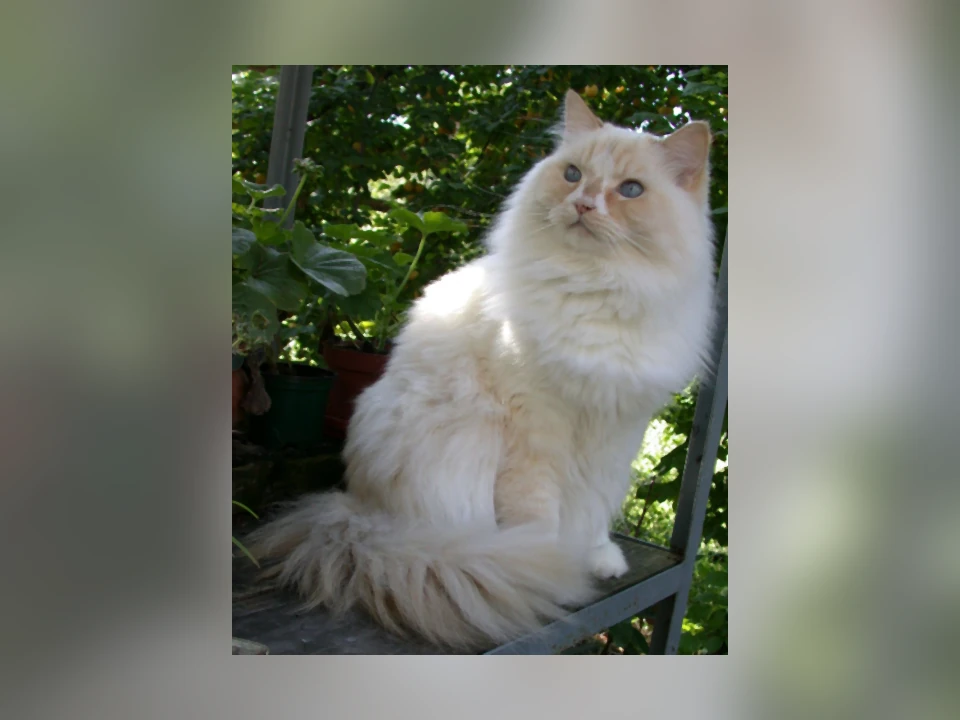
Meet the Ragamuffin (a large, huggable, sweet-natured cousin of the Ragdoll)
The Ragamuffin is, first and foremost, a cat built for cuddling. Large, soft, and almost comically relaxed about being held, it has earned a devoted following among people who want a true lap cat. The breed shares its roots with the Ragdoll: both trace back to the same breeding lines developed in California in the 1960s, and the Ragamuffin emerged when a group of breeders split off to develop the cat under its own name. Today the Cat Fanciers’ Association and The International Cat Association recognize the Ragamuffin as a distinct breed.
The most useful way to understand a Ragamuffin is by its relationship to the Ragdoll — and its one clear difference. Temperamentally, the two are very much alike: big, docile, affectionate, slow to grow up. The standout distinction is appearance. Where the Ragdoll is bred specifically as a blue-eyed color-point cat, the Ragamuffin is recognized in a wide rainbow of colors and patterns, with eyes in many shades. So if you’ve fallen for the Ragdoll personality but want it in, say, a solid coat or a tabby pattern, the Ragamuffin is often the answer.
These are among the larger domestic cats. Males commonly reach the upper end of the range, females somewhat less, and like their Ragdoll cousins they don’t finish filling out until around three to four years of age. Individuals vary — size, coat, and personality differ even within a single litter — so meet the cat, not just the breed.
Personality & temperament
If the breed has a signature, it’s affection. Ragamuffins are exceptionally people-oriented, often following their humans from room to room, greeting visitors at the door, and settling into a lap the instant someone sits down. Many will go limp and floppy when picked up — the same relaxed-in-your-arms trait the Ragdoll is famous for — which is exactly what makes them so satisfying to hold.
This is a mellow, patient cat rather than a high-octane one. Ragamuffins tend to play at a gentle pace, aren’t notorious climbers or counter-surfers, and usually keep a soft, sparing voice instead of demanding chatter. That easygoing nature makes them wonderfully tolerant: most accept handling, cuddling, and the bustle of a busy home with remarkable grace, which is a big part of why they’re often recommended for families with respectful children.
The flip side of all that devotion is that a Ragamuffin genuinely wants company. This is not a self-sufficient cat content to be left alone for long stretches. A Ragamuffin that’s regularly home by itself can become lonely, so they suit households where someone is around or where a second pet provides companionship.
Living with a Ragamuffin
A Ragamuffin fits gracefully into many homes — apartments, houses, quiet households, and lively families alike. Their gentle disposition makes them generally good with kids, other cats, and even friendly dogs, and their modest energy level means they ask for affection more than acreage. They’re as happy on the couch beside you as anywhere.
Two realities shape day-to-day life with one. First, they’re slow to mature; expect a few years of gradual filling-out before your cat reaches full adult size and settling. Second, and most important, Ragamuffins should live indoors. Their trusting, docile temperament — the very thing that makes them so lovable — leaves them poorly equipped to handle traffic, predators, and theft outside. A secure catio, a screened porch, or supervised harness time gives them safe outdoor enrichment without the danger.
Because they thrive on closeness, build their routine around interaction: short daily play sessions, a cozy perch near where you spend time, and the simple presence of their people. A Ragamuffin rarely needs much convincing to join in.
Grooming & care
The Ragamuffin’s coat is plush and silky, with a softer, less dense texture than the heavy double coat of a Persian — which means it mats far less readily and is more forgiving to maintain. A few brushings a week, stepped up during seasonal shedding, are usually enough to keep tangles from forming behind the ears, under the legs, and along the britches. “Less prone to matting” is not “never,” though, so consistency beats marathon detangling sessions.
Regular brushing does double duty: it’s also the single most effective way to cut down on hairballs, since it removes loose hair before your cat swallows it during self-grooming. Our guide to hairballs in cats explains how grooming and a few other habits reduce them. Cats rarely need full baths, but for the occasional times one helps — a sticky mess, a senior cat who’s fallen behind on grooming — our do cats need baths guide walks through doing it calmly and safely. Round out care with the basics every cat needs: routine nail trims, dental care, and a clean litter box.
Health
Ragamuffins are generally healthy, long-lived cats, but as a relative of the Ragdoll they share a few inherited risks that make responsible breeding genuinely important. The most significant is hypertrophic cardiomyopathy (HCM), the most common heart disease in cats. Because of the breed’s overlap with Ragdoll lines, reputable breeders echo-screen their breeding cats and are transparent about their results — ask to see that paperwork before you buy.
Polycystic kidney disease (PKD) can also appear in related lines, so screened parents matter here too. Like all cats, Ragamuffins can develop feline lower urinary tract disease and bladder stones; encourage water intake, feed appropriately, and watch litter-box habits closely, because straining or urinating outside the box can signal a problem — our cat urinary problems (FLUTD) guide covers the warning signs. Finally, this breed’s large frame and famously mellow activity level make weight gain easy to overlook, and obesity worsens nearly every other health risk. As Cornell Feline Health Center and the Merck Veterinary Manual note, knowing a breed’s hereditary risks lets your veterinarian screen proactively rather than waiting for symptoms. Buy from breeders who screen their cats, or adopt from a rescue that’s honest about a cat’s health history.
Is a Ragamuffin right for you?
For the right home, a Ragamuffin is hard to beat: a big, gentle, deeply affectionate lap cat that wants to be near you, tolerates children and other pets, and brings a calm, cuddly presence to the household. If you love the Ragdoll temperament but want it in a wider palette of colors and patterns, this is your breed. Families wanting a serene, sociable companion — and people who simply want a cat that will actually sit with them — tend to fall hard for it.
Go in clear-eyed, though. That silky coat asks for a few brushings a week, you’ll be committing to strict indoor living to keep a trusting cat safe, and their devotion means they don’t love being alone for long stretches. They’re not the self-sufficient choice for someone who wants minimal involvement. Most importantly, seek a breeder who screens for HCM and PKD, or adopt from an honest rescue. Do that, and you’ll likely share well over a decade with one of the most lovable cats there is — remembering, always, that every cat is an individual whose temperament and health vary even within a litter.